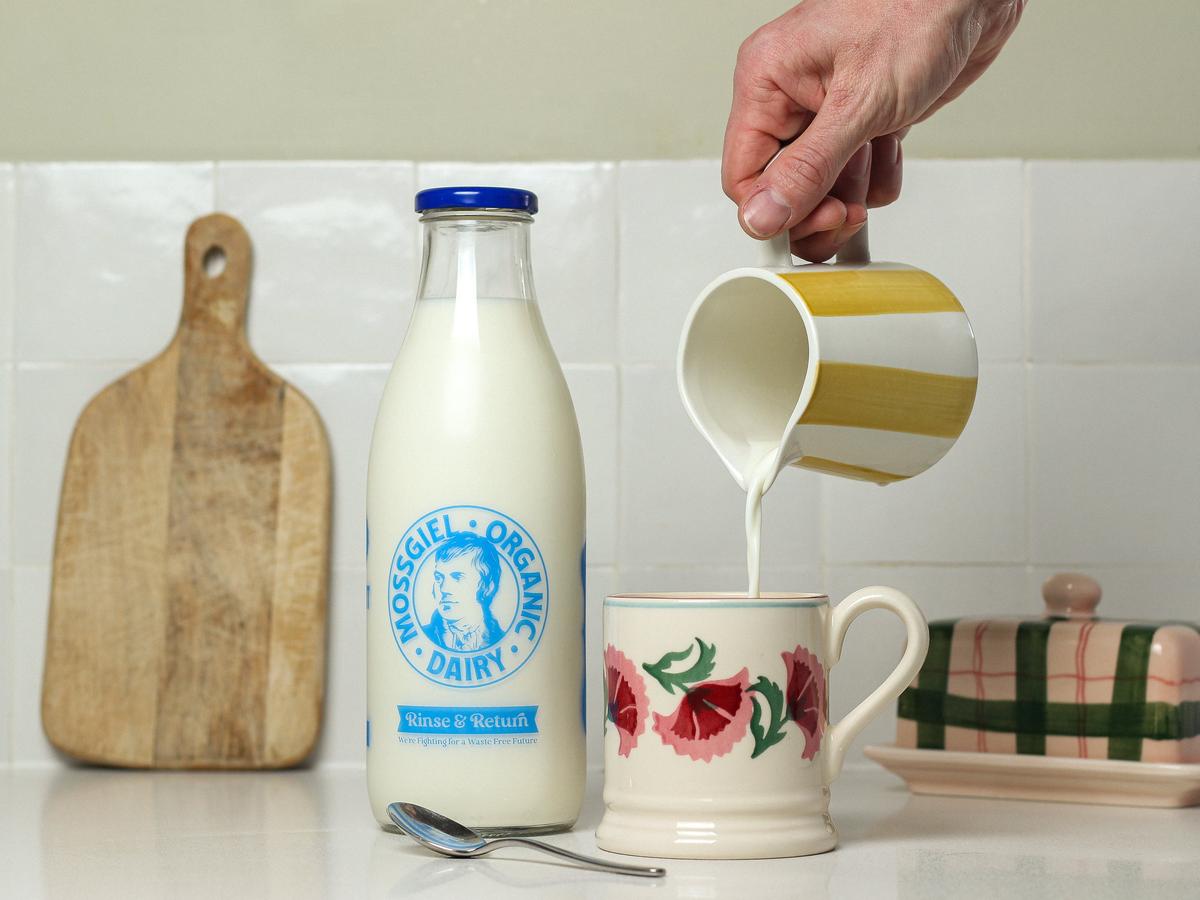
Rethinking Raw Milk: How Mossgiel’s Brewed Milk Bridges Flavour and Food Safety
Companies Mentioned
Why It Matters
It offers a regulator‑approved way to meet rising raw‑milk demand, opening a new premium segment for dairy processors. The model demonstrates how modest processing tweaks can unlock higher margins and consumer loyalty.
Key Takeaways
- •Mossgiel brews milk at 68 °C, killing pathogens while preserving flavor
- •Cream retained, giving 4.5‑4.9% fat vs 3.6% in standard whole milk
- •Sold in 1 L reusable bottles for $3.56 per litre, a 115% premium
- •Raw‑style demand rising; product positioned as “sourdough of milk”
- •Seasonal grass diet alters sweetness and creaminess, offering terroir‑like profile
Pulse Analysis
Raw milk has long sat at the fringe of the dairy market, prized for its unfiltered taste but shackled by strict safety regulations. In the United States, fewer than 5% of adults try raw milk annually, while Europe sees roughly 6% of milk sold in its unpasteurised form. Consumer fatigue with ultra‑processed foods and a growing appetite for transparency have turned raw‑style dairy into a niche but vocal segment, prompting innovators to seek safe, authentic alternatives that can be scaled beyond the farm gate.
Mossgiel’s solution hinges on a precise heat treatment—68 °C for a short period—that sits just below traditional pasteurisation thresholds. This temperature destabilises harmful bacteria without denaturing the proteins that give raw milk its characteristic mouthfeel and froth quality. By retaining the cream (4.5‑4.9% fat) and avoiding homogenisation, the milk delivers a richer, more decadent texture than conventional whole milk (3.6% fat). Priced at roughly $3.56 per litre, the product commands a 115% premium, reflecting small‑scale production, reusable packaging, and the added value of provenance and seasonal flavor shifts tied to grass‑fed cows.
The broader implication is a potential new revenue stream for dairy farms willing to adopt modest processing tweaks. If consumer interest continues to climb, brewed milk could transition from a boutique offering to a mainstream staple, much like sourdough bread did in the early 2020s. Its sustainability angle—reusable bottles and lower processing energy—adds appeal for environmentally conscious shoppers, while the safety guarantee satisfies regulators, paving the way for wider distribution channels and possibly inspiring similar innovations across other raw‑style food categories.
Rethinking raw milk: How Mossgiel’s brewed milk bridges flavour and food safety
Comments
Want to join the conversation?
Loading comments...