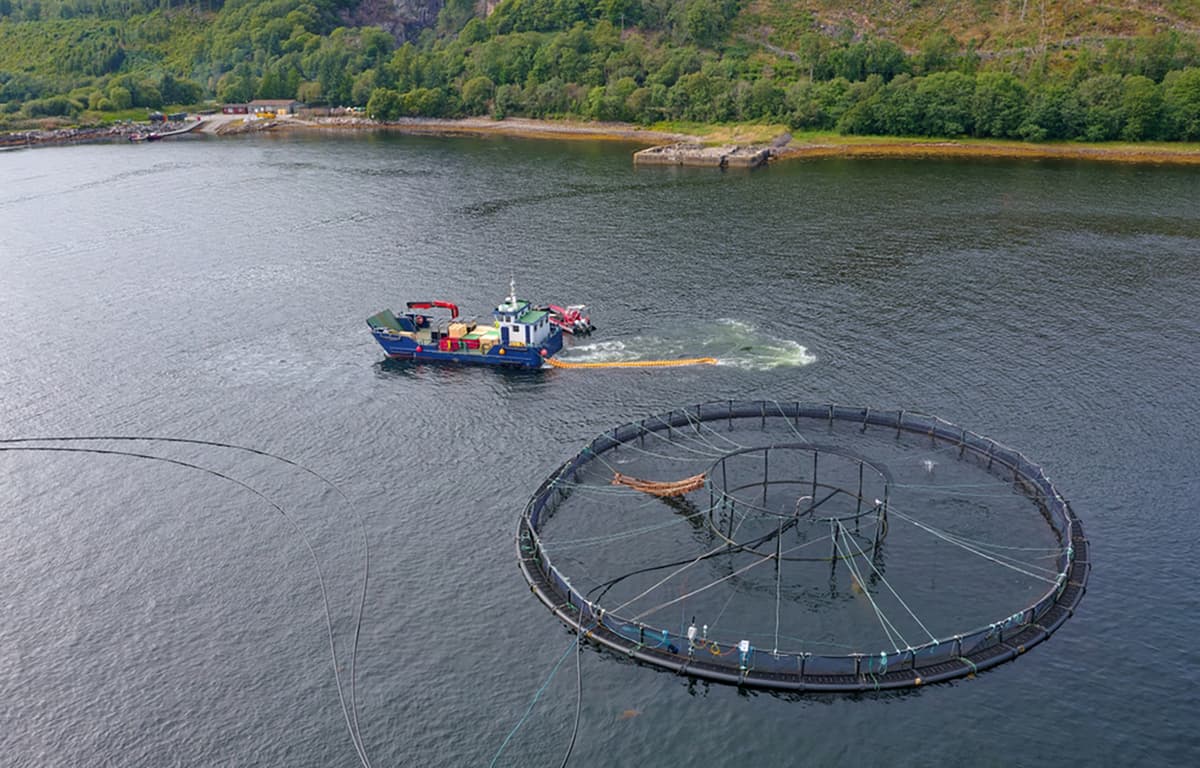
Scottish Salmon Survival Rates Reach New Q1 High Following GBP 1 Billion Investment Push
Why It Matters
Higher survival rates increase production efficiency and profitability, reinforcing Scotland’s position as a leading global salmon supplier while delivering low‑carbon protein to markets.
Key Takeaways
- •Q1 2026 salmon survival hit 99.03%, highest ever.
- •Investment exceeds £1 bn (~$1.4 bn) since 2018 in health tech.
- •Record survival boosts yields and delivers low‑carbon protein.
- •Exports reached £828 m (~$1.1 bn) while domestic sales hit £1.5 bn (~$2 bn).
- •Industry contributes ~£1 bn (~$1.4 bn) annually and sustains 11,000 jobs.
Pulse Analysis
The Scottish salmon‑farming sector has hit a new performance milestone, posting a 99.03 percent average survival rate for the first quarter of 2026. This figure eclipses the previous record and reflects a decade‑long push to modernize aquaculture through more than £1 billion (about $1.4 billion) of capital directed at veterinary services, freshwater‑treatment systems, and real‑time monitoring. Enhanced biosecurity protocols and shorter marine grow‑out cycles have reduced disease pressure, allowing farms to convert feed into market‑ready fish more efficiently than ever before.
The uptick in survival translates directly into economic gains. In 2025, Scottish salmon generated roughly £828 million ($1.1 billion) in export revenue and £1.5 billion ($2 billion) in domestic sales, reinforcing its status as the United Kingdom’s top food export. The sector’s contribution of about £1 billion ($1.4 billion) to the Scottish economy supports roughly 11,000 jobs, many in remote coastal communities where alternative employment is scarce. Higher yields also mean a larger supply of low‑carbon, nutrient‑dense protein for consumers worldwide.
Looking ahead, the industry’s commitment to data‑driven management and sustainable practices positions it to meet rising global protein demand while curbing environmental footprints. Continued investment in closed‑containment systems, automated health diagnostics, and renewable energy integration could push survival rates even higher and further reduce reliance on wild fish feed. For investors and policymakers, the Scottish model offers a blueprint for scaling responsible aquaculture, suggesting that similar funding frameworks could unlock comparable productivity gains in other marine‑farming regions.
Scottish salmon survival rates reach new Q1 high following GBP 1 billion investment push
Comments
Want to join the conversation?
Loading comments...