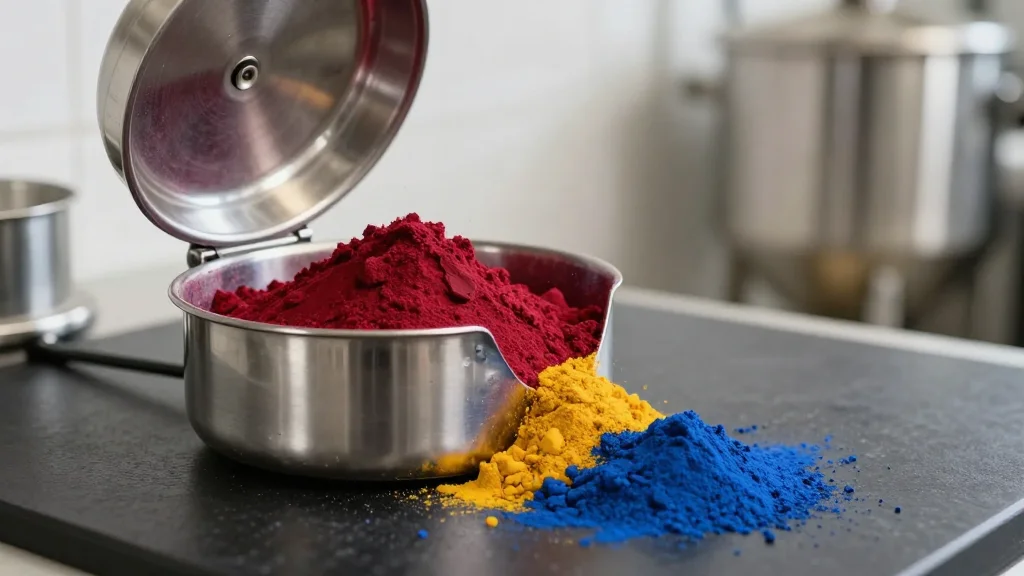
Sensient Invests $250M to Expand Natural Food Dye Production
Why It Matters
The investment positions Sensient to dominate a rapidly expanding market driven by consumer health concerns and regulatory momentum, potentially reshaping ingredient sourcing across the food industry.
Key Takeaways
- •Sensient allocating $250M to boost natural‑color capacity.
- •New 28,800 sq ft facility adds to 500,000 sq ft plant.
- •Targets $1B sales in natural colors segment.
- •Industry shift driven by clean‑label consumer demand.
- •Natural colors generate ~10:1 revenue multiple versus synthetics.
Pulse Analysis
The natural‑color market is entering a inflection point as shoppers increasingly scrutinize ingredient lists for artificial additives. Health‑focused campaigns and high‑profile advocacy, such as the "Make America Healthy Again" initiative, have accelerated demand for clean‑label solutions. Food manufacturers are reformulating products to meet these expectations, creating a cascade of conversion projects that require higher‑volume, plant‑derived pigments. This trend is not limited to the United States; global supply chains are feeling the pressure, prompting ingredient firms to reassess their portfolios and invest in sustainable sourcing.
Sensient Technologies is betting heavily on this shift, earmarking up to $250 million to expand its flagship natural‑color plant in St. Louis. The addition of 28,800 sq ft of production space will increase capacity at a facility already spanning half a million square feet, enabling the company to scale output quickly. Management has set a $1 billion sales target for the natural‑color business, a stark contrast to its $100 million synthetic‑color base. While the capital outlay will compress margins in the short term, the firm expects a 10:1 revenue multiple on natural pigments, reflecting the higher usage rates required to achieve comparable hues.
The broader industry implications are significant. As major food brands accelerate natural‑color adoption, suppliers that can deliver consistent quality at scale will capture disproportionate market share. Sensient’s aggressive rollout may force competitors to accelerate their own R&D and capacity projects, intensifying M&A activity in the specialty ingredients space. Over the next two years, the natural‑color segment could become a primary growth engine for ingredient companies, reshaping profit structures and prompting further regulatory scrutiny on labeling standards. Companies that fail to adapt risk losing relevance in a market increasingly defined by transparency and health consciousness.
Sensient invests $250M to expand natural food dye production
Comments
Want to join the conversation?
Loading comments...