Solar Foods Secures €350,000 in EU Hydrogen Valley Project to Expand Solein Output
Why It Matters
The grant fast‑tracks Solar Foods’ move toward commercial‑scale, low‑carbon protein, positioning the company as a pioneer in merging the hydrogen economy with food production. It also highlights EU policy support for climate‑friendly protein alternatives, a growing market segment.
Key Takeaways
- •Solar Foods receives €350k (~$385k) from EU hydrogen valley project.
- •Funding supports scaling Solein output at Factory 01 to meet demand.
- •Planned Factory 02 aims for 6,400 tons annual production using external hydrogen.
- •Project showcases hydrogen’s role in sustainable food protein and EU clean tech.
Pulse Analysis
The BalticSeaH2 initiative represents a strategic push by the European Union to embed clean hydrogen across multiple industrial sectors. Backed by a €33 million budget, the program links 40 partners across nine Baltic nations, creating a transnational hydrogen corridor that supports everything from steelmaking to food production. Solar Foods’ participation underscores how the EU is leveraging hydrogen not only for energy transition but also for novel supply chains, positioning the region as a testbed for large‑scale, low‑carbon manufacturing.
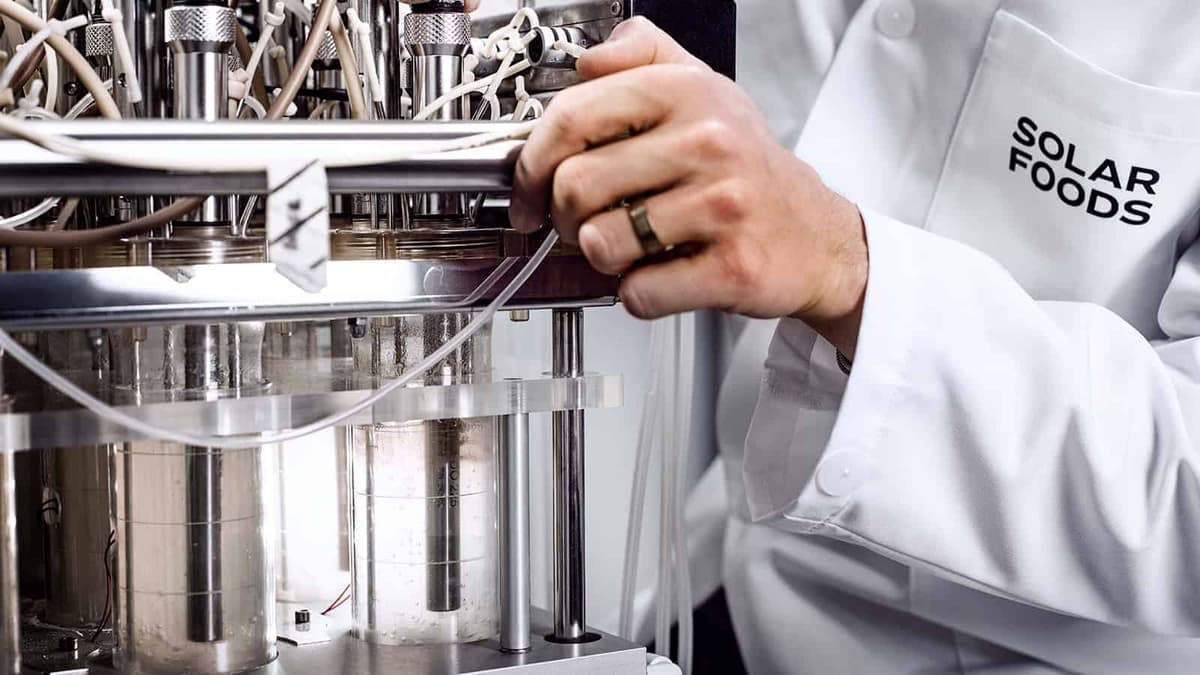
Solar Foods’ core technology—gas fermentation—converts renewable electricity, water, and captured CO₂ into a single‑cell protein called Solein. At Factory 01, on‑site electrolyzers generate hydrogen, feeding bioreactors that produce 160 tons of protein annually. The recent €350,000 grant will expand this capacity, smoothing the path toward the planned Factory 02, which targets 6,400 tons per year. By outsourcing hydrogen production for the new plant, Solar Foods can focus on scaling its fermentation process, a move that could drive down unit costs and make the product competitive with traditional soy or whey proteins.
The broader market implications are significant. As consumers and regulators demand more sustainable protein sources, hydrogen‑derived foods could become a cornerstone of the circular economy. Solar Foods already holds regulatory approval in Singapore and is pursuing authorizations elsewhere, signaling confidence in safety and nutritional value. The EU’s financial backing not only de‑risks the technology but also signals to investors that hydrogen‑based food production is a viable growth sector, potentially reshaping protein supply chains and accelerating the decarbonization of the agri‑food industry.
Solar Foods Secures €350,000 in EU Hydrogen Valley Project to Expand Solein Output
Comments
Want to join the conversation?
Loading comments...