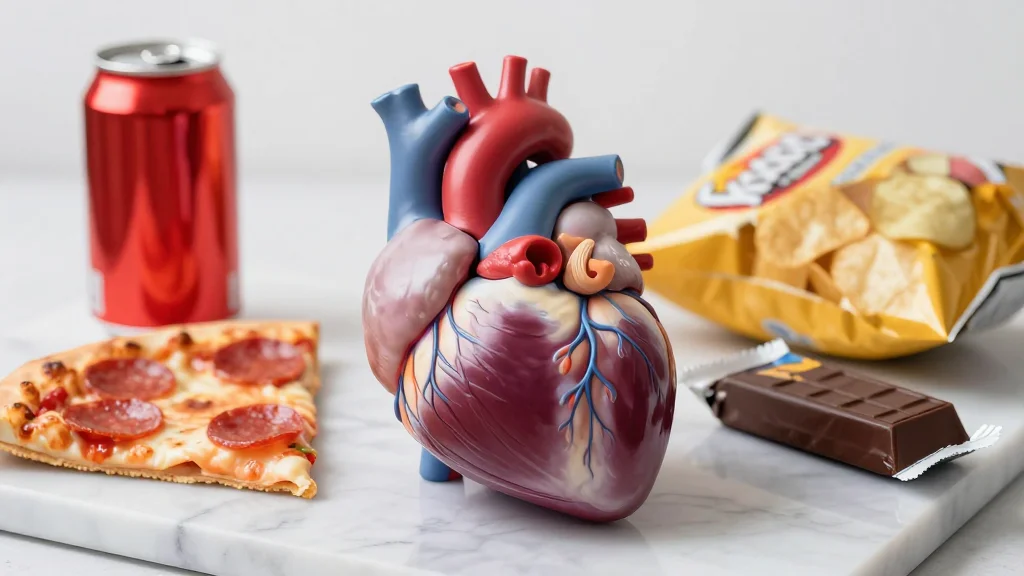
Study Links Diets High in Ultra-Processed Foods to Increased Heart Attack, Stroke Risk
Why It Matters
The association signals a sizable, modifiable risk factor for CVD, prompting both clinical guidance and regulatory action to curb ultra‑processed food consumption.
Key Takeaways
- •High UPF intake raises CVD risk 47%
- •Study used NHANES data from 4,787 adults
- •Dietary Guidelines 2025-2030 advise avoiding highly processed foods
- •California bill proposes certified non‑UPF label
- •Regulators debate definition and potential unintended consequences
Pulse Analysis
The recent American Journal of Medicine study from Florida Atlantic University analyzed 4,787 U.S. adults in the NHANES 2021‑2023 cycles, quantifying the share of calories derived from ultra‑processed foods (UPFs) using the NOVA classification. After adjusting for age, sex, race, smoking and income, participants in the top quartile of UPF consumption faced a 47 percent higher risk of cardiovascular events, chiefly heart attacks and strokes, compared with those in the lowest quartile. These findings reinforce earlier cohort work linking UPFs to metabolic syndrome, systemic inflammation, and adverse lipid profiles, suggesting a robust epidemiological signal.
The health implications have quickly entered the policy arena. The 2025‑2030 Dietary Guidelines for Americans now explicitly advise limiting “highly processed” foods, marking the first federal dietary recommendation that targets processing level rather than nutrient content. Simultaneously, the FDA and USDA are drafting a uniform definition for UPFs, with a rollout expected by April 2026. California’s proposed “Certified Non‑UPF” seal mirrors the USDA Organic label, aiming to guide consumers and schools toward minimally processed options. Critics warn that a blunt regulatory approach could penalize nutrient‑dense processed foods and stifle innovation.
For clinicians and insurers, the study underscores the need to incorporate food processing information into risk assessments and dietary counseling. Yet, the evidence remains largely observational; randomized trials are needed to establish causality and to differentiate harmful processing from necessary preservation techniques. Industry stakeholders argue that over‑broad definitions may create legal uncertainty and unintended market distortions. A balanced strategy—combining clearer labeling, targeted public‑health campaigns, and continued research into the mechanistic pathways linking ultra‑processing to cardiovascular disease—offers the most pragmatic route to reducing the growing burden of CVD.
Study Links Diets High in Ultra-Processed Foods to Increased Heart Attack, Stroke Risk
Comments
Want to join the conversation?
Loading comments...