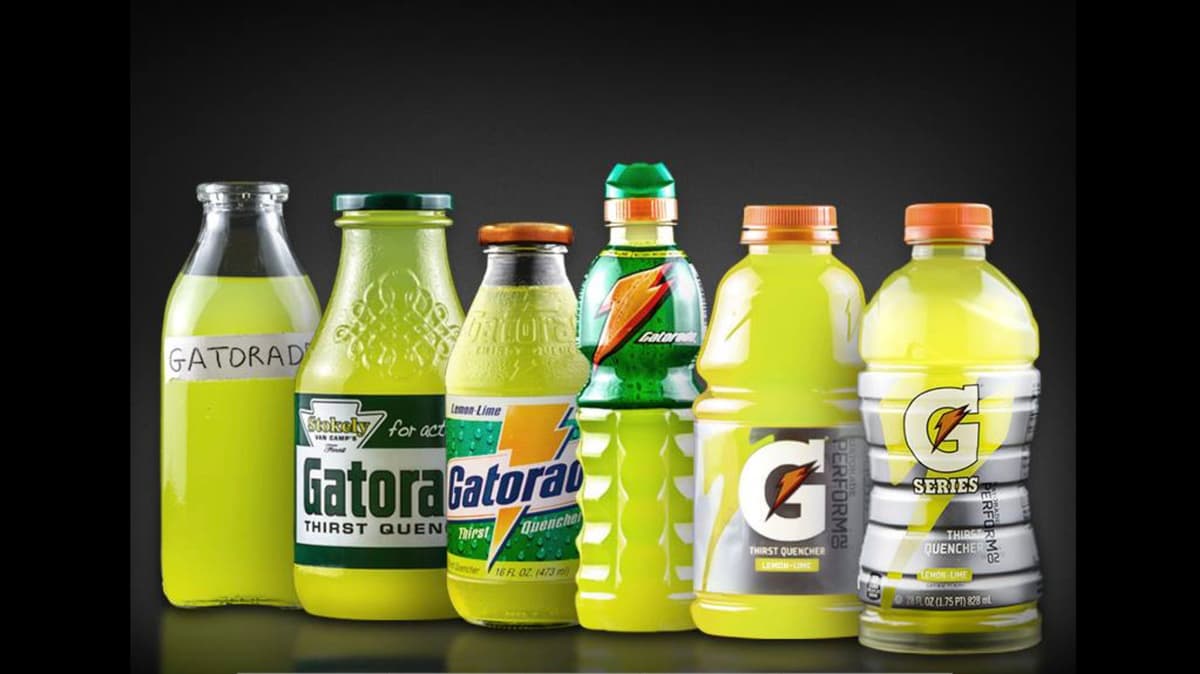
Why It Matters
Packaging innovations have driven Gatorade’s market penetration, influencing brand perception, shelf appeal, and sales velocity in the highly competitive sports‑drink sector. Understanding this evolution helps marketers gauge how form‑factor shifts can unlock growth and consumer loyalty.
Key Takeaways
- •First commercial Gatorade bottle launched in 1968 via Stokely‑Van Camp
- •1970s introduced carbonated cans and the iconic lightning‑bolt logo
- •1991 featured Michael Jordan on both plastic and glass bottles
- •1998 E.D.G.E. bottles were first ergonomically designed sports containers
- •2013 Thirst Quencher redesign reduced volume by 4 oz, sparking fan backlash
Pulse Analysis
The Gatorade bottle’s journey mirrors broader trends in consumer packaging, where functionality and branding intersect. Early iterations—glass jars and metal cans—served a nascent market focused on performance benefits rather than aesthetics. The 1973 lightning‑bolt logo cemented visual identity, while the 1991 Michael Jordan partnership leveraged celebrity power to boost shelf presence. Each redesign, from the ergonomic E.D.G.E. model to the 2013 Thirst Quencher, responded to shifting consumer expectations for convenience, ergonomics, and visual appeal, illustrating how packaging can become a core component of product strategy.
From a business perspective, Gatorade’s packaging pivots have directly impacted sales velocity and market share. The introduction of sport‑specific bottles with spouts in the mid‑1990s aligned with the rise of youth sports programs, expanding distribution channels into schools and local leagues. Celebrity endorsements amplified brand equity, while ergonomic designs reduced spill risk and enhanced user experience, translating into higher repeat purchase rates. Moreover, the 2013 volume reduction sparked debate but also signaled cost‑efficiency measures, allowing PepsiCo to maintain margins amid rising raw‑material prices.
Looking ahead, the evolution is unlikely to stop. Emerging trends such as recyclable polymers, smart caps that track hydration, and personalized labeling present new growth avenues. Competitors are investing heavily in sustainable packaging, pressuring Gatorade to innovate further to retain its leadership in the sports‑drink category. By monitoring consumer sentiment and leveraging data‑driven design, Gatorade can continue to adapt its bottle architecture, ensuring relevance in an increasingly eco‑conscious and tech‑savvy market.
The Evolution Of Gatorade Bottles Over The Years
Comments
Want to join the conversation?
Loading comments...