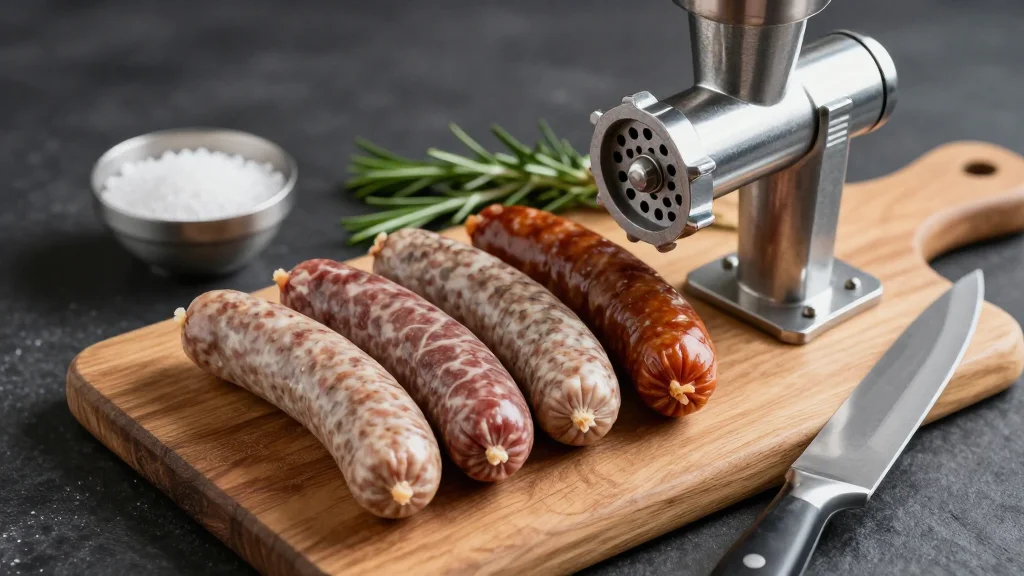
University of Wisconsin-Madison Setting up Artisanal Meat Processing Workshop
Why It Matters
The workshop equips food‑industry professionals with rare expertise that bridges heritage methods and contemporary safety protocols, a combination increasingly demanded by consumers seeking authentic, high‑quality meat products. It also strengthens UW‑Madison’s role as a hub for culinary innovation and workforce development in the specialty meat sector.
Key Takeaways
- •Workshop runs June 9‑11 at UW‑Madison’s MSABD facility.
- •Award‑winning sausage makers teach alongside industry and academic experts.
- •Hands‑on demos cover fresh, emulsified, dry‑cured, and liver sausages.
- •Includes food‑safety training and market‑trend analysis for artisanal products.
- •Open to processors, chefs, culinary students, and R&D professionals.
Pulse Analysis
Consumer appetite for heritage‑style meats has surged, prompting universities and industry groups to offer specialized training. UW‑Madison’s workshop taps into this trend by delivering a curriculum that respects centuries‑old recipes while integrating modern equipment, such as precision smokers and automated casing fillers. Participants gain a scientific understanding of meat functionality, ingredient interactions, and safety controls, positioning them to meet both artisanal expectations and regulatory requirements.
The program’s structure blends classroom theory with extensive hands‑on sessions, including live demonstrations of fresh, emulsified, dry‑cured, and liver‑based sausages. By pairing award‑winning artisans with academic researchers, attendees experience a cross‑disciplinary exchange that accelerates skill acquisition. Topics such as the MEAT + POULTRY RED BOOK®, raw material functionality, and market positioning provide a holistic view, enabling chefs and processors to innovate while preserving product integrity.
Beyond skill development, the workshop addresses a broader industry challenge: the shortage of talent fluent in both traditional craftsmanship and modern food‑safety standards. Graduates can drive product differentiation for specialty retailers and upscale restaurants, capitalizing on premium pricing for authentic, safely produced meats. As the artisanal sector expands, institutions like UW‑Madison become critical pipelines for the next generation of meat innovators, reinforcing regional economic growth and reinforcing the United States’ competitive edge in high‑value food manufacturing.
University of Wisconsin-Madison setting up artisanal meat processing workshop
Comments
Want to join the conversation?
Loading comments...