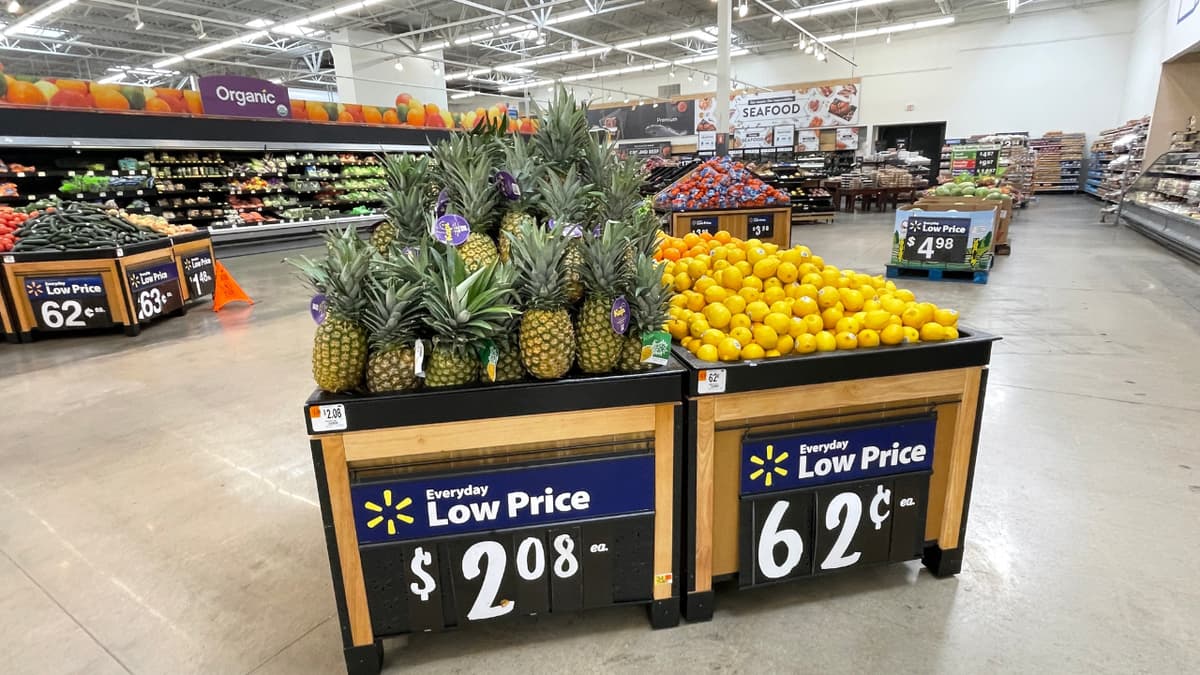
Walmart Continues to Lose Grocery Market Share
Why It Matters
Walmart’s shrinking dominance signals heightened competition in U.S. grocery and CPG markets, pressuring margins and prompting strategic pivots. The shift reshapes retailer investment theses and could accelerate consolidation or innovation efforts.
Key Takeaways
- •Walmart grocery share fell to 19.9% in 2026
- •Costco’s grocery share rose to 8.2% in 2026
- •Amazon/Whole Foods CPG share reached 8% in 2026
- •Kroger’s CPG share dropped to 6.7% in 2026
- •Walmart’s CPG share declined to 20.4% in 2026
Pulse Analysis
Walmart’s gradual loss of grocery market share reflects broader consumer migration toward value‑oriented and specialty formats. The retailer slipped from a 20% share in 2025 to 19.9% this year, while its CPG dominance narrowed to 20.4% from 21.1% two years ago. Analysts attribute the trend to Walmart’s slower rollout of fresh‑food assortments, price‑sensitive shoppers gravitating to discount clubs, and the rise of omnichannel competitors that blend online convenience with in‑store pickup. The erosion, though modest in absolute terms, is significant for a company that has long relied on scale to negotiate supplier terms and drive profitability.
Costco’s ascent underscores the appeal of bulk‑price models and membership loyalty. Its grocery share climbed to 8.2%, up from 7.9% in 2025, while its CPG footprint expanded to 8.1% in 2026, overtaking traditional grocers. Amazon’s partnership with Whole Foods also accelerated, pushing their combined CPG share to 8%—the fastest year‑over‑year growth among the top five. Meanwhile, Kroger’s share slipped to 8.3% in grocery and 6.7% in CPG, indicating that legacy supermarkets are struggling to retain price‑conscious shoppers who are increasingly drawn to warehouse clubs and digital platforms.
The competitive reshuffle forces Walmart to double down on differentiation. Options include expanding private‑label offerings, enhancing last‑mile delivery, and leveraging its massive data assets to personalize promotions. Investors are watching closely, as sustained share loss could compress margins and trigger strategic realignments, such as potential partnerships or acquisitions in the high‑growth e‑commerce and specialty food spaces. For the broader industry, the data signal a continued fragmentation of market share, where agility and consumer‑centric innovation will determine the next wave of retail leadership.
Walmart continues to lose grocery market share
Comments
Want to join the conversation?
Loading comments...