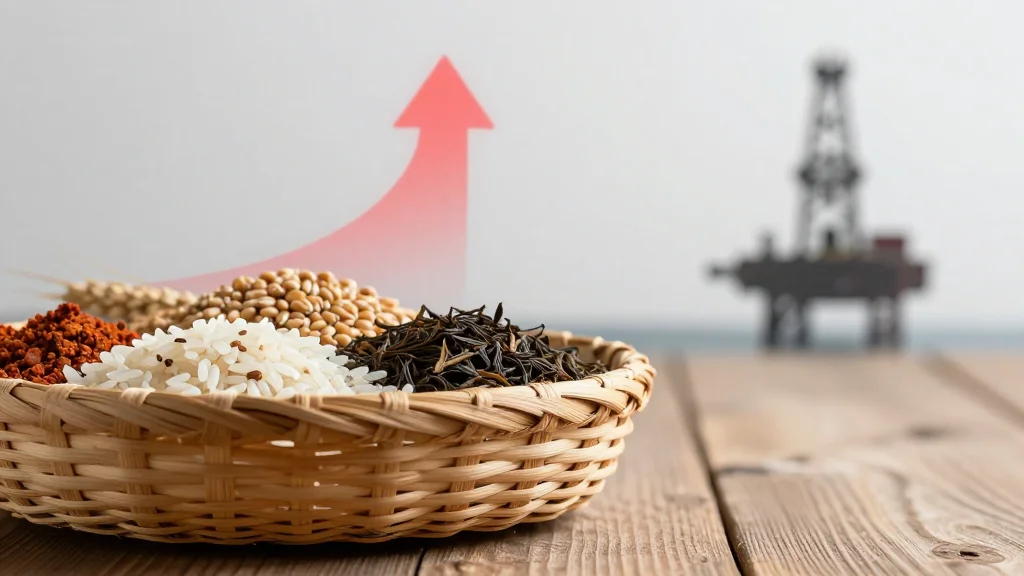
West Asia Tensions Disrupt Indian FMCG Recovery for FY27-28: Report
Why It Matters
The downgrade signals tighter profit margins for India’s consumer‑staples giants, pressuring valuations and investor sentiment. It also underscores how external oil‑price shocks can cascade through emerging‑market consumer sectors.
Key Takeaways
- •West Asia conflict cuts FY27 FMCG earnings estimate by ~3.3%
- •Nifty FMCG index fell ~10% since March due to supply shock
- •Raw material cost inflation expected for 1‑2 quarters despite war ending
- •Target P/E multiples trimmed 7% amid heightened uncertainty
- •Rural demand remains resilient, cushioning long‑term sector outlook
Pulse Analysis
The latest flare‑up in West Asia has sent ripples through global oil markets, tightening crude‑derived feedstock prices that Indian FMCG manufacturers rely on for everything from cooking oils to packaging. Unlike typical demand‑side shocks, this supply disruption hits the sector’s cost base directly, echoing the 2022 Russia‑Ukraine war when crude spiked to about $130 per barrel and forced a 200‑basis‑point margin squeeze across the industry. Analysts now view the current episode as a test of how resilient the Indian consumer‑goods ecosystem can be when external energy shocks intersect with a depreciating rupee.
From a financial perspective, the revised forecasts translate into a modest 3.3% earnings downgrade for FY27 and a 7% cut to average price‑to‑earnings multiples, reflecting heightened uncertainty. The Nifty FMCG index’s near‑10% correction since March illustrates market sensitivity to cost‑inflation pressures. While margin compression is projected at 100‑350 basis points in 1QFY27, the impact is expected to taper from the second quarter onward as supply chains normalize. Investors are therefore re‑pricing risk, focusing on companies with strong balance sheets and the ability to pass on higher input costs without eroding consumer demand.
Despite the short‑term headwinds, the sector’s fundamentals remain solid. Rural consumption, which accounts for a growing share of total sales, continues to show resilience, buoyed by steady agricultural output and limited exposure to commodity super‑cycles. Softness in agricultural commodity prices further cushions the cost curve. Consequently, many firms are likely to rebound once raw‑material inflation eases, positioning the Indian FMCG market for a gradual recovery that could outpace peers in other emerging economies.
West Asia tensions disrupt Indian FMCG recovery for FY27-28: Report
Comments
Want to join the conversation?
Loading comments...