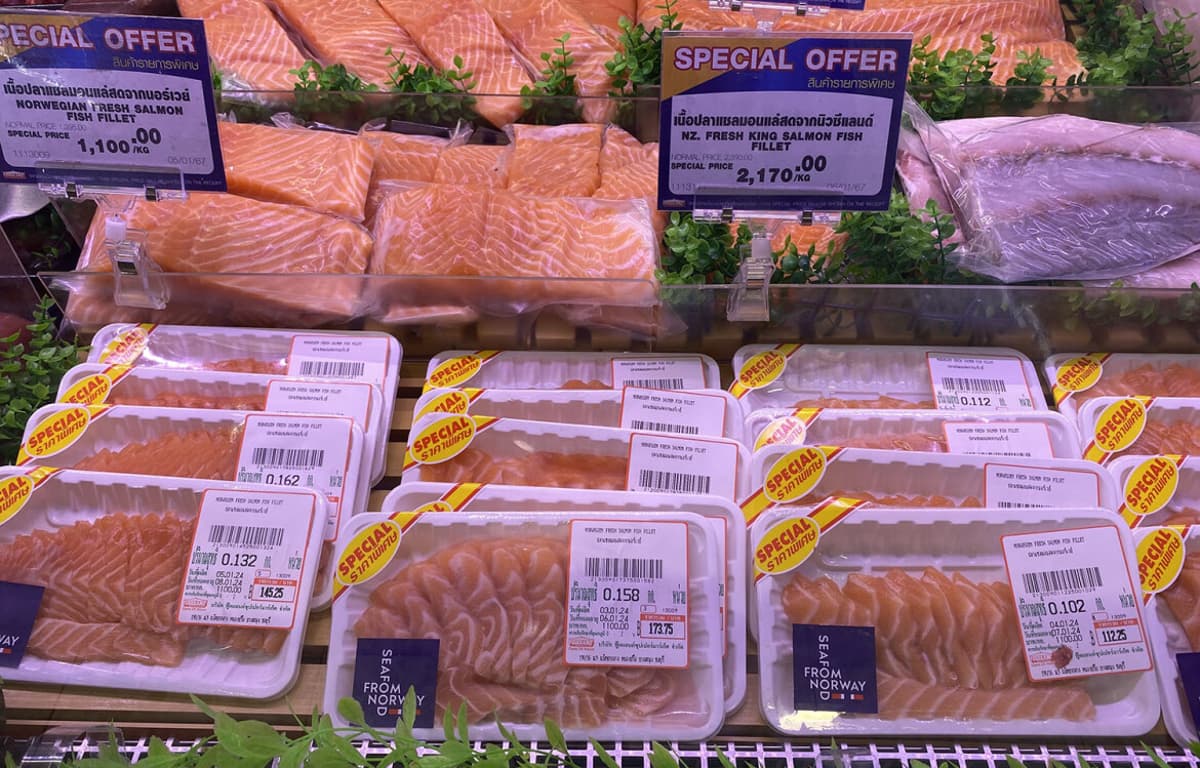
While Whole Fish Prices Tumble, Atlantic Salmon Fillets From Norway Hit NOK 177 Entering Week 15
Why It Matters
Lower salmon prices compress margins for Norwegian producers and could ripple through global seafood supply chains, affecting retailers and consumers. The trend signals a broader market imbalance between supply growth and demand recovery.
Key Takeaways
- •Norway's 3‑6 kg salmon now trades at $9.20/kg
- •Week‑14 price slipped 4% versus Week‑13
- •Decline reflects weak post‑Easter demand
- •Benchmark index signals pressure on farmed salmon margins
- •Prices may stay low if global supply outpaces demand
Pulse Analysis
Norway remains the world’s largest supplier of farmed Atlantic salmon, and its pricing benchmarks are closely watched by processors, distributors, and investors. The latest Sitagri Salmon Index data shows the 3‑to‑6 kg whole fish price slipping to NOK 87.55 per kilogram, or roughly $9.20, a 4% decline from the previous week. This dip follows a period of optimism that Easter‑related consumer spending would boost demand, but the anticipated surge never materialized. The price movement reflects a confluence of factors: robust production cycles, lingering pandemic‑induced supply chain adjustments, and a cautious retail environment that has yet to translate into higher purchase volumes.
For seafood processors and retailers, the price erosion tightens profit margins that were already under pressure from rising feed costs and stricter sustainability standards. Lower raw‑material costs can benefit downstream pricing, potentially making salmon more affordable for consumers, yet the benefit may be offset by reduced earnings for farming operations. Companies with diversified product lines or those that have secured forward contracts may weather the volatility better, while smaller producers could face cash‑flow challenges. The price trend also influences contract negotiations, inventory strategies, and the timing of new farm expansions.
Looking ahead, several variables will shape the salmon market’s trajectory. Global feed prices, which have been volatile due to grain market fluctuations, directly affect production costs and could either exacerbate or alleviate pricing pressure. Additionally, expanding aquaculture capacity in Chile, Scotland, and Canada adds to supply, while consumer preferences for healthy protein sources keep demand resilient. Trade policies, especially tariffs on seafood imports, and currency movements between the Norwegian krone and the dollar will further influence price dynamics. Stakeholders should monitor these indicators to anticipate whether the current low‑price environment is a temporary correction or the start of a longer‑term adjustment in the global salmon market.
While whole fish prices tumble, Atlantic salmon fillets from Norway hit NOK 177 entering Week 15
Comments
Want to join the conversation?
Loading comments...