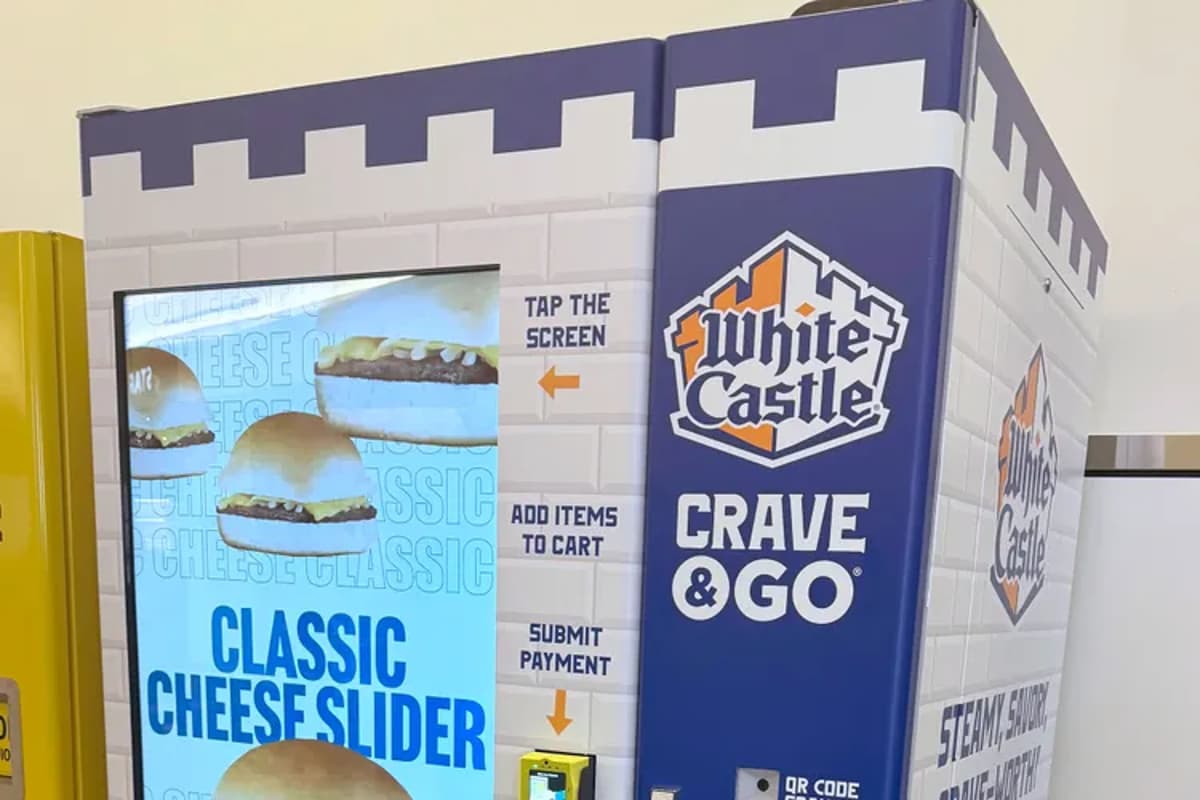
White Castle Puts Its Restaurant in a Box with 1,000 Automated Kiosks
Companies Mentioned
Why It Matters
The model offers a low‑cost, scalable expansion channel that could reshape unit economics for quick‑service brands and pressure traditional storefronts.
Key Takeaways
- •1,000 kiosks target high‑traffic institutional venues.
- •Automation cuts labor and real‑estate expenses dramatically.
- •On‑demand cooking bridges convenience and perceived freshness.
- •Menu design must align with equipment capabilities.
- •Success could trigger industry‑wide shift to distributed retail.
Pulse Analysis
White Castle’s “Crave & Go” rollout arrives at a moment when automated food service is moving from novelty to mainstream. By placing self‑contained kiosks in hospitals, university campuses and corporate campuses, the chain sidesteps the high cost of leasing full‑size storefronts while still offering its signature sliders hot and ready. The partnership with Automated Retail Technologies supplies the hardware and remote‑monitoring platform needed to keep temperature, cooking time and inventory in check without on‑site staff. Early pilots have shown queues forming within minutes, confirming that speed and convenience remain top drivers for today’s on‑the‑go diners.
The financial calculus behind the kiosks is compelling. Traditional quick‑service locations require a sizable upfront investment—construction, equipment, and a crew of cooks, cashiers and managers—plus ongoing payroll and utility bills. An automated unit shrinks the footprint to roughly the size of a vending machine and replaces most labor with software, cutting operating costs by an estimated 40‑50 percent. Capital outlays are limited to the kiosk itself and a modest connection to a central kitchen, allowing White Castle to scale rapidly. This lower‑cost model could improve same‑store sales metrics while preserving margins in a labor‑tight market.
Beyond White Castle, the deployment signals a broader strategic shift for the fast‑food sector. Brands will need to redesign menus to fit the constraints of robotic grills and temperature‑controlled compartments, favoring items that can be assembled quickly and retain quality after short holding periods. Competitors that ignore the micro‑location opportunity may lose traffic in high‑density venues where consumers expect instant, contactless service. As the technology matures, we can expect a hybrid ecosystem where traditional restaurants coexist with networks of unattended kiosks, redefining how and where fast food is consumed.
White Castle Puts Its Restaurant in a Box with 1,000 Automated Kiosks
Comments
Want to join the conversation?
Loading comments...