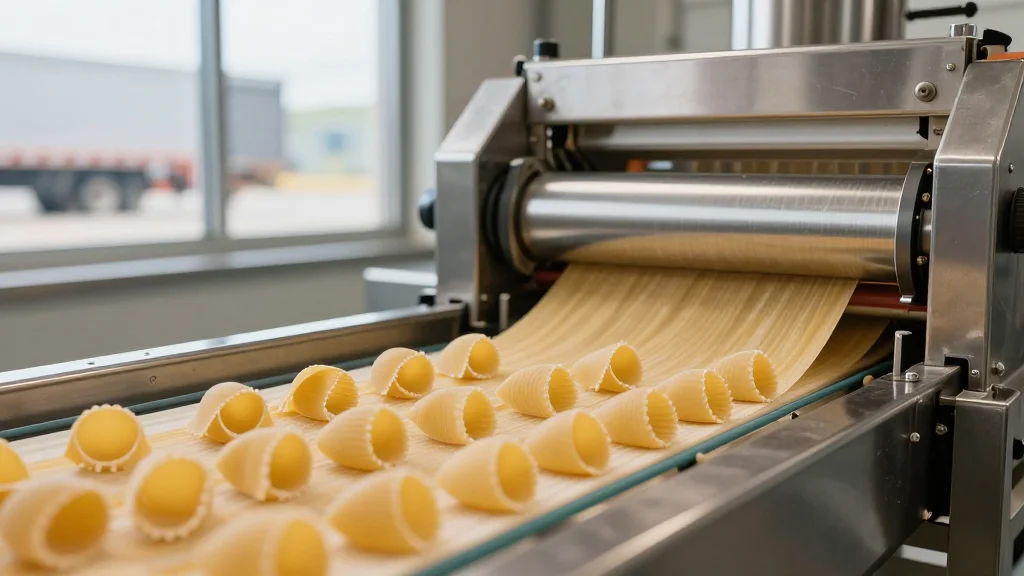
Winland Foods Invests in US Pasta Plant
Why It Matters
The expansion strengthens domestic private‑label supply chains and positions Windoria to capture growing demand for value‑priced pasta, while adding jobs and logistical efficiency in the Midwest.
Key Takeaways
- •Winland invests $38.5 M to expand St. Louis pasta plant
- •New line adds rail‑car access, boosting production flexibility
- •Capacity increase creates 25 jobs, raising local employment
- •Expansion supports Windoria’s $4 bn food‑manufacturing platform
- •Plant slated to run by H2 2026, meeting demand growth
Pulse Analysis
The $38.5 million infusion into Winland Foods’ St. Louis facility marks a strategic push to modernize U.S. private‑label pasta production. By installing a new line and rail‑car loading capability, the plant will not only lift output of egg‑based pasta shapes but also improve logistical agility, reducing reliance on truck freight and cutting lead times. The timing aligns with a broader resurgence in domestic food manufacturing, as retailers and food‑service operators seek reliable, cost‑effective sources amid lingering supply‑chain disruptions.
Winland’s expansion is a direct extension of the 2025 Windoria merger, which combined Winland’s extensive North‑American footprint with La Doria’s Italian heritage. Together, the $4 billion entity now commands a diversified portfolio spanning pasta, sauces, dressings, and ready‑to‑serve meals. This scale enables cross‑selling opportunities and economies of scale that can drive margin improvement. Moreover, the added capacity positions Windoria to meet the accelerating demand for private‑label products, a segment that has grown double‑digits as consumers gravitate toward affordable, high‑quality alternatives to branded goods.
Beyond immediate operational gains, the investment signals a broader industry trend toward regionalization and infrastructure upgrades. Rail access at the St. Louis site enhances bulk ingredient handling, supporting larger batch runs and reducing per‑unit transportation costs. Competitors may feel pressure to replicate similar logistics enhancements to stay competitive. As the plant comes online in the latter half of 2026, analysts will watch how the increased output influences pricing dynamics in the U.S. pasta market and whether the job creation component spurs further economic development incentives in the Midwest.
Winland Foods invests in US pasta plant
Comments
Want to join the conversation?
Loading comments...