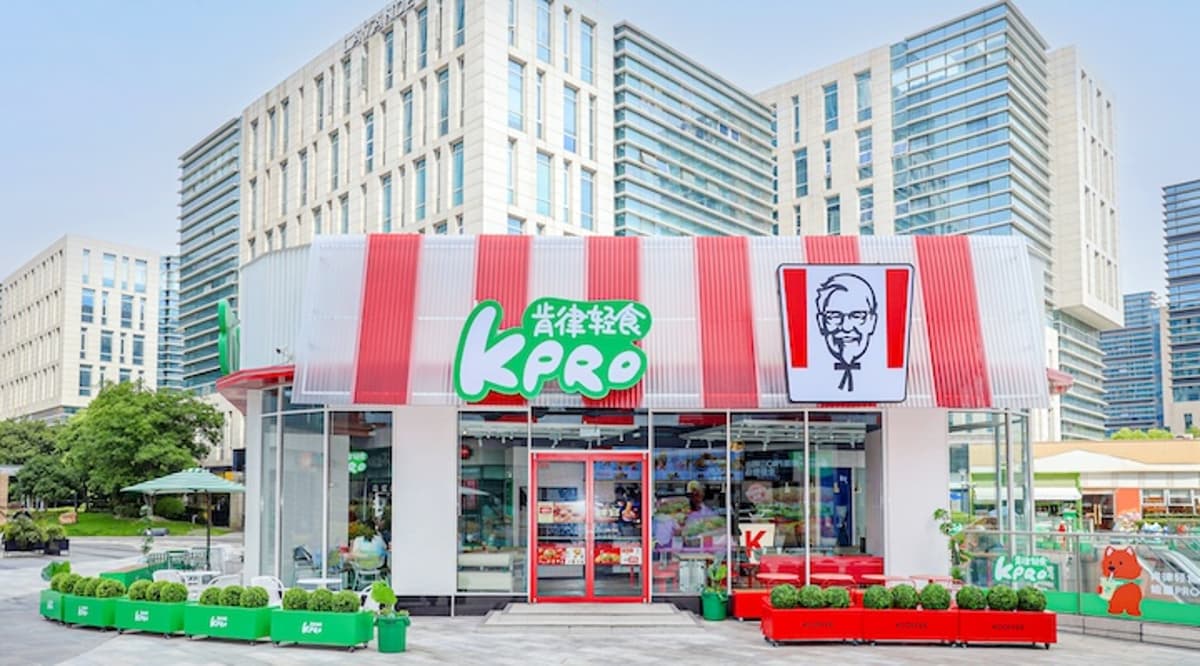
Yum China Scales Kpro Concept Beyond 300 Locations
Companies Mentioned

KFC
Why It Matters
Kpro’s accelerated growth showcases Yum China’s ability to monetize existing KFC infrastructure while meeting rising consumer demand for nutritious fast‑food options, potentially reshaping the quick‑service landscape in China.
Key Takeaways
- •Kpro surpasses 300 stores, targeting 600 by year‑end.
- •Operates alongside KFC, sharing supply chain and loyalty program.
- •Focuses on tier‑1, tier‑2, select tier‑3 cities in east and south China.
- •Menu emphasizes multigrain bowls, yogurt smoothies, whole‑wheat sandwiches.
- •Lower capex than standalone concepts, boosting profit margins.
Pulse Analysis
Yum China’s Kpro concept taps into a broader shift among Chinese diners toward lighter, health‑focused meals without sacrificing convenience. As urban consumers become more calorie‑conscious, the brand’s menu—featuring multigrain energy bowls, yogurt‑based smoothies and whole‑wheat sandwiches—aligns with emerging dietary preferences. By positioning Kpro alongside established KFC locations, Yum China sidesteps the high costs of building standalone restaurants, accelerating market penetration while preserving brand familiarity.
The side‑by‑side operating model provides Kpro with immediate access to KFC’s extensive supply chain, real‑time data on foot traffic, and a built‑in loyalty ecosystem. This synergy reduces inventory overhead and enables rapid menu iteration based on consumer feedback. Moreover, the shared real estate footprint cuts rent and construction expenses, delivering a leaner cost structure that can translate into higher margins compared with traditional quick‑service formats. The strategy also allows Yum China to test new concepts in high‑traffic venues before committing to dedicated storefronts.
With a target of 600 stores by the end of the year, Kpro is poised to influence competitive dynamics in China’s fast‑food sector. Rival chains may feel pressure to launch comparable health‑centric sub‑brands or to partner with existing operators to achieve similar economies of scale. As the concept expands into tier‑1, tier‑2 and select tier‑3 markets, its performance will serve as a barometer for the scalability of hybrid restaurant models that blend legacy brand strength with niche, trend‑driven offerings. Success could encourage further diversification across Yum China’s portfolio, reinforcing its position as a market leader in an increasingly health‑aware consumer landscape.
Yum China scales Kpro concept beyond 300 locations
Comments
Want to join the conversation?
Loading comments...