Demonstrating that retro gaming can serve as a practical tool for reducing compulsive social‑media use, the piece underscores a low‑cost, accessible strategy for digital‑wellbeing. As screen‑time fatigue rises, such alternatives gain relevance for both individuals and mental‑health initiatives.
The surge in doomscrolling has turned smartphones into perpetual attention magnets, prompting mental‑health experts to seek tangible antidotes. While many solutions advocate complete digital detoxes, they often feel unrealistic for busy professionals. Introducing a handheld console—specifically a Game Boy Advance loaded with Pokémon FireRed—offers a middle ground: a screen that delivers structured, goal‑oriented play without the endless feed of notifications. Early anecdotal evidence, like Roberts’ three‑hour weekly screen‑time drop, suggests that purposeful retro gaming can rewire habit loops and restore focus.
Pokémon FireRed’s design is uniquely suited to this purpose. Its turn‑based battles, limited UI, and predictable pacing create a low‑cognitive‑load environment, allowing players to enter a flow state without the overstimulation typical of modern titles. The nostalgic Kanto region also taps into the brain’s reward circuitry, evoking positive memories that counteract the anxiety‑inducing scroll of social feeds. Because the game lacks microtransactions and algorithmic content pushes, users retain full control over their time, turning idle moments—like waiting for a package—into purposeful progress toward gym badges rather than endless scrolling.
The broader market is taking note. Pokémon’s 30th‑anniversary campaign, spanning fast‑food tie‑ins, museum collaborations, and apparel lines, has revived the franchise’s cultural relevance, making retro titles more accessible than ever. This resurgence signals an opportunity for other legacy games to be repurposed as wellness tools, especially as employers and wellness platforms look for cost‑effective interventions. For anyone battling screen‑time fatigue, swapping a phone for a nostalgic handheld may not only curb doomscrolling but also reintroduce a sense of purposeful play that modern apps often lack.
Trading social media for Pokémon battles and evolutions in Kanto on a Game Boy Advance has been surprisingly serene
Michael Roberts
Mon 9 Feb 2026 09:29 EST | Last modified 13:08 EST
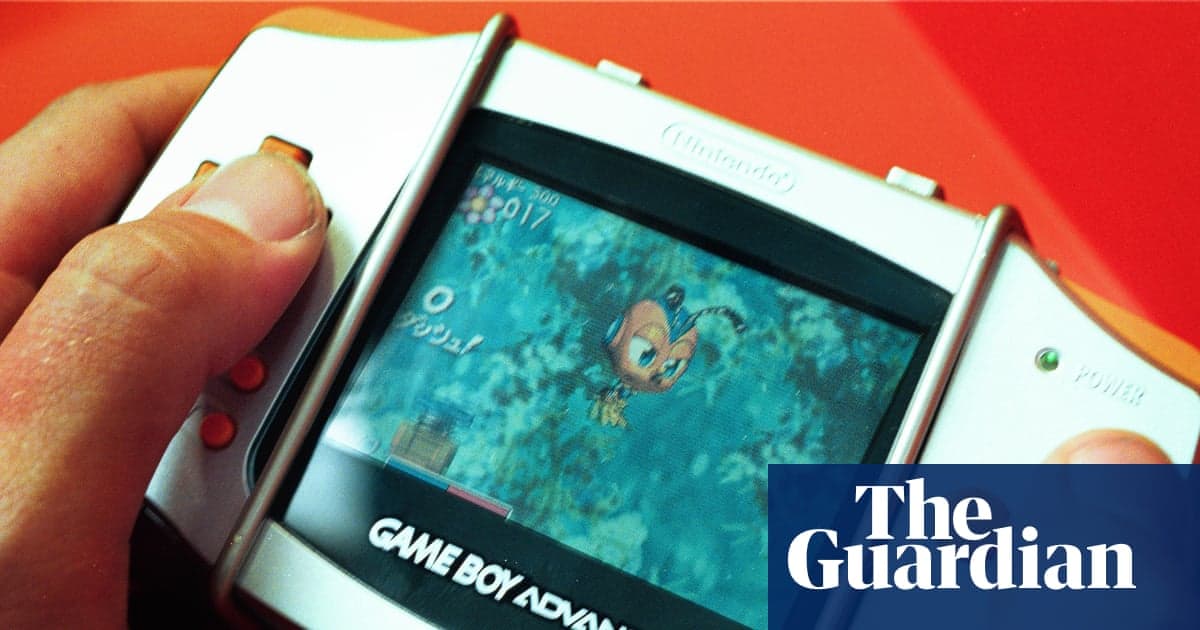
Beating bad habits … a Nintendo Gameboy Advance.
Photograph: Martin Godwin/The Guardian
Cutting back on doomscrolling must be one of the hardest new‑year resolutions to keep. Instinctively tapping on the usual suspects on your phone’s home screen becomes a reflex, and vast quantities of money and user data have been specifically employed to keep you reaching for the phone, ingraining it into our work, leisure and social lives. You’ll get no shame from me if you love your phone and have a healthy relationship with your apps, but I’ve found myself struggling lately.
This year, I’m attempting to cut back on screen time – sort of. I’m replacing the sleek oblong of my smartphone with something a little more fuzzy and nostalgic. In an attempt to dismantle my bad habit, I’m closing the feeds of instant updates and instead carrying around a Game Boy Advance. I’ve been playing Pokémon FireRed, a remake of the very first Pokémon games, which turn 30 this month. Even this refreshed version is more than two decades old.
Improving your digital wellbeing doesn’t necessarily mean cutting out screen time completely. Not all screens are created equal. I’m hoping that swapping one screen for another isn’t like Indiana Jones switching out the golden idol with a big bag of sand, only for the booby‑trap boulder to crush me all the same.
A remake of the very first Pokémon games … Pokémon FireRed.
Photograph: Nintendo/MobyGames
I hadn’t played Pokémon regularly since 2006’s Pokémon Diamond on the Nintendo DS, which was my introduction to the franchise. I dabbled in Pokémon Black on the DS and Pokémon Legends: Arceus on the Nintendo Switch, but neither stuck. I’d convinced myself that once you’ve played through one Pokémon game, you’ve pretty much played them all. But as Hollywood has profitably realised, 20 years is a long enough gap for something to feel fresh again.
My first steps in Pokémon were taken in the Sinnoh region, so the prospect of visiting the Kanto region from the first games and catching the original 151 Pokémon felt exciting to me. But I couldn’t bring myself to start playing the original Red or Blue on a chunky old Game Boy. I might be trying to embrace a more analogue existence, but gaming without colour is my line in the sand.
FireRed’s positive effects on my life arrived unexpectedly quickly. It only took a couple of hours of exploration and encounters with wild Pokémon to make me forget about my phone. It was sat right next to me, but it was no longer calling to me like Gollum’s ring. Usually my device would find its way into my hand during loading breaks and elaborate cutscenes on narrative‑heavy and beautiful modern PlayStation games.
Perhaps there’s some magic in FireRed’s more free‑form approach to story and less overstimulating retro graphics. Maybe those gaps left by implied details in the design and dialogue leave space for my imagination – which my doomscrolling habit had nearly atrophied. The world of Pokémon is serene and charming, despite constant trainer battles and gruelling gym‑leader face‑offs, and even those are quite low stakes. A gaming experience hasn’t offered me such tranquility since I first picked up Animal Crossing. Try as he might, even Tom Nook can’t patent escapism.
Curiously, this adventure, though fresh for me, feels nostalgic. I’ve never played with a team solely made up of monsters from the original Pokédex, yet somehow I’m transported back to the late 90s when it seemed like the world was going Poké‑mad. I even named my rival after one of my childhood best friends. All these years later, it’s so satisfying to finally, thoroughly embrace this canon.
Pokémon is hardly counterculture: it’s the most profitable video‑game franchise in history. Pokémon is gearing up for a 30th‑anniversary year with a McDonald’s Happy Meal promotion, a new theme park, a partnership with the Natural History Museum and a Uniqlo line among much else – so, if anything, it feels more zeitgeisty and omnipresent than it has in years. And yet it does feel rebellious to pick up an old Game Boy instead of my phone. It’s somehow unruly to take myself offline, just for a bit, to just have fun with a retro game. I’m able to enjoy technology on my own terms: I’m not coerced into microtransactions, I’m not relying on the latest oh‑so‑essential firmware update, I’m not endlessly instructed to like, comment, subscribe for more.
Video game developer Shigeru Miyamoto holds up the Nintendo Game Boy Advance during its launch in May 2001.
Photograph: John Barr/AP
Filling the natural breaks in my day with an old video game has done me the world of good, even if it’s evolving my Psyduck while dinner is in the oven or taking down a gym leader while waiting for a package. My phone’s screen time is already down by three hours a week since beginning this adventure. In a small way, it’s helping me to stop comparing myself with others and begin to tackle some existential dread that doomscrolling seems to encourage. Playing Pokémon FireRed in 2026 is utterly nourishing, and wonderfully low‑stakes compared to a social‑media ecosystem where everything is trying to appear equally urgent and meaningful.
If you’re trying to combat overthinking, insecurity or exhaustion by committing to the herculean task of using your phone less, take a quick trip to the Kanto region – or another resolutely offline game world.
Comments
Want to join the conversation?
Loading comments...