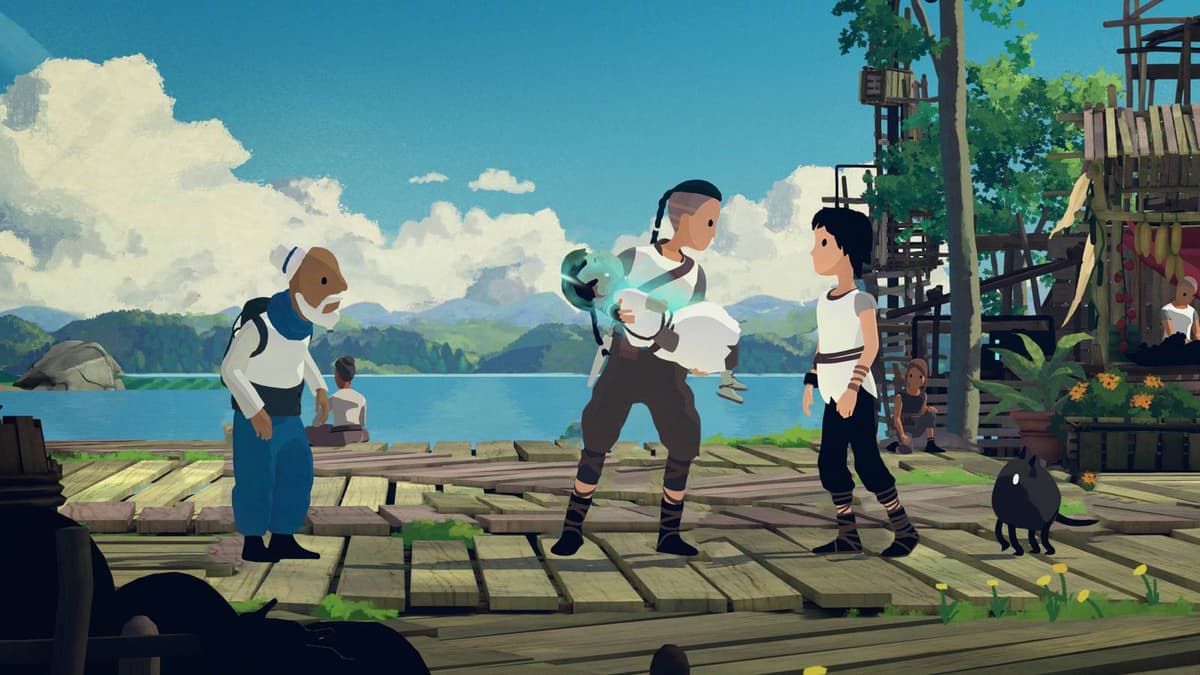
Planet of Lana 2: Children of the Leaf Uses an Invented Language to Enhance Its Story
•February 28, 2026
0
Companies Mentioned


Why It Matters
The approach forces players to engage more deeply with visual and auditory cues, signaling a shift toward immersive, non‑verbal storytelling in games and challenging the dialogue‑heavy norm of mainstream titles.
Key Takeaways
- •Invented language replaces most spoken dialogue
- •Enhances player focus through non‑verbal storytelling
- •Deluxe edition includes language primer for fans
- •Music and animation convey narrative without subtitles
- •Highlights shift away from exposition‑heavy design
Pulse Analysis
The decision to craft an original, nonsensical language for Planet of Lana 2 reflects a growing appetite for immersive world‑building that goes beyond subtitles and voice‑overs. By treating language as a design tool rather than a narrative crutch, Wishful Studios joins a niche of developers—such as FromSoftware and Insomniac—who rely on environmental storytelling, body language, and sound design to convey plot. This strategy not only differentiates the title in a crowded indie market but also taps into players’ desire for puzzles that demand attentive observation, reinforcing the game’s core mechanics.
From a gameplay perspective, the invented tongue compels players to read tone, gesture, and musical motifs to decipher intent, effectively turning every encounter into a subtle test of perception. Composer Takeshi Furukawa’s score acts as a parallel language, with recurring motifs that signal emotional beats, while the animation team uses exaggerated silhouettes to fill the gap left by faceless characters. This multimodal narrative architecture reduces reliance on expository dialogue, aligning with the co‑director’s critique of streaming‑era storytelling that favors easy, on‑the‑go consumption over depth.
Commercially, the language primer slated for the deluxe edition creates an ancillary revenue stream and cultivates a community of fans eager to learn and discuss the constructed lexicon. For indie studios, this model demonstrates how ancillary content can extend a game’s lifecycle and deepen brand loyalty. As larger publishers observe the positive reception to such experimental storytelling, we may see a broader industry shift toward hybrid narrative techniques that blend invented languages, music, and visual cues, reshaping how stories are told in interactive media.
Planet of Lana 2: Children of the Leaf uses an invented language to enhance its story
0
Comments
Want to join the conversation?
Loading comments...