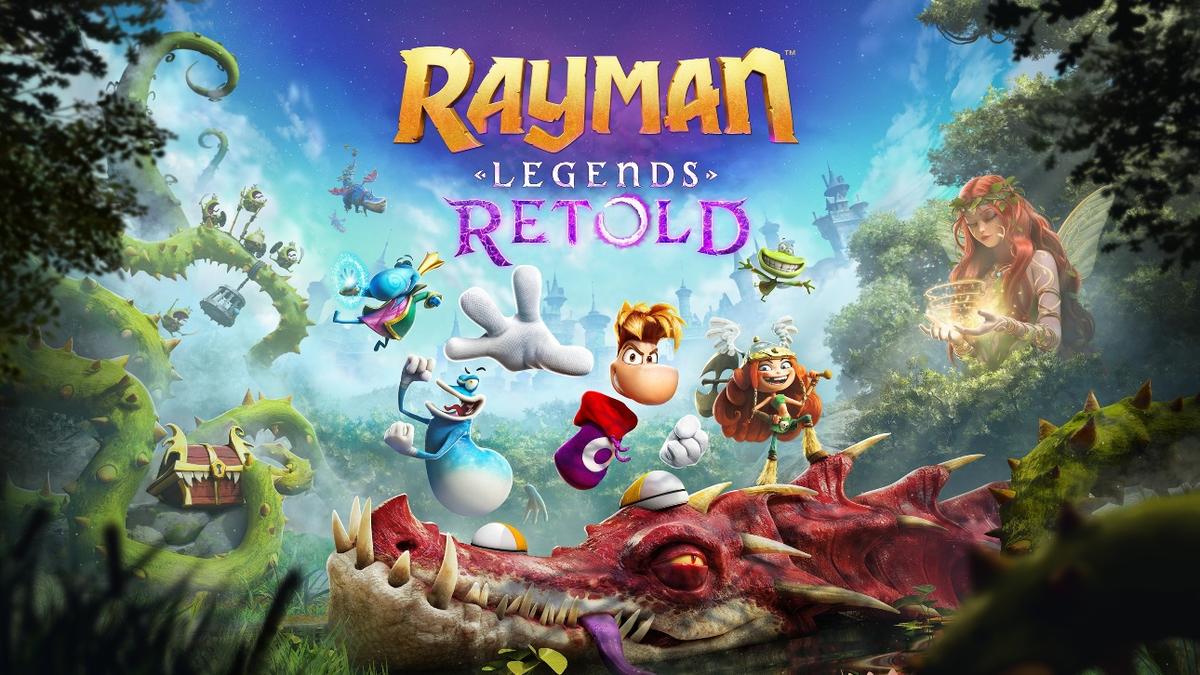
Rayman Legends Retold Interview: Developer on Origins, Engine, New Content, Kung Foot’s Big Return, and More
Companies Mentioned
Why It Matters
The remake modernizes a beloved IP, expanding its audience on next‑gen hardware while signaling Ubisoft’s intent to rebuild the Rayman franchise for new revenue streams. It also showcases a hybrid‑engine approach that could influence other legacy game remasters.
Key Takeaways
- •Ubisoft revives Rayman Legends with 3D/2.5D remake.
- •New content includes dragon rides, hub redesign, Kung Foot Evo.
- •Uses Snowdrop and UbiArt engines for visuals and fidelity.
- •Targeting 60 FPS on Switch 2, content parity across platforms.
Pulse Analysis
Remaking classic titles has become a strategic pillar for publishers seeking to monetize nostalgia while attracting fresh players. Ubisoft’s decision to rebuild Rayman Legends in 3D reflects a broader industry trend: leveraging modern graphics pipelines to breathe new life into proven gameplay formulas. By pairing the original UbiArt Framework—renowned for its fluid 2D animation—with the Snowdrop engine’s advanced lighting and ray‑tracing capabilities, the studio can preserve the game’s signature charm while delivering a visual fidelity that meets today’s standards.
Transitioning a 2D platformer to a 2.5D environment presents unique technical hurdles. Artists must reinterpret flat sprites as fully articulated 3D meshes, ensuring expressive poses remain readable from any angle. Level design also demands re‑engineering; camera perspectives, depth cues, and collision geometry must accommodate the added dimension without compromising the tight rhythm of the original stages. Ubisoft tackled these challenges by introducing dynamic camera moves, bendable level geometry, and new cut‑scenes, while retaining fan‑favorite elements like the music‑driven platforming sequences. The revived Kung Foot mode, now labeled Kung Foot Evo, adds fresh power‑ups and arena tweaks, reinforcing the game’s replay value.
From a market perspective, launching Rayman Legends Retold on the upcoming Switch 2 positions Ubisoft to capture both legacy fans and the console’s expanding install base. A 60 FPS target ensures competitive performance, while content parity across platforms signals a unified release strategy. More importantly, the remake serves as a proof‑of‑concept for future Rayman projects, hinting at new entries that could build on the upgraded engine pipeline. As the industry continues to balance new IP development with revitalizing existing franchises, Ubisoft’s hybrid‑engine approach may set a benchmark for how legacy games can be reimagined for the next generation.
Rayman Legends Retold interview: developer on origins, engine, new content, Kung Foot’s big return, and more
Comments
Want to join the conversation?
Loading comments...