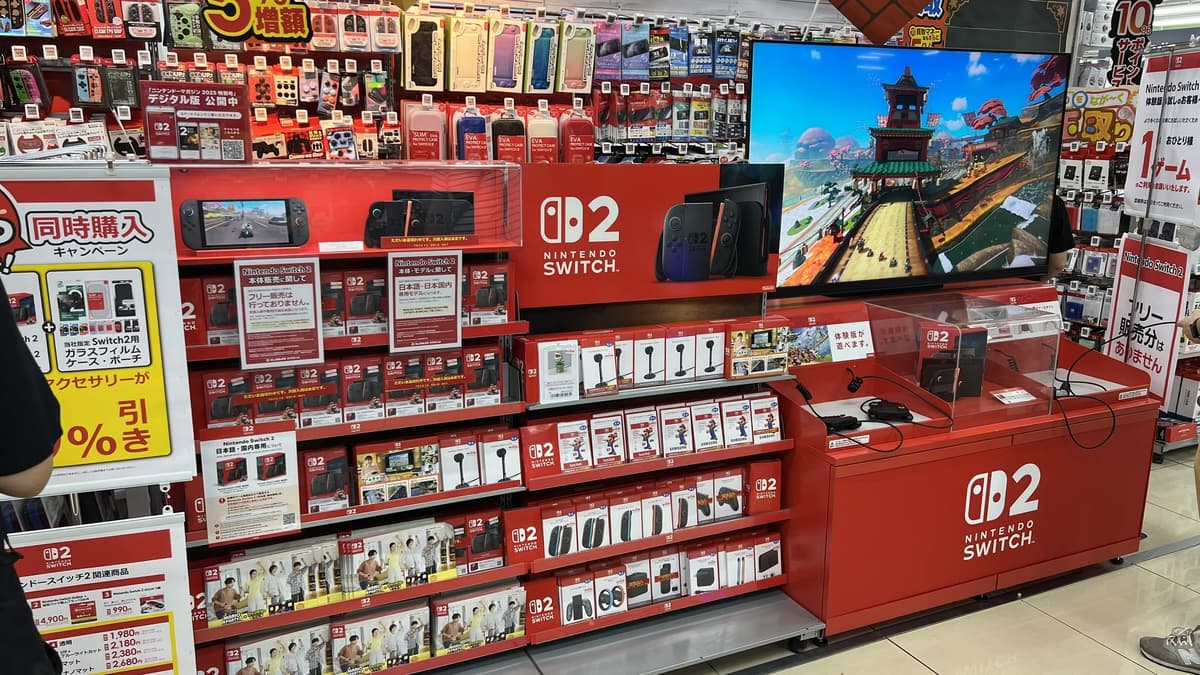
Switch 2 Hardware Sales Dropped 87% Week-on-Week in Japan Following Price Increase
Companies Mentioned
Why It Matters
The sharp demand contraction highlights the price sensitivity of Japanese gamers and puts pressure on Nintendo’s revenue outlook, while also reshaping the competitive dynamics with rivals like Microsoft and Sony.
Key Takeaways
- •Switch 2 Japan sales fell 87% to 31,751 units after price hike.
- •Price rose to ¥59,980 (~$374), up $62 from previous level.
- •Pre‑increase surge indicated consumers stocked up before price jump.
- •Original Switch weekly sales dropped to 229 units, eclipsed by Xbox Series X.
- •Nintendo’s Japan‑only Switch 2 now exceeds 5.8 million lifetime units.
Pulse Analysis
Nintendo’s decision to raise the Switch 2 price in Japan underscores a classic elasticity dilemma: higher margins versus volume erosion. While the ¥10,000 (≈$62) increase may seem modest, Japanese consumers have historically responded sharply to price shifts, especially for premium gaming hardware. The 87% sales drop mirrors a broader trend where gamers accelerate purchases ahead of price hikes, creating a temporary sales spike that evaporates once the new price takes effect. For Nintendo, the immediate revenue hit could be offset by higher per‑unit margins, but sustained demand may wane if the price gap widens relative to competing consoles.
The fallout extends beyond Nintendo’s own lineup. The original Switch’s plunge to just 229 units—making it the lowest‑selling platform that week—signals that even legacy hardware cannot rely on brand loyalty when faced with a pricier next‑gen offering. Competitors such as Microsoft’s Xbox Series X, which outsold the original Switch, stand to capture price‑conscious gamers seeking performance without the premium Nintendo tag. This shift may accelerate Microsoft’s push for subscription services like Xbox Game Pass in Japan, a market traditionally dominated by Nintendo’s first‑party titles.
Looking ahead, Nintendo must balance its pricing strategy with the broader ecosystem. Continued reliance on hardware sales to fund game development could be risky if future price hikes trigger similar demand shocks. Alternative revenue streams—cloud gaming, digital subscriptions, and expanded online services—could mitigate volatility. Moreover, the strong pre‑increase buying frenzy suggests that strategic timing of price announcements can be leveraged to smooth revenue peaks, but only if paired with clear value propositions that justify the higher cost to a price‑sensitive audience.
Switch 2 hardware sales dropped 87% week-on-week in Japan following price increase
Comments
Want to join the conversation?
Loading comments...