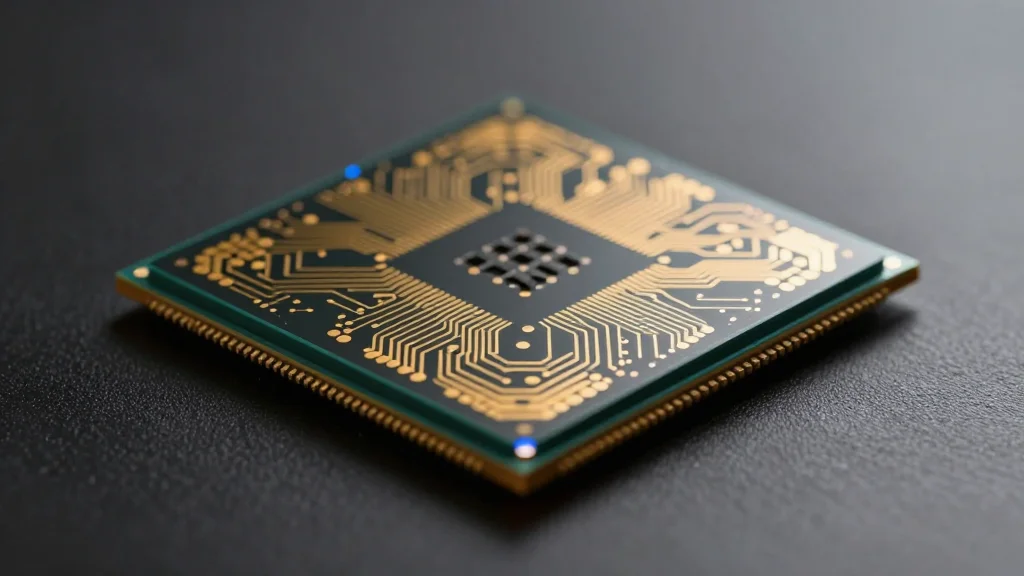
Alphabet Expands TPU Partnership with Anthropic, Adding 3.5 GW of Custom AI Chips

Companies Mentioned


Why It Matters
The deal highlights a turning point in AI infrastructure economics. By offering a high‑performance, energy‑efficient alternative to GPUs, Alphabet’s TPUs could lower the total cost of AI deployments for enterprises, accelerating adoption across industries. The partnership also diversifies Alphabet’s revenue streams beyond advertising, giving the company a tangible hardware business that can scale with AI demand. For the broader hardware market, the expansion intensifies competition among silicon vendors. Nvidia faces pressure to defend its pricing power, while Broadcom benefits from deeper integration with Google’s ecosystem. The outcome will influence chip pricing, supply‑chain dynamics, and the strategic choices of AI startups seeking the most cost‑effective compute.
Key Takeaways
- •Alphabet and Broadcom will supply Anthropic with 3.5 GW of TPUs starting in 2027.
- •Anthropic has already placed a $21 billion TPU order for 2024.
- •TPU expansion challenges Nvidia’s GPU dominance in AI accelerator market.
- •Broadcom’s AI semiconductor revenue rose 106% YoY to $8.4 billion in Q1 2026.
- •Morgan Stanley estimates 500,000 TPUs could add $13 billion to Alphabet’s revenue.
Pulse Analysis
Alphabet’s TPU strategy reflects a broader industry pivot from generic GPUs to purpose‑built ASICs. The company’s early investment in custom silicon gave it a decade‑long head start, allowing it to leverage economies of scale and deep integration with Google Cloud. By turning the TPU into a commercial product, Alphabet not only monetizes its hardware R&D but also creates a moat around its AI services; customers who adopt TPUs are more likely to stay within Google’s ecosystem for both compute and software.
The partnership with Anthropic is especially significant because it validates the TPU’s performance in a high‑profile, revenue‑generating AI workload. Claude’s rapid revenue growth—from $9 billion at the end of 2025 to a $30 billion run‑rate—demonstrates that enterprises are willing to pay premium prices for models that run efficiently on custom silicon. If Anthropic’s demand for TPUs scales as projected, Alphabet could capture a sizable slice of the AI hardware market, potentially rivaling Nvidia’s $10 billion investment in the same startup.
However, the success of the TPU expansion hinges on Broadcom’s ability to deliver at scale without eroding margins. While Broadcom’s AI chip revenue is soaring, its profit margins lag behind Nvidia’s 75%+ gross margins. Maintaining cost‑efficiency while meeting the 3.5 GW target will be critical. Moreover, the deal’s contingent nature—dependent on Anthropic’s commercial success—adds a layer of risk. Should Claude’s market share falter, the projected revenue upside for Alphabet could shrink.
Overall, the expanded TPU partnership signals a maturing AI hardware market where diversification of compute sources becomes a competitive advantage. Alphabet’s dual role as software and hardware provider positions it uniquely to capture both sides of the AI value chain, a dynamic that could reshape the competitive landscape for years to come.
Alphabet expands TPU partnership with Anthropic, adding 3.5 GW of custom AI chips
Comments
Want to join the conversation?
Loading comments...