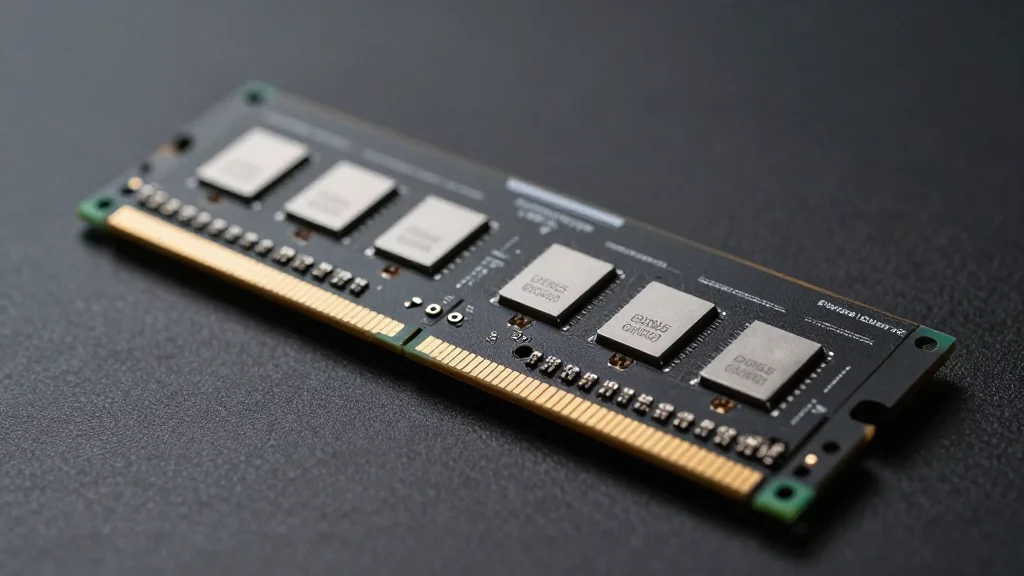
Corsair DDR5 Kits Reveal First Use of China’s CXMT DRAM, Marking Global Market Entry

Companies Mentioned
Why It Matters
The appearance of CXMT DRAM in a high‑visibility Corsair product demonstrates that Chinese memory manufacturers are moving beyond domestic markets and can meet the technical standards required by premium PC components. This development could diversify the global DRAM supply chain, offering manufacturers a new source of chips at potentially lower cost, and reducing reliance on the three legacy suppliers that are increasingly focused on AI‑centric memory. However, it also raises questions about quality assurance, intellectual‑property protection, and the geopolitical risk of integrating Chinese silicon into Western hardware ecosystems. If Chinese firms can sustain high yields at scale, they may force a price correction in the DDR5 market, benefitting system integrators and end‑users. Conversely, any supply disruptions or regulatory push‑back could reinforce the dominance of Samsung, SK Hynix and Micron, preserving the status quo. The outcome will shape component pricing, product roadmaps, and the strategic calculations of PC manufacturers worldwide.
Key Takeaways
- •Corsair’s Gaming Vengeance DDR5 16 GB 6000 MT/s kit lists CXMT as the DRAM supplier.
- •CXMT offers DDR5 dies up to 24 Gb and prototype speeds of 8000 MT/s.
- •AI‑driven demand has pushed Samsung, Micron and SK Hynix to prioritize HBM and LPDDR5X, tightening PC‑grade DRAM supply.
- •Chinese memory firms are executing an “Epic Expansion” to double wafer output this year.
- •Analysts expect more Chinese‑sourced memory modules at Computex 2026.
Pulse Analysis
The Corsair‑CXMT pairing is a litmus test for the viability of Chinese DRAM in the high‑performance consumer market. Historically, Chinese fabs have focused on cost‑effective, lower‑tier memory for domestic servers. CXMT’s push into DDR5, with specifications that mirror Samsung’s A‑Die, suggests a strategic pivot aimed at capturing the lucrative enthusiast segment. This move could compress margins for the established trio, especially if CXMT can leverage lower labor and material costs to undercut pricing.
From a market‑structure perspective, the entry of a new supplier introduces a fourth competitive axis, potentially breaking the oligopolistic pricing power that has characterized DRAM for decades. In the short term, PC manufacturers facing chronic shortages may welcome the additional source, but they must also weigh the risk of supply volatility and potential export controls. The geopolitical dimension cannot be ignored; U.S. policy may tighten restrictions on Chinese semiconductor components, which could limit the scalability of CXMT’s export ambitions.
Looking ahead, the real test will be volume consistency. If CXMT can deliver high‑yield, high‑speed DDR5 at scale, we may see a cascade of similar adoptions across brands like G.Skill, Kingston and Crucial. That would accelerate the democratization of high‑speed memory, driving down costs for gamers and workstation users alike. Conversely, any quality or reliability issues could reinforce the premium perception of Korean and U.S. memory, preserving their market leadership. The next quarter will be decisive as Computex showcases whether CXMT‑based modules can move from prototype to production‑ready status.
Corsair DDR5 Kits Reveal First Use of China’s CXMT DRAM, Marking Global Market Entry
Comments
Want to join the conversation?
Loading comments...