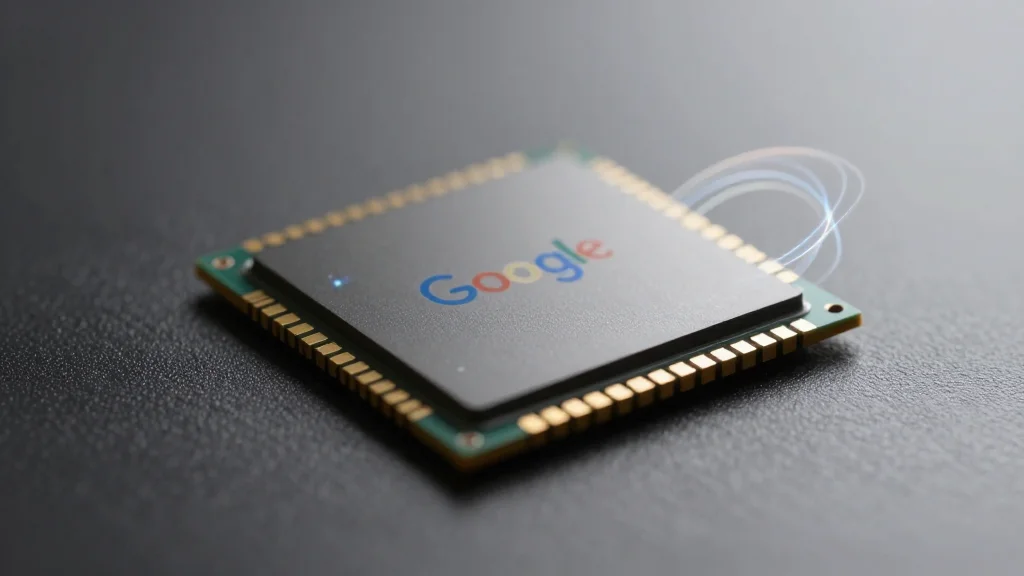
Google Begins Limited TPU Rollout to Select Data‑Center Customers, Challenging Nvidia

Companies Mentioned

Why It Matters
Google’s decision to sell TPUs externally creates a new source of competition in the AI accelerator market, which has been dominated by Nvidia for several years. By opening its silicon to third‑party data centers, Google not only diversifies its revenue streams but also reduces the industry’s reliance on Nvidia GPUs, potentially lowering costs for AI workloads and spurring innovation across the hardware stack. The partnership with Blackstone adds significant financial muscle, enabling rapid scaling of TPU‑focused neocloud infrastructure. This could reshape the competitive dynamics among cloud providers, neocloud specialists, and enterprise customers, who now have a viable alternative to GPU‑centric solutions. The move also underscores a broader trend of tech giants monetizing internal chip designs, a strategy that could accelerate the fragmentation of AI compute supply chains.
Key Takeaways
- •Google begins limited external sales of first‑generation TPU chips to Anthropic, a tentative Meta deal, and a third unnamed data‑center customer.
- •Blackstone contributes $5 billion to a joint venture with Google, targeting 500 MW of TPU capacity by next year and $25 billion total spending power.
- •Anthropic’s TPU agreement is part of a $200 billion compute pact, linking Claude models to Google’s hardware.
- •Google’s TPU rollout challenges Nvidia’s dominance in AI accelerators, especially in the neocloud segment.
- •The venture could pressure neocloud rivals CoreWeave and Nebius on pricing and capacity as Google leverages TSMC fab priority.
Pulse Analysis
Google’s limited TPU rollout is more than a product launch; it is a strategic gambit to reshape the AI hardware ecosystem. Historically, Nvidia’s GPUs have been the default choice for both training and inference, thanks to their performance and early‑market lead. Google’s internal TPUs proved effective for its own services, but the decision to commercialize them externally signals a shift from a cloud‑only model to a hardware‑as‑a‑service approach. By coupling the chips with a $5 billion Blackstone‑backed neocloud venture, Alphabet can offer end‑to‑end AI compute solutions that bundle silicon, software, and data‑center capacity—an integrated value proposition Nvidia does not currently provide.
The timing aligns with mounting pressure on Nvidia’s supply chain and pricing. TSMC’s advanced nodes are in high demand, and any ability to secure priority fab slots gives Google a tangible advantage. Moreover, the $200 billion compute agreement with Anthropic illustrates that large AI developers are actively seeking alternatives to Nvidia’s GPUs, especially when cost and energy efficiency become decisive factors. If Google can deliver comparable or superior performance per watt, it could catalyze a broader migration toward TPU‑centric workloads, forcing Nvidia to accelerate its own next‑gen architectures or consider more aggressive pricing.
However, the rollout’s success hinges on ecosystem adoption. Developers must be convinced to port models to the TPU stack, and the joint venture must demonstrate reliable, scalable operations at a price point that justifies switching. Early adopters like Anthropic and Meta will serve as litmus tests; their performance data and cost metrics will likely influence the decisions of other AI‑intensive firms. In the short term, we can expect a modest but meaningful shift in AI hardware procurement, with Google carving out a niche in inference‑heavy, latency‑sensitive workloads. Over the next 12‑18 months, the competitive pressure could translate into lower GPU prices, increased R&D spending across the board, and a more fragmented but innovative accelerator market.
Google Begins Limited TPU Rollout to Select Data‑Center Customers, Challenging Nvidia
Comments
Want to join the conversation?
Loading comments...