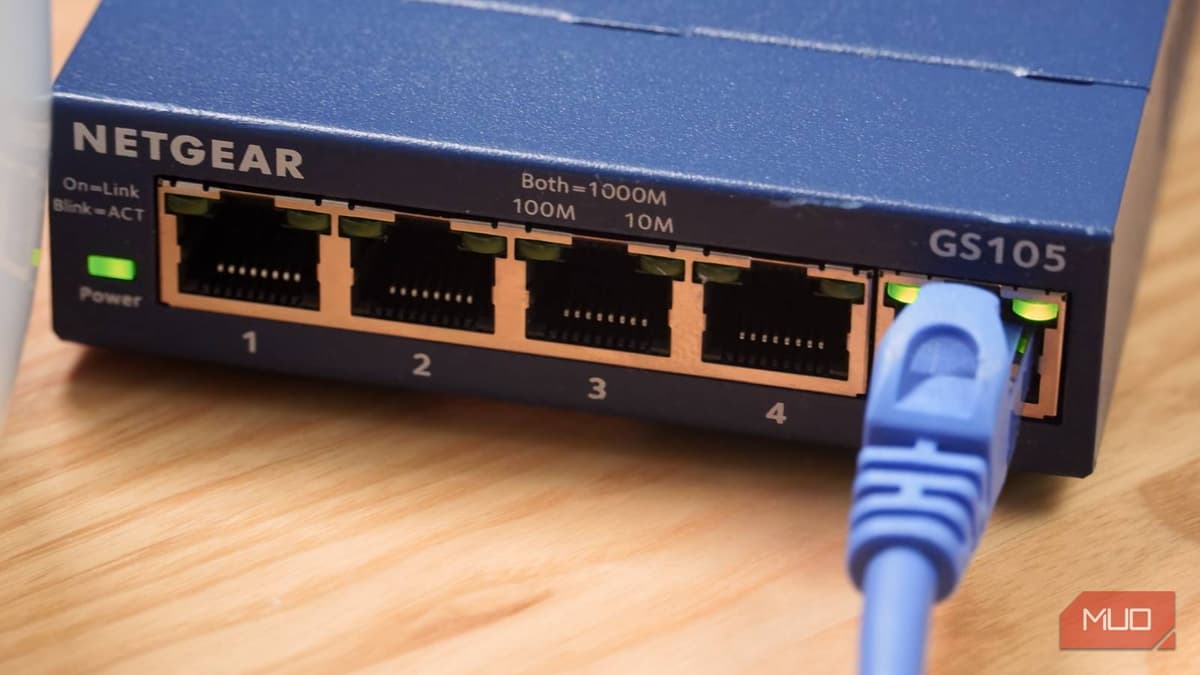
I Didn't Know There Were Two Kinds of Network Switches Until I Almost Bought the Wrong One — Here's What I Learned
Companies Mentioned
Why It Matters
Selecting the appropriate switch prevents overspending on unnecessary features while ensuring the network can meet performance and security demands, a critical decision for both home users and businesses.
Key Takeaways
- •Unmanaged switches provide plug‑and‑play connectivity from 100 Mbps to 2.5 Gbps
- •Managed switches enable VLANs, QoS, redundancy, and port authentication
- •Home users typically need only unmanaged switches for cost‑effective networking
- •Enterprises choose managed switches to control traffic and improve security
- •Price gap widens: unmanaged models often under $50, managed start above $200
Pulse Analysis
The surge in smart‑home devices, from voice assistants to security cameras, has driven a wave of Ethernet adoption beyond the traditional router. While Wi‑Fi remains convenient, wired connections still deliver the lowest latency and highest reliability, especially for bandwidth‑hungry applications like 4K streaming or gaming. Unmanaged switches meet this demand with a simple plug‑and‑play design, offering a range of port speeds that easily outpace most consumer Wi‑Fi standards. For most households, the modest price tag—often under $50—makes them the logical choice to expand a home network without technical overhead.
In contrast, corporate environments require granular control over traffic flow and security posture. Managed switches provide the tools to segment networks via VLANs, prioritize mission‑critical services with QoS, and implement redundancy protocols that keep operations online during hardware failures. These capabilities are essential for data centers, office campuses, and even midsize businesses that host VoIP, video conferencing, or cloud‑based applications. Although they demand a steeper learning curve and higher upfront cost—typically starting around $200—the payoff is a resilient, secure infrastructure that can be tuned to evolving business needs.
When shopping for a switch, buyers should first assess device density, required bandwidth, and whether advanced features like PoE, 10 GbE uplinks, or cloud‑based management are necessary. For most consumers, a basic unmanaged gigabit model suffices, while IT teams should evaluate managed options that align with their security policies and performance targets. Looking ahead, hybrid solutions that blend on‑premise control with SaaS management platforms are gaining traction, offering the flexibility of remote configuration without sacrificing enterprise‑grade functionality.
I didn't know there were two kinds of network switches until I almost bought the wrong one — here's what I learned
Comments
Want to join the conversation?
Loading comments...