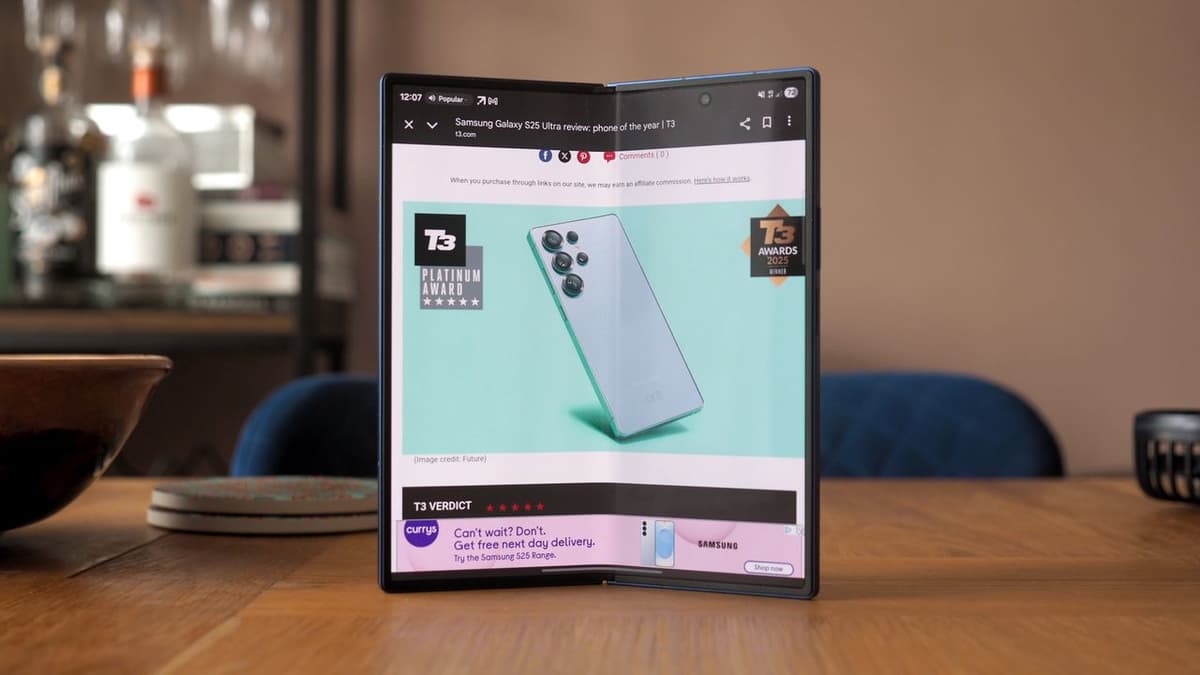
If You Want to Compare the Samsung Galaxy Z Fold 8 Ultra with the Wider Model, Here You Go
Companies Mentioned
Why It Matters
The reveal signals Samsung’s tactical response to emerging foldable competition and hints at differentiated pricing and feature tiers that could reshape premium smartphone dynamics.
Key Takeaways
- •Dummy units reveal Z Fold 8 Ultra’s extra camera.
- •Wider Z Fold 8 adopts slimmer, more compact fold.
- •Launch slated for July 22 Galaxy Unpacked event.
- •Naming shift signals distinct positioning against iPhone Ultra.
- •Telephoto camera likely omitted from wider model.
Pulse Analysis
Samsung’s foldable portfolio is entering a pivotal phase as leaked dummy units of the Galaxy Z Fold 8 and Z Fold 8 Ultra provide the clearest visual comparison yet. The wider Fold 8 continues the thin‑and‑light ethos introduced with the Z Fold 7, promising a more comfortable hand‑hold and reduced crease visibility. In contrast, the Ultra retains the traditional larger hinge and adds an extra camera sensor, suggesting a premium tier aimed at power users who prioritize photography alongside multitasking. These visual cues, though unofficial, set expectations for hardware refinements that could address long‑standing durability and battery concerns that have hampered earlier models.
The decision to rename the models reflects a strategic move to differentiate Samsung’s offerings in a market that’s about to see Apple’s first foldable, the iPhone Ultra. By branding the larger device as "Ultra" and the slimmer version simply as "Fold 8," Samsung signals a clear hierarchy: the Ultra will compete on high‑end specs and camera prowess, while the wider model targets consumers seeking a more portable experience without the premium price tag. Analysts note that dropping the telephoto lens on the wider variant could streamline production costs and improve battery life, further sharpening the price‑performance balance against Apple’s anticipated pricing.
For consumers, the upcoming launch could reshape buying decisions in the premium segment. If Samsung maintains a price gap similar to previous generations—potentially positioning the Ultra above $2,000 and the wider model in the $1,500‑$1,800 range—buyers will weigh the trade‑off between screen real estate, camera capability, and portability. Moreover, the integration of Samsung’s ecosystem, including Galaxy Watch and XR devices, may enhance the overall value proposition. As the foldable market matures, Samsung’s dual‑track approach could solidify its leadership, provided the devices deliver on durability, software optimization, and compelling price points.
If you want to compare the Samsung Galaxy Z Fold 8 Ultra with the wider model, here you go
Comments
Want to join the conversation?
Loading comments...