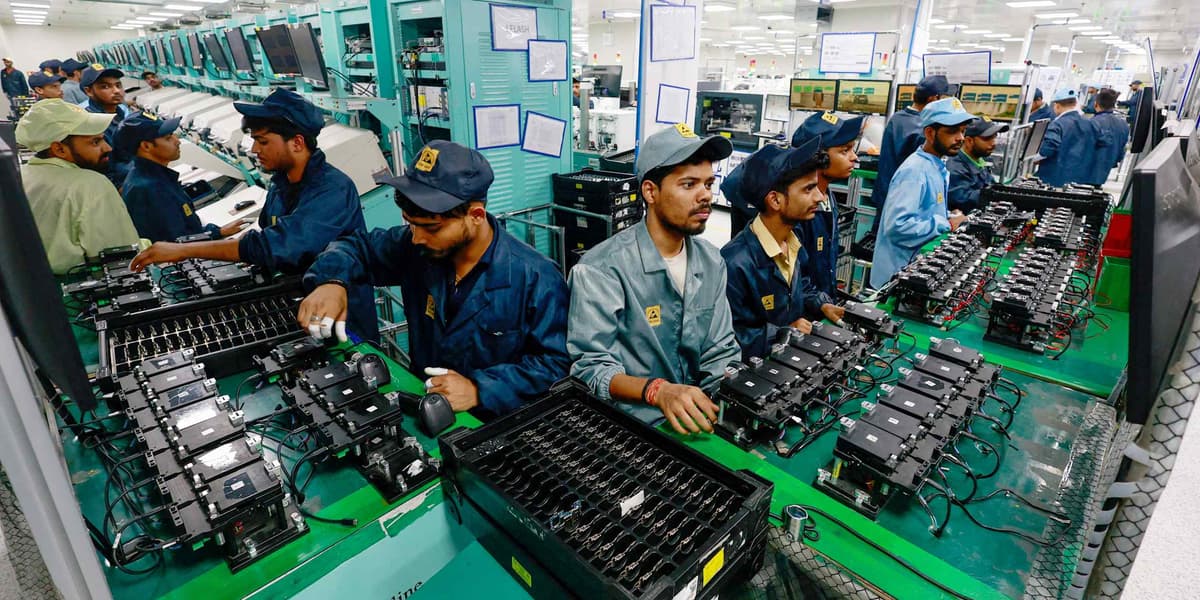
India Increases Use of Foreign Players to Move up Electronics Value Chain
Why It Matters
Elevating the electronics value chain strengthens India’s export potential and reduces reliance on low‑cost assembly hubs, reshaping global supply dynamics.
Key Takeaways
- •India offers tax breaks and subsidies for foreign electronics firms
- •TDK, Dixon Technologies, HKC form joint ventures to produce advanced modules
- •Talent gaps and low R&D spending still hinder domestic innovation
- •Government aims to shift from assembly to design and testing
- •Increased foreign participation could boost India's export share in electronics
Pulse Analysis
India’s electronics manufacturing ecosystem has long been dominated by contract assembly for multinational brands, a model that delivers volume but little intellectual property or design capability. Recognizing this limitation, the government launched the Production Linked Incentive (PLI) scheme and a series of tax concessions to encourage higher‑value activities such as component fabrication, system integration and R&D. The policy shift aligns with the broader ‘Make in India’ agenda, which seeks to capture a larger slice of the $1.2 trillion global electronics market and reduce the country’s dependence on imported finished goods.
Foreign firms have responded quickly, attracted by the promise of subsidies covering up to 30 % of capital expenditure and five‑year tax holidays on profits from value‑added activities. Japan’s TDK secured a PLI grant to expand its capacitor production, while Indian assembler Dixon Technologies entered a joint venture with China‑based HKC Overseas to manufacture display modules under the same incentive framework. These collaborations give foreign partners access to India’s low‑cost labor pool and a growing domestic market, while Indian firms gain technical know‑how and supply‑chain depth that were previously unavailable.
The influx of overseas players also spotlights persistent challenges. India still grapples with a shortage of skilled engineers and limited corporate R&D spending, which could curb the speed at which design and testing capabilities mature. Nonetheless, the government’s focus on talent development—through scholarships, industry‑academia consortia and upgraded lab infrastructure—aims to close that gap. If successful, the combined effect of foreign investment and homegrown expertise could lift India’s electronics export share from roughly 2 % today to double digits by 2030, reshaping regional supply chains.
India increases use of foreign players to move up electronics value chain
Comments
Want to join the conversation?
Loading comments...