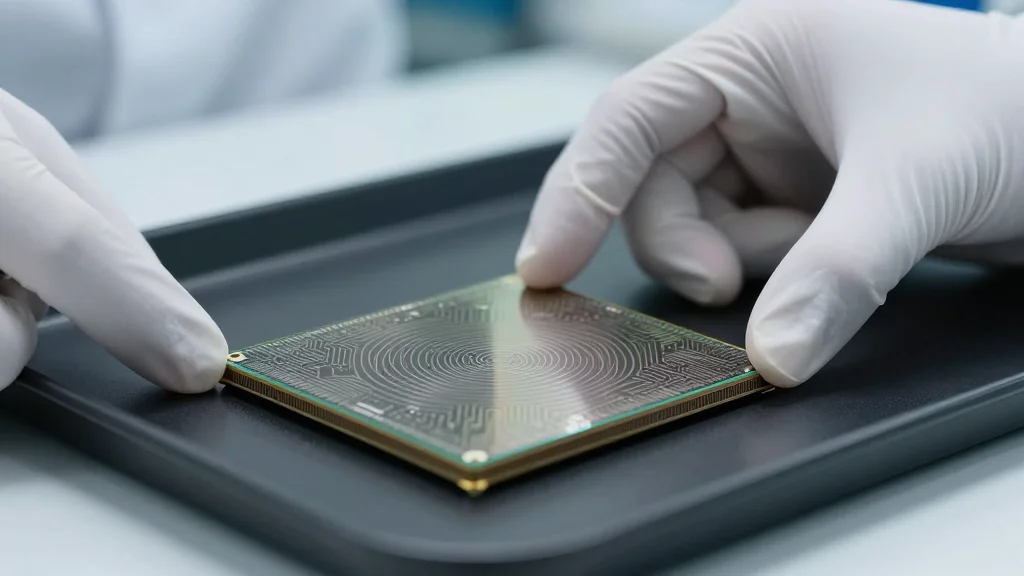
Intel Apple Chip Pact Tests Valuation As U.S. Foundry Ambitions Grow
Why It Matters
The pact aligns Intel’s foundry ambitions with U.S. supply‑chain security goals, offering a high‑profile customer that could accelerate domestic chip production. Success could reshape market dynamics and investor sentiment toward U.S. semiconductor manufacturing.
Key Takeaways
- •Apple's preliminary deal pushes Intel into high‑volume consumer chip foundry
- •U.S. policy incentives aim to cut reliance on Taiwan manufacturing
- •Intel shares trade 28% above target despite overvaluation signals
- •Volume, pricing, and capex details will dictate impact on Intel's P/E
- •Strong 30‑day momentum may mask longer‑term execution risks
Pulse Analysis
The United States is intensifying its push for a sovereign semiconductor supply chain, and the Intel‑Apple agreement is a flagship example. By committing to fabricate Apple‑designed processors on American soil, Intel taps into a lucrative consumer market while satisfying policy objectives that prioritize domestic capacity and reduce geopolitical risk. The collaboration also signals to other OEMs that Intel’s foundry services are maturing beyond its traditional PC and data‑center focus, potentially opening doors to a broader range of high‑volume customers.
From an investor standpoint, the news arrives at a time when Intel’s shares are trading well above analyst price targets and appear significantly overvalued by valuation models. Nonetheless, the stock has posted a 58.8% gain over the past month, reflecting bullish momentum that may be driven by expectations of new revenue streams. Analysts will scrutinize the forthcoming details—such as the volume of Apple chips, pricing structures, and the capital expenditures required to meet advanced node demands—to gauge whether the partnership can justify the premium valuation and improve Intel’s price‑to‑earnings ratio relative to the 61.7× industry average.
Looking ahead, the deal’s success hinges on execution risk and the broader policy environment. Continued U.S. subsidies and tax incentives could offset the high capex needed for cutting‑edge fabs, but any delays or cost overruns could erode confidence. Moreover, the partnership may pressure rivals like TSMC and Samsung to accelerate their own U.S. investments, potentially reshaping the global foundry landscape. For Intel, delivering on the Apple agreement could cement its credibility as a true third‑party foundry, while failure could reinforce doubts about its ability to compete at the highest technology nodes.
Intel Apple Chip Pact Tests Valuation As U.S. Foundry Ambitions Grow
Comments
Want to join the conversation?
Loading comments...