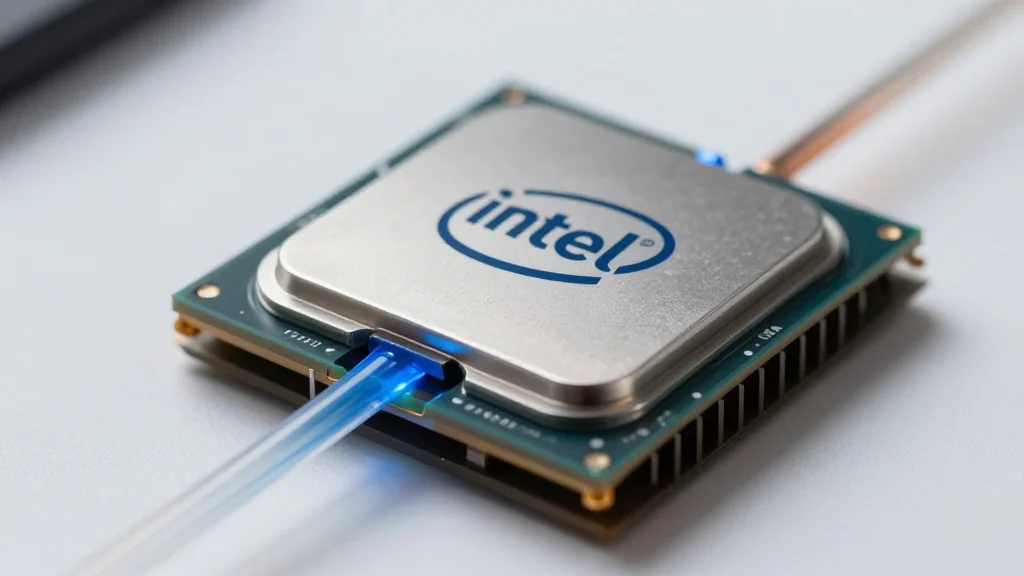
Intel Deepens Multi-Year Partnership with Google on AI‑focused Cloud Hardware

Companies Mentioned
Why It Matters
The Intel‑Google pact underscores a strategic shift toward vertically integrated AI hardware in the cloud. By tying Xeon CPUs—or comparable Intel silicon—to Google’s AI services, the two firms aim to reduce reliance on foreign fabs and lock in performance‑critical workloads. Co‑developing custom IPUs could give Google a differentiated compute layer that rivals Nvidia’s GPUs, potentially reshaping pricing and performance dynamics in the hyperscale market. For the broader hardware ecosystem, the deal highlights the growing importance of advanced packaging as a revenue driver for foundries. Intel’s ability to offer EMIB and Foveros solutions directly to cloud providers may spur other chipmakers to accelerate their own 3D‑stacking roadmaps, intensifying competition in a segment that has traditionally been dominated by TSMC.
Key Takeaways
- •Intel and Google expand multi‑year AI hardware partnership, adding custom IPU development.
- •Intel shares rose 2.9% to $64.17 after the announcement, reflecting investor optimism.
- •Advanced packaging talks could generate the first $1 billion‑plus of annual foundry revenue for Intel.
- •The deal aligns with Intel’s 18A node rollout and Gaudi 3 AI accelerator launch.
- •First‑quarter earnings on April 23 will provide the first financial glimpse of the partnership’s impact.
Pulse Analysis
Intel’s renewed focus on advanced packaging and custom silicon for cloud AI marks a decisive pivot from its earlier wafer‑centric strategy. By leveraging EMIB and Foveros, Intel can offer differentiated, high‑bandwidth interconnects that are attractive to U.S. hyperscalers wary of supply‑chain disruptions. The partnership with Google not only secures a marquee customer but also creates a joint development pipeline that could produce a Google‑specific IPU architecture, a move that directly challenges Nvidia’s dominance in AI training and inference.
Historically, Intel’s cloud CPU business has been a steady, if unspectacular, revenue stream. The new co‑development effort suggests a willingness to move up the value chain, capturing design‑win royalties and potentially higher‑margin packaging services. If the custom IPUs achieve performance parity with GPUs at lower power envelopes, Google could lower its operating costs and differentiate its AI offerings, pressuring competitors to accelerate their own ASIC programs.
However, the success of this collaboration hinges on execution. Intel must deliver on its aggressive 18A node timeline while scaling advanced‑packaging capacity at Fab 34. Google, meanwhile, needs to integrate the new silicon into its sprawling cloud infrastructure without disrupting existing workloads. Any delay could erode the market’s enthusiasm, especially as rivals like Amazon Web Services and Microsoft Azure are also courting bespoke AI chips. The upcoming earnings release will be a litmus test: strong guidance could validate the partnership’s commercial viability, while muted results may signal that the hardware bet is still years away from profitability.
Overall, the Intel‑Google agreement illustrates how the hardware layer is becoming the new battleground for AI supremacy. Companies that can combine cutting‑edge process technology, advanced packaging, and tailored silicon design are poised to capture the most lucrative slice of the AI cloud market, and Intel’s gamble may well determine whether it reclaims a leadership role in the post‑Moore era.
Intel deepens multi-year partnership with Google on AI‑focused cloud hardware
Comments
Want to join the conversation?
Loading comments...