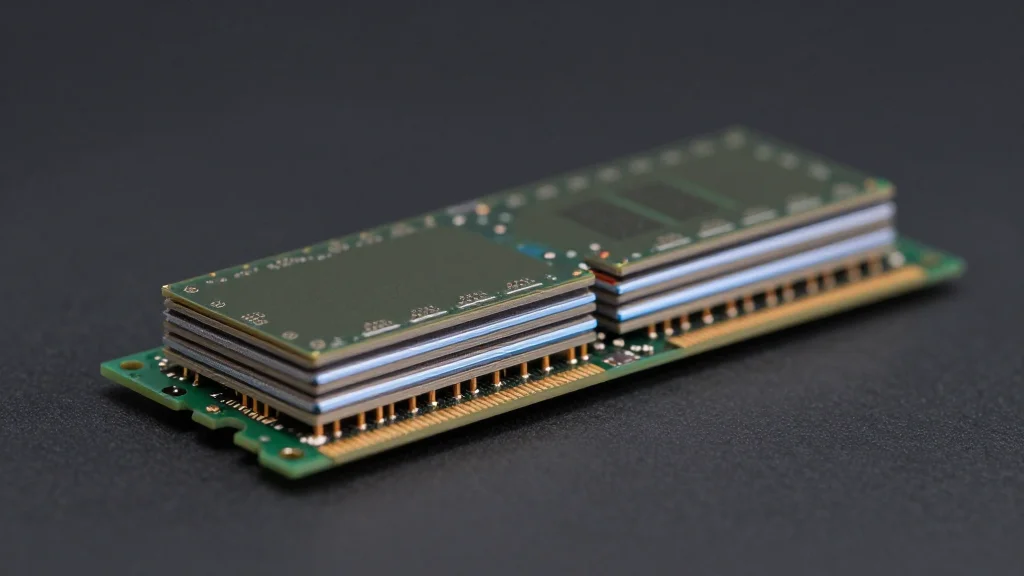
Memory Has Grown to Nearly Two-Thirds of AI Chip Component Costs

Companies Mentioned

Why It Matters
The surge in memory costs reshapes AI‑chip economics, squeezing margins and forcing cloud providers to allocate more capital to component pricing, which could slow AI deployment or spur alternative designs.
Key Takeaways
- •HBM accounts for 63% of AI chip spend by Q4 2025.
- •HBM spend rose to $32 billion in 2025, up $20 billion YoY.
- •Logic‑die share stayed flat near 13% despite overall growth.
- •Advanced packaging share fell from 19% to 15% in two years.
- •Microsoft and Meta budget $35 billion extra for component price hikes.
Pulse Analysis
The rapid ascent of high‑bandwidth memory (HBM) as the dominant cost driver in AI chips reflects both soaring demand for data‑intensive workloads and a constrained supply chain. HBM’s superior bandwidth‑to‑power ratio makes it essential for training large language models, but its complex manufacturing process limits output, pushing prices upward. Between 2024 and 2025, HBM’s share of total component spend rose from just over half to nearly two‑thirds, and its dollar value more than doubled, outpacing growth in logic dies and packaging.
Cloud giants are feeling the pinch, as illustrated by Microsoft’s $190 billion FY 2026 capital budget, which earmarks roughly $25 billion for higher component prices, and Meta’s $10 billion capex increase for the same reason. These adjustments signal that memory cost inflation is now a material line item in corporate planning, potentially eroding profit margins on AI services. Companies may respond by negotiating longer‑term supply contracts, investing in alternative memory technologies, or redesigning chips to reduce HBM density without sacrificing performance.
The broader market will likely see ripple effects. Memory suppliers such as Micron and SK Hynix could capture higher pricing power, but sustained demand may also attract new entrants and spur capacity expansion, eventually easing price pressure. Meanwhile, chip designers like Nvidia, AMD, Google and Amazon might explore chiplet architectures or advanced packaging to balance cost and performance, or shift toward lower‑cost DRAM where feasible. Investors should watch how these strategic choices influence AI compute pricing, supply‑chain resilience, and the competitive dynamics of the rapidly expanding generative‑AI ecosystem.
Memory has grown to nearly two-thirds of AI chip component costs
Comments
Want to join the conversation?
Loading comments...