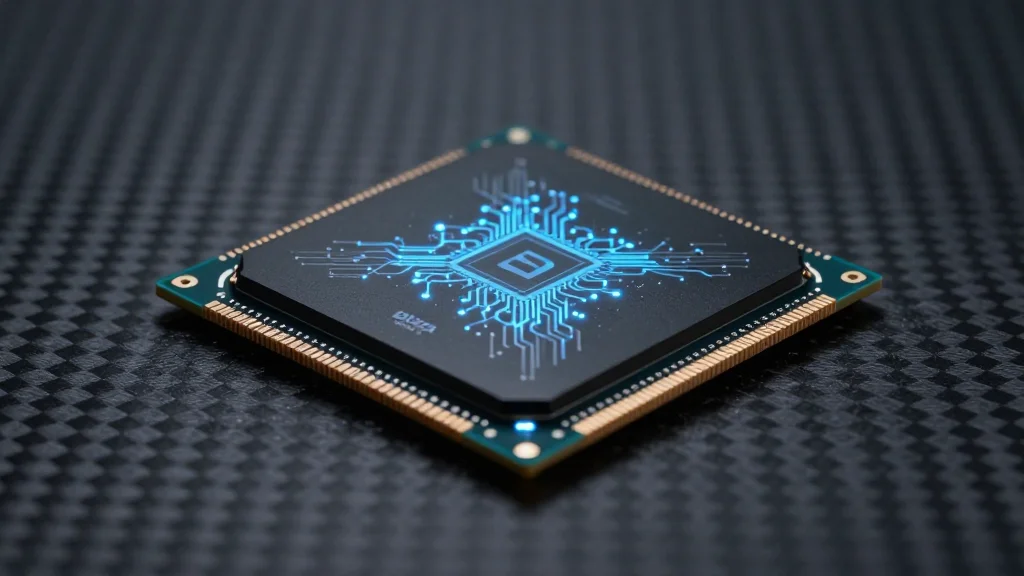
NVIDIA Ships Vera, Its First AI‑agent CPU, to Anthropic, OpenAI, SpaceXAI and Oracle

Companies Mentioned


Why It Matters
Vera introduces a purpose‑built CPU for the emerging class of agentic AI, a segment that places unprecedented real‑time, low‑latency demands on compute. By delivering a processor that can handle concurrent tool calls, retrieval operations and reinforcement‑learning loops, NVIDIA is positioning itself to dominate the full stack of AI infrastructure, not just the GPU‑centric portion. This could accelerate the deployment of autonomous agents in enterprise, research and space‑flight applications, reshaping how AI workloads are architected. The hardware also signals a strategic pivot for NVIDIA: moving from a pure GPU play to a heterogeneous compute model. If successful, Vera could open new revenue channels, force competitors to develop comparable CPUs, and push cloud providers to offer mixed‑node instances that blend NVIDIA’s GPU and CPU technologies. The ripple effect may accelerate standards for agentic workloads and drive a wave of software innovation to exploit the new CPU capabilities.
Key Takeaways
- •NVIDIA delivered Vera CPUs to Anthropic, OpenAI, SpaceXAI and Oracle in May 2026.
- •Vera features 88 Olympus cores, 1.2 TB/s memory bandwidth and 50% faster per‑core performance.
- •Ian Buck described the launch as a "new CPU moment" for agentic AI.
- •Anthropic’s James Bradbury highlighted Vera’s role in scaling compute for large models.
- •Vera marks NVIDIA’s first CPU product, expanding its AI hardware portfolio beyond GPUs.
Pulse Analysis
NVIDIA’s decision to launch Vera reflects a broader industry realization that AI agents are straining traditional CPU designs. While GPUs excel at parallel matrix math, the orchestration layer—handling API calls, context retrieval, and real‑time decision loops—still relies heavily on general‑purpose cores. By engineering a CPU that prioritizes low‑latency, high‑throughput task switching, NVIDIA is effectively creating a new performance tier that could become the de‑facto standard for agentic AI workloads.
Historically, NVIDIA’s strength has been in scaling GPU performance, but the company has faced criticism for a perceived lack of CPU offerings. Competitors like AMD have introduced Instinct CPUs, and cloud giants such as Amazon and Google have rolled out custom silicon to address similar needs. Vera’s early adoption by high‑profile labs suggests that NVIDIA’s integration of its own CPU with its mature GPU ecosystem offers a compelling value proposition: tighter hardware‑software co‑design, unified driver stacks, and the ability to leverage NVLink‑style interconnects for ultra‑fast CPU‑GPU communication.
Looking ahead, the success of Vera will hinge on software adoption. NVIDIA must deliver robust toolchains—compilers, schedulers, and libraries—that can transparently offload agentic tasks to the CPU without sacrificing developer productivity. If the ecosystem coalesces, Vera could become a cornerstone of the next generation of AI factories, driving a shift toward heterogeneous compute platforms where CPUs and GPUs are no longer separate silos but tightly coupled partners in delivering autonomous intelligence.
NVIDIA ships Vera, its first AI‑agent CPU, to Anthropic, OpenAI, SpaceXAI and Oracle
Comments
Want to join the conversation?
Loading comments...