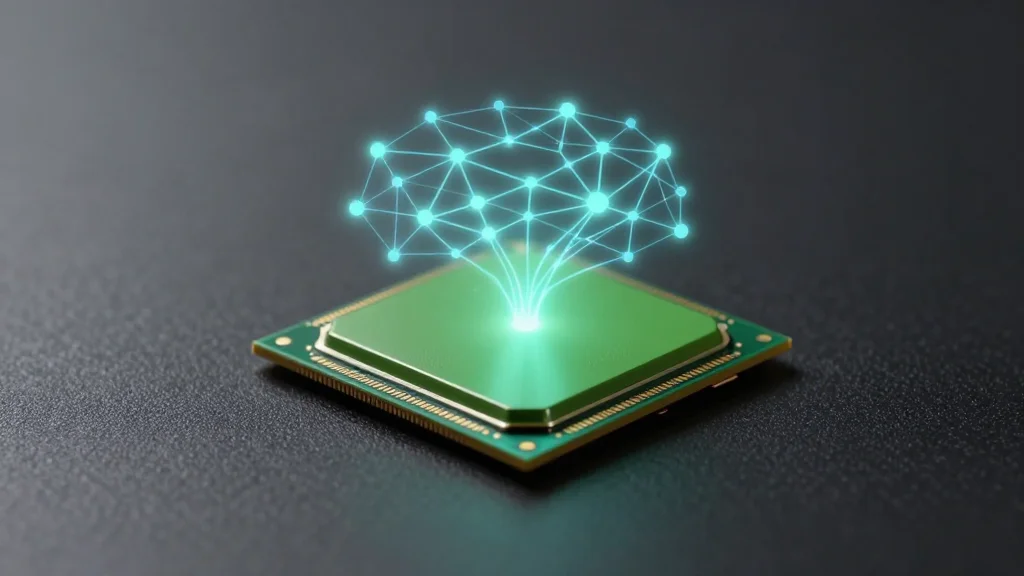
Nvidia Unveils AI Chip to Bring Agents Directly to PCs
Companies Mentioned


Why It Matters
On‑device AI agents could reshape personal computing by reducing reliance on cloud services, creating new hardware demand and opening a multi‑hundred‑billion‑dollar market for chipmakers. Nvidia’s move accelerates competition and signals a shift toward edge‑centric AI architectures.
Key Takeaways
- •Nvidia launches RTX Spark chip for on‑device AI agents.
- •Vera CPU targets $200 bn AI agent market.
- •AMD, Intel, Qualcomm stocks dip after Nvidia announcement.
- •Microsoft shares rise, buoyed by AI partnership.
- •Nvidia pledges $150 bn annual investment in Taiwan.
Pulse Analysis
The RTX Spark chip marks a turning point for consumer PCs, moving AI from data‑center clouds to the edge of the device. By processing prompts and autonomous agents locally, users can expect faster response times, lower latency, and reduced bandwidth costs. This capability also addresses privacy concerns, as sensitive data can stay on the hardware rather than traversing the internet. Nvidia’s partnership with Microsoft and MediaTek highlights a collaborative ecosystem that could set new standards for AI‑enabled operating systems, challenging AMD, Intel and Apple to accelerate their own edge‑AI roadmaps.
Analysts estimate the emerging market for AI agents and dedicated processors to exceed $200 billion, a figure Nvidia cited during its keynote. The Vera CPU, designed specifically for running complex agents, complements the RTX Spark by providing a unified hardware stack for both graphics and AI workloads. The announcement triggered immediate market reactions: shares of competing chipmakers fell, while Microsoft’s stock rose on the perceived boost to its AI software suite. Investors are watching how quickly OEMs adopt the technology, as early adopters could gain a competitive edge in performance‑critical applications such as gaming, content creation, and enterprise productivity tools.
Beyond the hardware, Nvidia’s $150 billion annual investment pledge in Taiwan underscores the strategic importance of the island’s semiconductor ecosystem. By anchoring R&D and manufacturing there, Nvidia aims to secure a reliable supply chain for advanced AI silicon amid geopolitical tensions. The company also dismissed fears that AI will cut software‑engineer jobs, arguing that new agentic tools will actually increase hiring. As the industry labels 2026 the "year of agents," the shift toward always‑on, autonomous AI on personal devices could redefine the human‑computer interface, prompting a wave of software innovation and new business models centered on edge intelligence.
Nvidia unveils AI chip to bring agents directly to PCs
Comments
Want to join the conversation?
Loading comments...