Nvidia's Exposure to Asian Supply Chains for Components Hits 90% of Its Production Costs — Marked Increase From 65% Could Intensify as Physical AI Adds Even More Exposure
Companies Mentioned


Why It Matters
The heightened Asian exposure raises geopolitical and supply‑chain risk for Nvidia’s high‑margin data‑center and emerging AI hardware lines, potentially affecting revenue stability. Investors and partners must watch how quickly Nvidia can scale U.S. packaging to mitigate those risks.
Key Takeaways
- •Asian suppliers now account for 90% of Nvidia's production costs.
- •Physical AI products compete for TSMC's 3nm wafer capacity.
- •LPDDR5X memory constraints force early retirement of older Jetson modules.
- •U.S. packaging facilities remain under‑scale, delaying supply‑chain diversification.
Pulse Analysis
Nvidia’s supply chain has become markedly more Asia‑centric, with 90% of production costs now tied to Taiwanese and South Korean vendors. This jump from 65% a year earlier reflects the company’s rapid rollout of physical‑AI hardware that relies on the same advanced nodes and memory technologies as its data‑center GPUs. The concentration amplifies exposure to regional disruptions, trade policy shifts, and capacity bottlenecks, prompting analysts to reassess risk premiums on Nvidia’s earnings outlook.
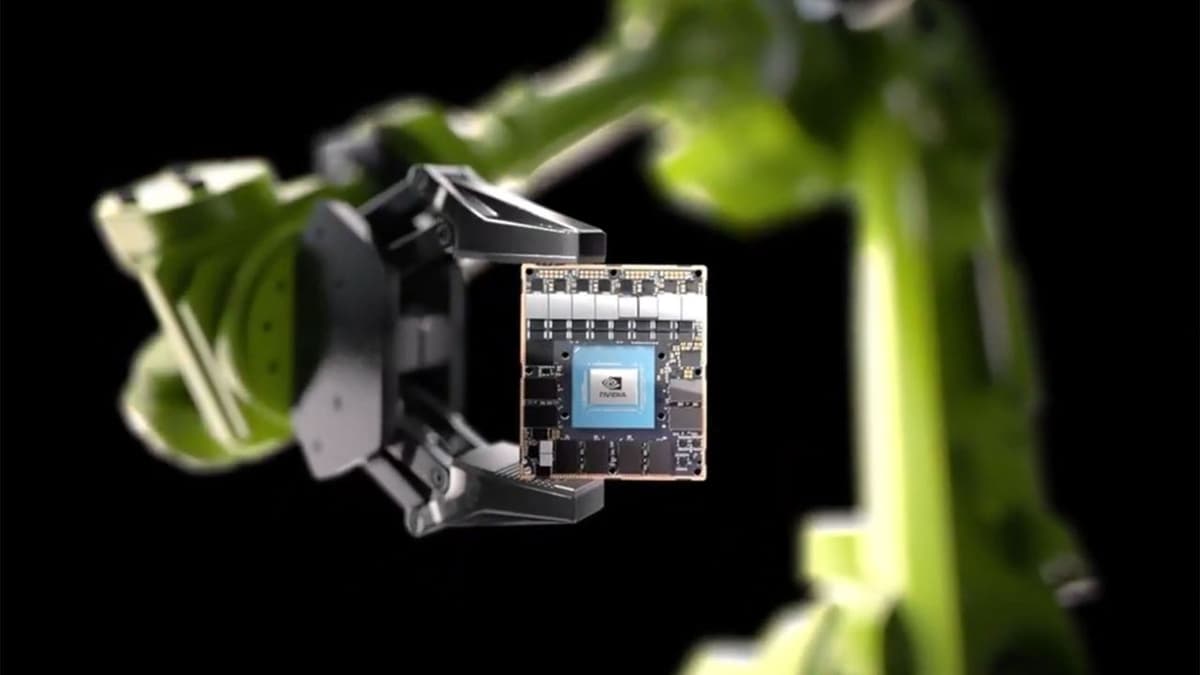
The launch of the Jetson Thor robotics platform and the DRIVE AGX Thor automotive SoC has intensified demand for TSMC’s 3 nm wafers and high‑bandwidth LPDDR5X memory sourced from Samsung and SK hynix. These products vie directly with Blackwell data‑center GPUs for limited fab starts, while older Jetson modules are being retired because LPDDR4 supply has dried up. The resulting memory squeeze forces customers onto newer, higher‑margin modules, but also tightens the supply pipeline for Nvidia’s broader AI ecosystem, potentially slowing adoption rates if component shortages persist.
Nvidia’s $500 billion commitment to U.S. server manufacturing signals a strategic push to diversify away from Asian dependence, yet domestic advanced‑packaging facilities are still ramping up. Foxconn, Wistron, Amkor and SPIL are building capacity in Arizona, but full‑scale production remains months away, meaning most chips still ship back to Taiwan for CoWoS packaging. Until these plants reach operational maturity, Nvidia will continue to shoulder significant supply‑chain risk, a factor investors will monitor closely as the company expands its physical‑AI portfolio.
Nvidia's exposure to Asian supply chains for components hits 90% of its production costs — marked increase from 65% could intensify as physical AI adds even more exposure
Comments
Want to join the conversation?
Loading comments...