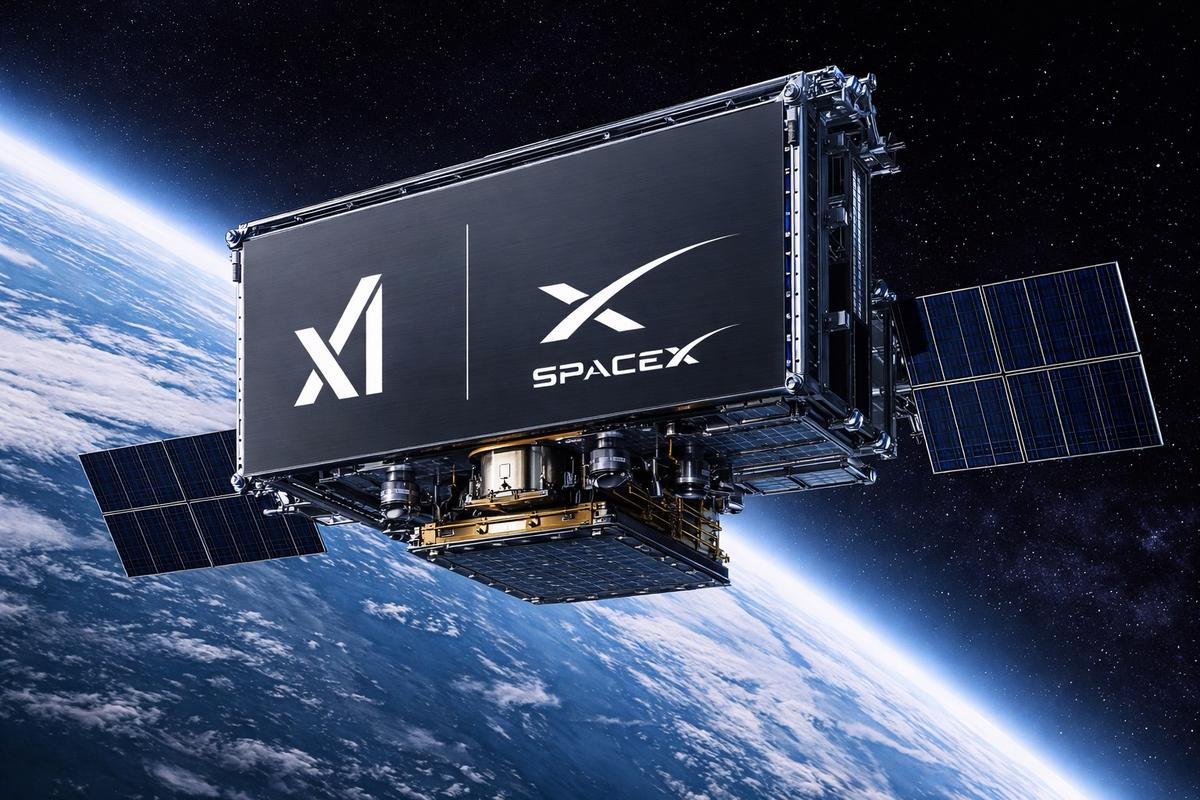
SpaceX Terafab Shows Where the AI Money Is Really Going



Why It Matters
The filing signals that AI investment is moving toward owning the chips, data centers, and power needed to run large models, reshaping competitive dynamics and bolstering U.S. strategic hardware capacity. Success would create a new, infrastructure‑based moat for investors and for firms that rely on AI compute.
Key Takeaways
- •SpaceX proposes $55bn Texas chip fab, expandable to $119bn.
- •Facility targets AI compute bottleneck, linking rockets, Starlink, xAI.
- •Musk eyes $60bn Cursor acquisition, or $10bn partnership option.
- •Texas reinvestment zone may grant property‑tax abatements for the project.
- •Success would give SpaceX strategic leverage over AI supply chain.
Pulse Analysis
The AI boom that began with cloud‑based models and chatbots is now spilling into bricks‑and‑mortar investments. Venture capital that once chased software demos is funding multi‑billion‑dollar semiconductor fabs, power contracts, and cooling infrastructure. Industry giants from Nvidia to TSMC have announced new plants, while U.S. policy, including the CHIPS Act, incentivizes domestic capacity to reduce reliance on overseas supply chains. This macro shift underscores that the true competitive advantage in AI will increasingly be measured in megawatts of power and wafer‑per‑month output rather than algorithmic novelty.
SpaceX’s Terafab proposal leverages Musk’s vertically integrated ecosystem. The company already controls launch services, satellite broadband via Starlink, and AI model development through xAI. Adding a massive chip and advanced‑computing facility would close the loop, giving SpaceX direct access to the hardware that powers its own AI products and the broader market. The Texas reinvestment zone offers potential property‑tax abatements, aligning public‑policy incentives with private capital. Moreover, the optional $60 billion acquisition of Cursor—or a $10 billion partnership—could embed a developer‑toolchain directly into the hardware stack, further differentiating SpaceX from pure‑play AI startups.
However, the venture carries classic semiconductor risks: long construction timelines, costly specialized equipment, and exposure to demand volatility. If AI model efficiency improves faster than anticipated or the market overbuilds capacity, the $55‑$119 billion outlay could become a stranded asset. Investors must weigh the strategic upside of owning a critical AI bottleneck against the fixed‑cost burden and regulatory hurdles. In a landscape where chips, power, and land are becoming the new oil, SpaceX’s gamble could either cement a durable moat or illustrate the perils of over‑extending into capital‑intensive infrastructure.
SpaceX Terafab Shows Where the AI Money Is Really Going
Comments
Want to join the conversation?
Loading comments...