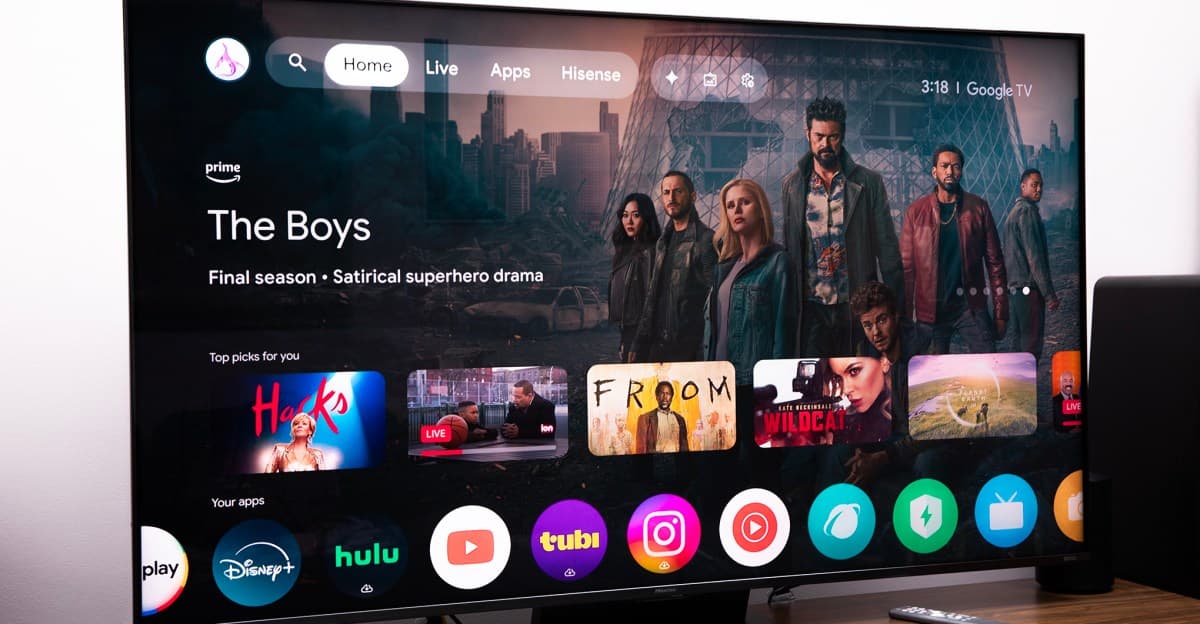
The Hisense UR9 Is a Great First Shot Against OLED’s Bow
Companies Mentioned
Why It Matters
The UR9 demonstrates that RGB LED backlighting can deliver OLED‑level color volume at a comparable price, forcing the premium TV market to reassess value propositions. Its launch signals a potential shift toward brighter, wider‑gamut LCDs as manufacturers seek alternatives to OLED’s contrast advantage.
Key Takeaways
- •UR9 offers 100% BT.2020 color gamut coverage
- •Brightness exceeds 1,000 nits, rivaling high‑end OLEDs
- •Price starts at $3,500, matching flagship OLEDs
- •Motion judder observed during fast camera pans
Pulse Analysis
RGB LED technology represents a hybrid evolution of LCD panels, replacing the traditional white backlight with individual red, green and blue diodes. This architecture enables the Hisense UR9 to hit the full BT.2020 color space, a feat previously limited to high‑cost demo units. Coupled with a peak brightness that tops 1,000 nits, the UR9 delivers HDR images that are both vivid and punchy, especially in well‑lit rooms where OLEDs can dim. The TV also supports Dolby Vision, HDR10+, and a 180 Hz native refresh rate, making it a compelling choice for gamers and cinephiles alike.
In real‑world testing, the UR9’s out‑of‑the‑box calibration produces accurate colors and deep blacks, though it cannot match OLED’s pixel‑level contrast. Reviewers noted occasional motion judder during rapid pans, a typical challenge for LCD‑based panels despite the high refresh rate and FreeSync Premium Pro support. The inclusion of three HDMI 2.1 ports and a USB‑C DisplayPort offers future‑proof connectivity, while the Google TV platform provides a robust app ecosystem. Overall, the picture quality rivals premium OLEDs, but the LCD foundation still suffers from limited viewing angles and some blooming, especially in high‑contrast scenes.
From a market perspective, Hisense’s pricing strategy—$3,500 for a 65‑inch unit—directly challenges LG and Samsung’s flagship OLEDs, which sit at similar price points. By delivering a brighter, wider‑gamut display at a comparable cost, the UR9 forces competitors to either lower OLED prices or accelerate their own RGB LED development. While OLED retains an edge in contrast, the UR9’s blend of brightness, color volume, and gaming features positions RGB LED as a viable alternative for consumers prioritizing HDR performance over absolute black levels. As more content creators adopt BT.2020, RGB LED panels like the UR9 could become the new premium standard, with OLED likely retaining its niche for cinema‑grade contrast.
The Hisense UR9 is a great first shot against OLED’s bow
Comments
Want to join the conversation?
Loading comments...