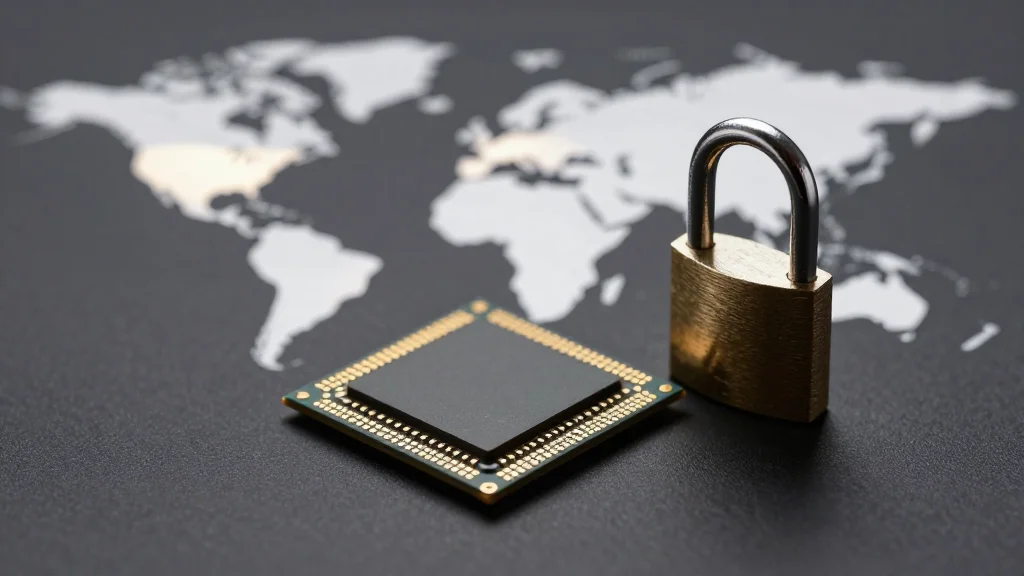
U.S. Blocks Nvidia AI Chip Shipments to Chinese Subsidiaries Outside China

Companies Mentioned
Why It Matters
The new guidance tightens U.S. control over the most powerful AI processors, directly affecting Nvidia’s market access to one of its fastest‑growing customer bases. By extending licensing to Chinese subsidiaries abroad, Washington aims to curb the rapid development of Chinese generative‑AI models that could have national‑security implications. The policy also underscores a broader shift toward stricter technology export regimes, influencing global supply‑chain strategies and prompting non‑U.S. chipmakers to reassess their exposure to Chinese markets. For the hardware ecosystem, the move could accelerate investment in domestic Chinese chip programs, alter the competitive balance between Nvidia and rivals like AMD, and increase compliance costs for all firms handling advanced semiconductors. It may also spur diplomatic friction as China pushes back against what it sees as an overreach of U.S. export controls, potentially leading to retaliatory measures that could ripple through the broader semiconductor industry.
Key Takeaways
- •U.S. Commerce Department mandates export licenses for Nvidia Blackwell chips sent to Chinese subsidiaries outside China.
- •Guidance clarifies rules in place since 2023, citing need to safeguard critical American technology.
- •Industry source estimates hundreds of thousands of chips may have been exported via the loophole.
- •Nvidia says the rule does not change its existing obligations but blocks unlicensed shipments.
- •Analysts warn the policy could reshape AI‑chip market dynamics and spur Chinese domestic chip development.
Pulse Analysis
Washington’s decision to extend export‑license requirements to overseas Chinese subsidiaries marks a decisive escalation in the technology‑security tug‑of‑war that has defined U.S.-China relations for the past decade. Historically, export controls focused on shipments directly to entities within China; this new guidance acknowledges that modern supply chains are increasingly multinational, allowing firms to sidestep restrictions by routing products through third‑country subsidiaries. By plugging that gap, the Commerce Department not only narrows a specific avenue for chip leakage but also signals to the broader industry that compliance will be scrutinized at every node of the value chain.
For Nvidia, the policy could shave a measurable portion off its projected AI‑chip revenue for 2026‑27, especially as the Blackwell family is positioned as the flagship platform for next‑generation generative‑AI workloads. The company’s reliance on a relatively small set of high‑margin customers in China means that any licensing bottleneck could translate into delayed shipments, higher costs, and potentially lost market share to rivals willing to navigate the regulatory maze more adeptly. AMD’s silence suggests it may be weighing its own exposure, but the broader market will likely see a slowdown in the flow of cutting‑edge AI silicon to Chinese research labs.
Strategically, the move may accelerate China’s push for self‑sufficiency in AI hardware, a goal articulated in its "Made in China 2025" roadmap. If Chinese firms are forced to source domestically or turn to alternative, possibly less efficient, architectures, the global AI performance gap could widen, granting the U.S. a temporary advantage in high‑end AI compute. However, the policy also risks prompting retaliatory measures, such as tighter export controls on U.S. semiconductor equipment or increased subsidies for Chinese chip fabs. The net effect will depend on how quickly Chinese manufacturers can scale indigenous production and whether allied nations align with the U.S. stance or adopt a more permissive approach to maintain their own market share in the booming AI hardware sector.
U.S. Blocks Nvidia AI Chip Shipments to Chinese Subsidiaries Outside China
Comments
Want to join the conversation?
Loading comments...