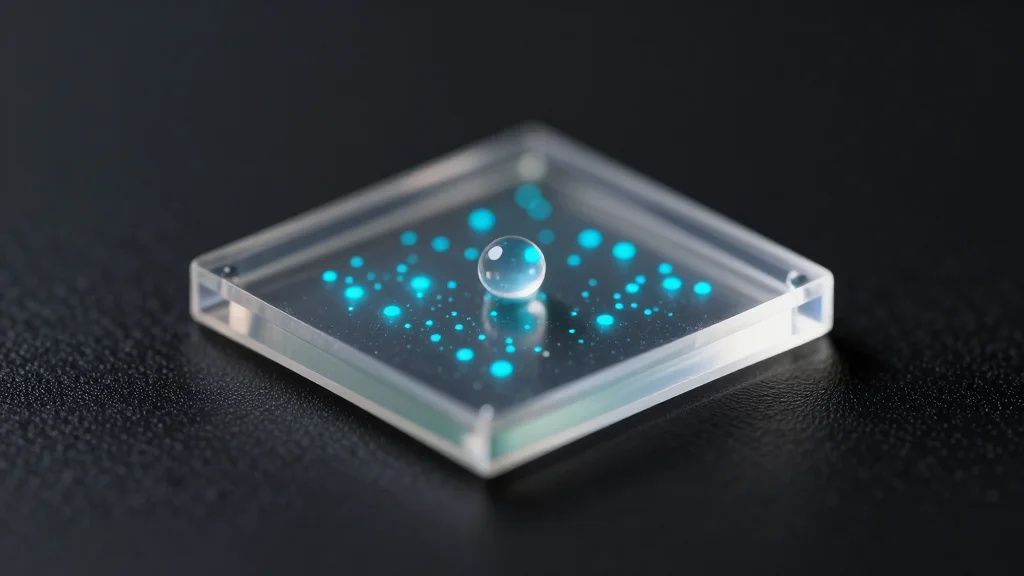
Deep Learning-Powered Biochip to Detect Genetic Markers

Why It Matters
The ability to rapidly, accurately, and multiplexedly quantify microRNAs could transform early disease detection and personalized medicine, offering clinicians a non‑invasive tool for screening and monitoring. It also opens a fast, low‑cost pathway for pharmaceutical companies to evaluate miRNA‑targeted therapies.
Key Takeaways
- •Biochip detects multiple microRNAs in 20 minutes without PCR
- •AI Mask R-CNN analyzes thousands of signals in a single snapshot
- •Detection limit reaches a few molecules with >99% accuracy
- •Prototype integrates nanophotonic chip, colour camera, and mobile app
- •Potential for non‑invasive screening of cancers, cardiovascular and viral diseases
Pulse Analysis
The discovery of microRNAs as master regulators of gene expression earned the 2024 Nobel Prize and has spurred a wave of research into their diagnostic potential. Because microRNAs circulate in minute quantities in blood, saliva or urine, traditional assays such as quantitative PCR require labor‑intensive amplification and can take several hours to deliver results. Clinicians have long sought a faster, label‑free method that can simultaneously profile dozens of markers, a capability that would accelerate early detection of cancers, heart disease and emerging viral threats.
NTU’s new platform tackles those challenges with a hybrid of nanophotonics and deep‑learning. A nanocavity etched onto a silicon chip traps light and amplifies fluorescence when a target microRNA binds to a complementary probe, making single‑molecule events visible. A compact colour camera captures the entire array in one frame, and a Mask R‑CNN model automatically segments, counts and classifies each fluorescent spot. In validation studies the system identified three lung‑cancer‑associated microRNAs at concentrations as low as a few molecules, delivering >99 % classification accuracy in under 20 minutes—far faster than PCR.
The implications extend beyond the lab. A mobile‑app interface means point‑of‑care testing could become as simple as placing a drop of blood on a chip and scanning it with a smartphone, opening pathways for large‑scale screening programs and real‑time monitoring of treatment response. Pharmaceutical firms could use the technology to screen miRNA‑based drug candidates more efficiently, while healthcare providers may integrate it into personalized‑medicine workflows. As regulatory frameworks evolve for AI‑driven diagnostics, NTU’s biochip positions itself as a scalable, cost‑effective solution poised to reshape molecular testing markets.
Deep learning-powered biochip to detect genetic markers
Comments
Want to join the conversation?
Loading comments...