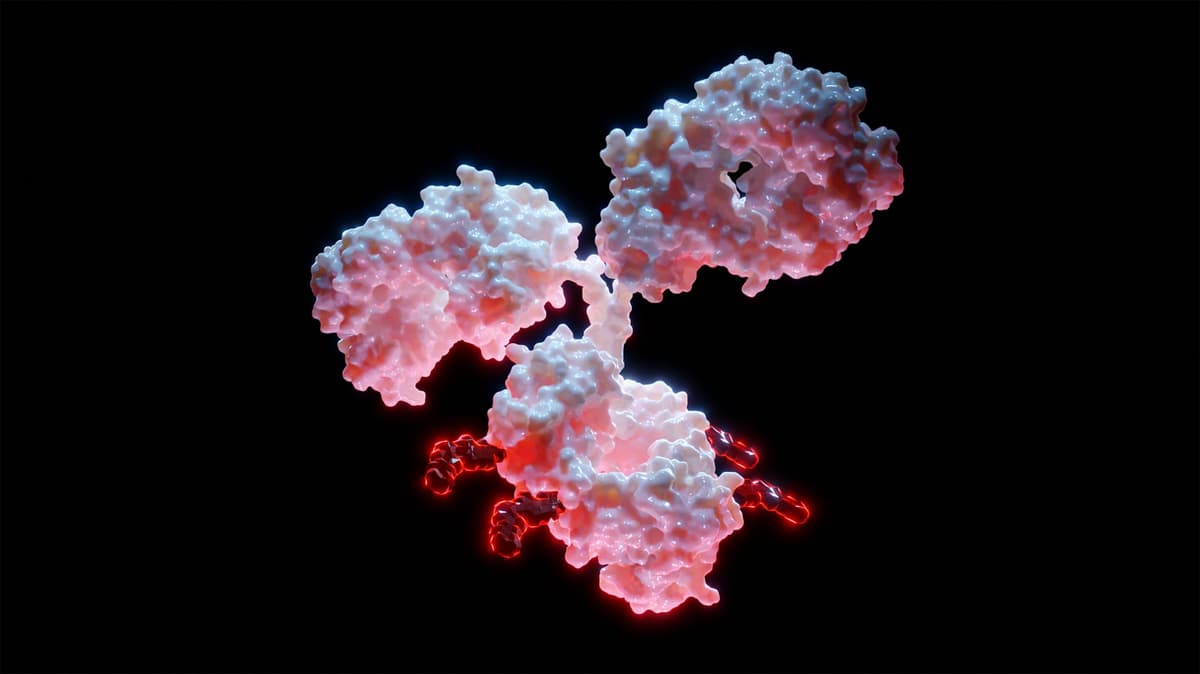
Alphamab Oncology to Present Phase 1 Data on Bispecific ADC JSKN016 in HER2-Negative Breast Cancer at ASCO 2026
Why It Matters
Early efficacy signals in a hard‑to‑treat HER2‑negative cohort could expand ADC therapy beyond HER2‑positive disease, offering new options for patients with limited alternatives.
Key Takeaways
- •JSKN016 targets TROP2 and HER3 with a topoisomerase I payload
- •Phase 1 data show antitumor activity in heavily pretreated HER2‑negative patients
- •Site‑specific glycosylation yields a homogeneous DAR of four, improving stability
- •Company plans combination trials and a Phase 3 TNBC study to expand use
Pulse Analysis
The emergence of bispecific antibody‑drug conjugates marks a pivotal shift in oncology, especially for HER2‑negative breast cancer, a segment that has historically lacked targeted therapies. While HER2‑positive tumors have benefited from ADCs like trastuzumab‑deruxtecan, HER2‑negative patients rely on chemotherapy and endocrine agents, often with modest durability. JSKN016’s dual‑target approach—simultaneously engaging TROP2 and HER3—addresses two pathways that drive proliferation and resistance, positioning the molecule to fill a critical therapeutic gap.
Technically, JSKN016 differentiates itself through a site‑specific glycosylation conjugation platform that delivers a consistent drug‑to‑antibody ratio (DAR) of four. This homogeneity enhances pharmacokinetic stability and reduces off‑target toxicity, challenges that have hampered earlier ADC generations. The payload, a topoisomerase I inhibitor, induces DNA damage once internalized, offering a potent cytotoxic mechanism while the bispecific binding improves tumor selectivity. Early Phase 1 data from Chinese patients reveal objective responses even after multiple lines of therapy, suggesting a favorable therapeutic window for a population with few options.
Strategically, Alphamab’s roadmap extends beyond monotherapy. By integrating JSKN016 into chemotherapy, immunotherapy, and other targeted regimens, the company aligns with a broader industry trend of combining ADCs with immune modulation to amplify efficacy. The planned Phase 3 trial in triple‑negative breast cancer underscores confidence in the platform’s scalability. If subsequent studies confirm the initial promise, JSKN016 could catalyze a wave of bispecific ADC development, reshaping treatment algorithms and creating significant market opportunities in a high‑unmet‑need space.
Alphamab Oncology to Present Phase 1 Data on Bispecific ADC JSKN016 in HER2-Negative Breast Cancer at ASCO 2026
Comments
Want to join the conversation?
Loading comments...