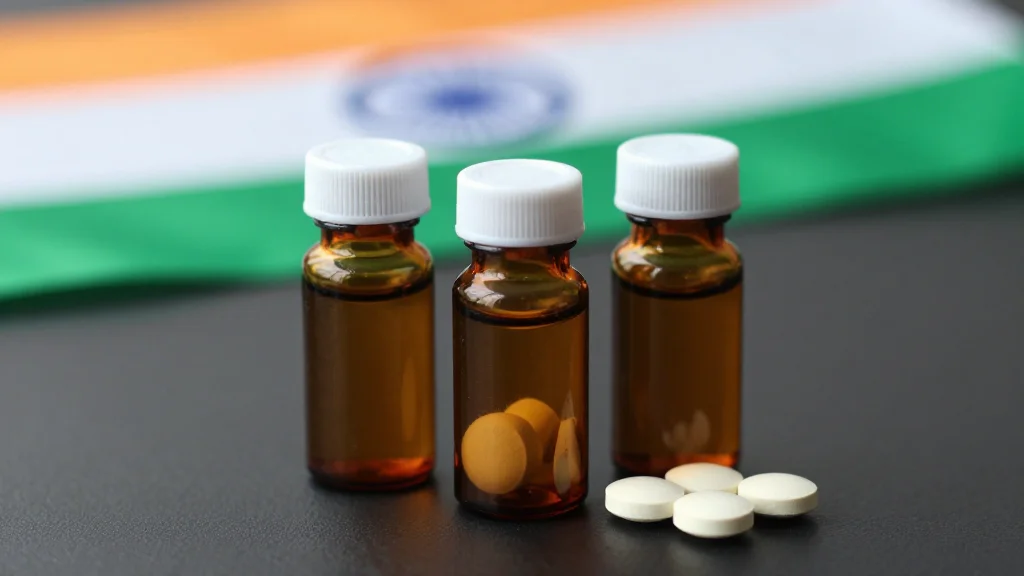
GLP-1 Goes For The Middle
Why It Matters
The shift to affordable Indian generics democratizes obesity and diabetes treatment, opening a massive middle‑class market while pressuring multinational pricing power. Investors and policymakers must watch the ensuing consolidation that will shape India’s $10‑plus billion GLP‑1 market.
Key Takeaways
- •Generics seized over 15% GLP‑1 market share in ten days
- •Novo's semaglutide share dropped from 98% to 76% in March
- •Indian generics price a month’s GLP‑1 treatment at $16‑$24
- •Strategic alliances help Indian firms reach 50,000 diabetes doctors
- •Market expected to narrow to 5‑8 generic players within six months
Pulse Analysis
The global GLP‑1 wave, ignited by Eli Lilly’s Mounjaro and Novo Nordisk’s Ozempic, has found a new engine in India’s cost‑conscious market. With the semaglutide patent lapsing, domestic manufacturers can produce bio‑equivalent versions at a fraction of the price, leveraging India’s scale‑driven manufacturing and a vast pool of 100 million diabetics and 250 million obese consumers. This price disruption is not merely a discount; it reshapes prescribing habits, as physicians now have credible, low‑cost alternatives that meet regulatory standards, accelerating adoption beyond urban centers.
Pricing is the linchpin of the generics surge. A month’s supply of Indian‑made semaglutide costs roughly $16‑$24, compared with Novo’s $68 baseline dose. Coupled with aggressive doctor‑targeted education programs and patient‑support ecosystems, these firms are expanding reach to an estimated 10,000‑15,000 prescribers, up from the previous 1,200‑1,500 core. Strategic alliances—such as Dr Reddy’s + USV and Zydus + Torrent—multiply market coverage, allowing firms to tap into regional networks and overcome the limitations of mass‑media campaigns that multinational brands once dominated.
Looking ahead, the Indian GLP‑1 arena is poised for rapid consolidation. Analysts predict that within six months only five to eight generic brands will retain sufficient pricing power, doctor relationships, and brand trust to dominate. This winnowing will likely cement a dual‑track market: premium multinational products for high‑income patients and affordable generics for the price‑sensitive middle. Stakeholders—from investors to health‑policy makers—must monitor pricing dynamics, alliance structures, and regulatory shifts, as they will dictate the long‑term profitability and accessibility of obesity and diabetes therapies in one of the world’s largest emerging markets.
GLP-1 Goes For The Middle
Comments
Want to join the conversation?
Loading comments...