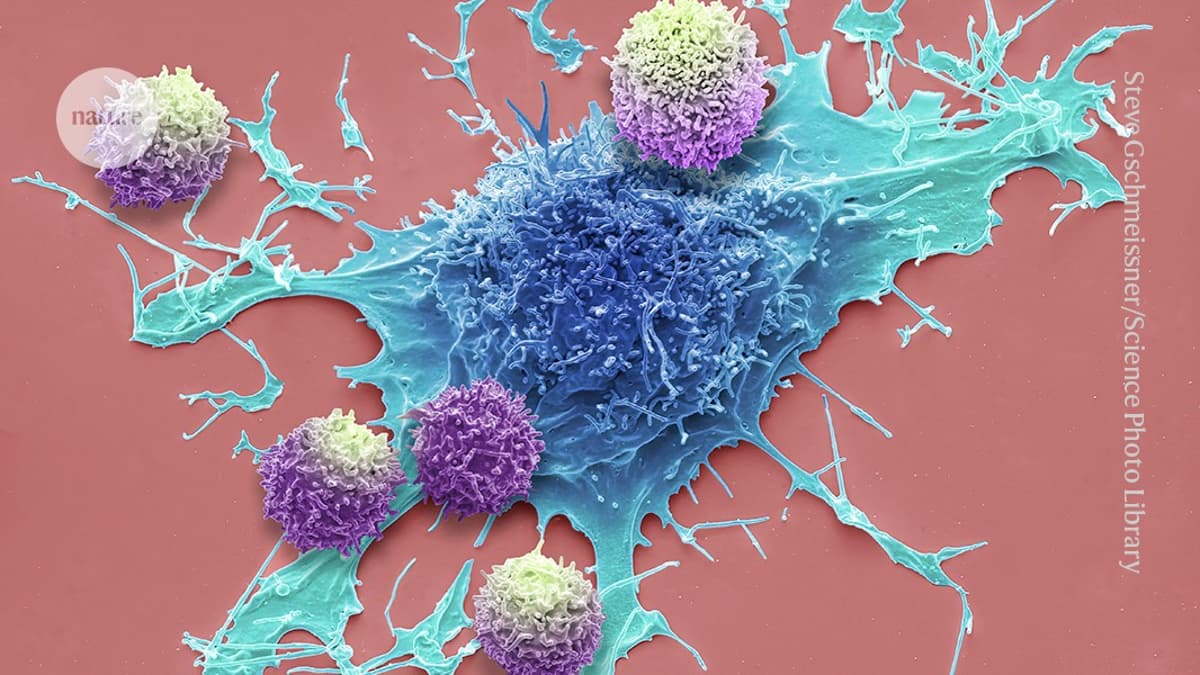
Long-Lived Immune Cells Show Promise Against Cancer in World-First Trial
Why It Matters
The approach could make CAR‑T therapies more effective and less toxic, expanding access for patients who currently have limited options. Success would reshape manufacturing priorities toward stem‑cell memory enrichment, accelerating the immunotherapy market.
Key Takeaways
- •Enriched CAR‑T cells yielded 5 full remissions out of 11 patients
- •Stem‑cell memory T cells increased ten‑fold in the experimental dose
- •Lower cell dose achieved comparable or better tumor control
- •Milder cytokine‑release syndrome observed versus standard CAR‑T
Pulse Analysis
Chimeric antigen receptor (CAR) T‑cell therapy has revolutionized treatment for certain blood cancers, yet its high toxicity and variable response rates limit broader adoption. Traditional manufacturing mixes diverse T‑cell subtypes, many of which lack the durability needed for sustained anti‑tumor activity. Stem‑cell memory T cells—rare, long‑lived cells capable of self‑renewal—have been linked to better outcomes in early studies, prompting researchers to explore whether enriching these cells could boost therapeutic potency.
In the recent Cell‑published trial, investigators amplified the proportion of stem‑cell memory T cells nearly ten‑fold before engineering them with a cancer‑targeting CAR. The resulting product was administered at doses substantially lower than conventional CAR‑T regimens. Remarkably, five of the eleven participants entered complete remission, and side‑effect profiles were notably gentler, with reduced cytokine‑release syndrome. These findings suggest that a higher per‑cell potency can be achieved without escalating toxicity, a critical advantage for patients with fragile health.
If larger, randomized studies replicate these results, the industry may pivot toward manufacturing pipelines that prioritize stem‑cell memory enrichment. Such a shift could lower production costs, shorten treatment timelines, and broaden eligibility for CAR‑T therapy across diverse hematologic malignancies. Investors and biotech firms are likely to watch the upcoming Phase II data closely, as success would cement a new standard for next‑generation cellular immunotherapies.
Long-lived immune cells show promise against cancer in world-first trial
Comments
Want to join the conversation?
Loading comments...