Medicare Advantage Turmoil Continues
Why It Matters
The slowdown signals a market correction that forces insurers, health systems, and policymakers to reassess risk‑sharing models and operational strategies, while the SNP surge offers a niche growth avenue. Understanding these dynamics is crucial for stakeholders aiming to protect revenue and navigate evolving Medicare Advantage regulations.
Key Takeaways
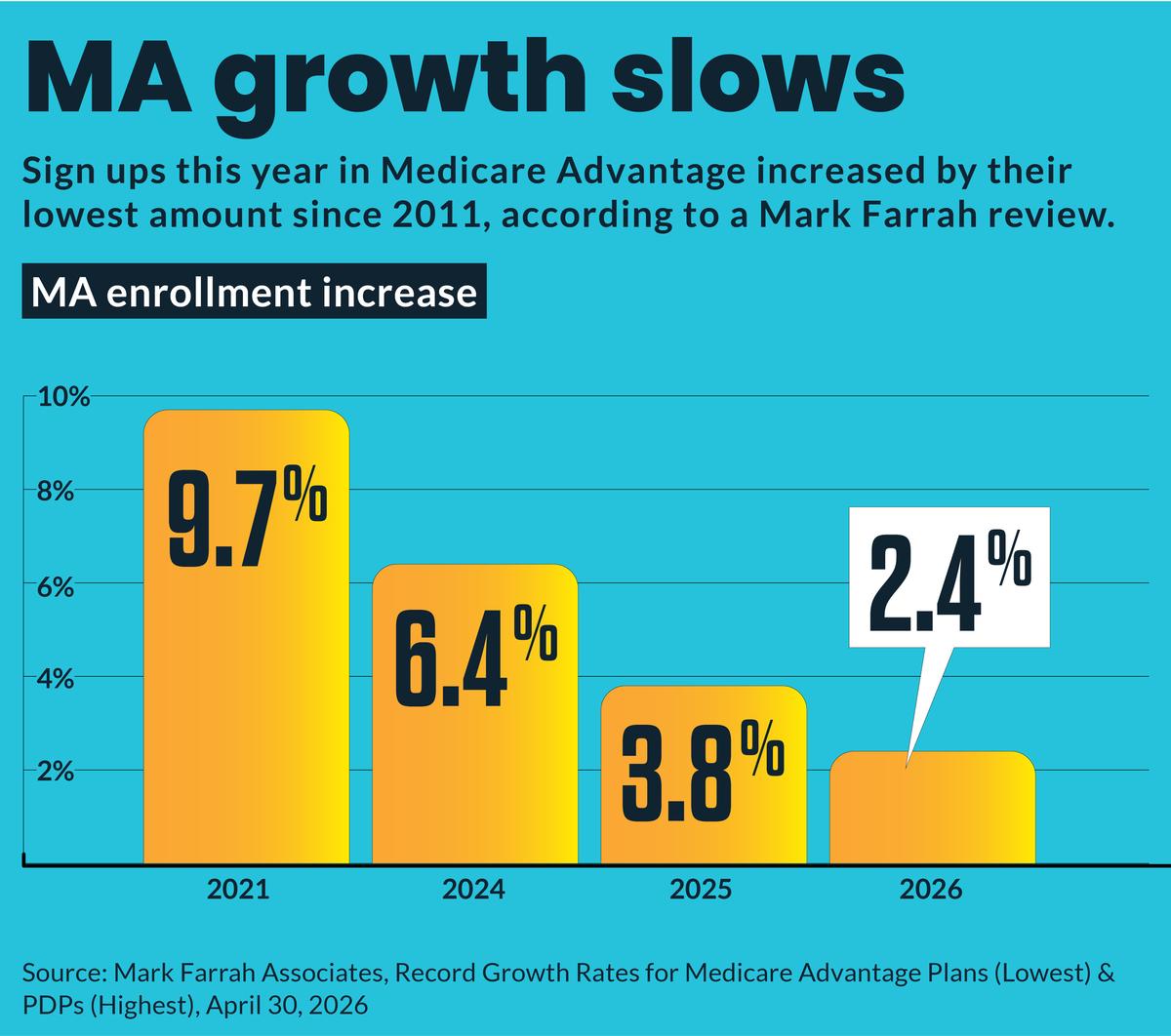
- •MA enrollment grew 2.4% YoY, slowest since 2011
- •UnitedHealthcare exited 109 counties, affecting 180,000 members
- •Six of top‑10 MA carriers posted enrollment declines
- •Humana added 1.3 million new MA enrollees
- •SNPs added 869,000 members, fastest MA segment growth
Pulse Analysis
The latest Medicare Advantage data reveal a clear inflection point. After years of double‑digit growth, enrollment increased a modest 2.4% in the first quarter of 2026, the lowest gain since 2011. Although the program still commands a majority share—over half of the 69.6 million Medicare‑eligible individuals—its momentum is clearly waning. Analysts attribute the slowdown to market saturation and a series of CMS regulatory adjustments that have reshaped plan economics and provider incentives.
Insurers are responding with strategic retrenchments. UnitedHealthcare’s withdrawal from 109 counties across 16 states removed coverage for roughly 180,000 beneficiaries, while six of the top ten MA carriers reported year‑over‑year enrollment drops, resulting in a net gain of only 1.5% for the leading group. At the same time, health systems are terminating contracts with MA plans, citing difficulties in negotiating terms and the impact of the No‑Surprise Act on out‑of‑network payments. The shift from PPOs to HMOs, coupled with CMS‑mandated faster prior‑authorization windows (72 hours for urgent cases), is prompting greater reliance on artificial‑intelligence decision tools to meet compliance timelines.
Amid the turbulence, Special Needs Plans (SNPs) are emerging as a bright spot, adding nearly 869,000 members by April 2026. Their focus on chronic‑condition cohorts creates a lucrative niche for providers equipped with robust population‑health infrastructure. However, the broader MA landscape remains cautious about downside‑risk contracts, with many health‑system CFOs opting out until data‑exchange capabilities improve. As AI‑driven analytics mature, they could lower administrative burdens and make value‑based arrangements more attractive, potentially reshaping the risk‑sharing paradigm in Medicare Advantage over the next few years.
Medicare Advantage turmoil continues
Comments
Want to join the conversation?
Loading comments...