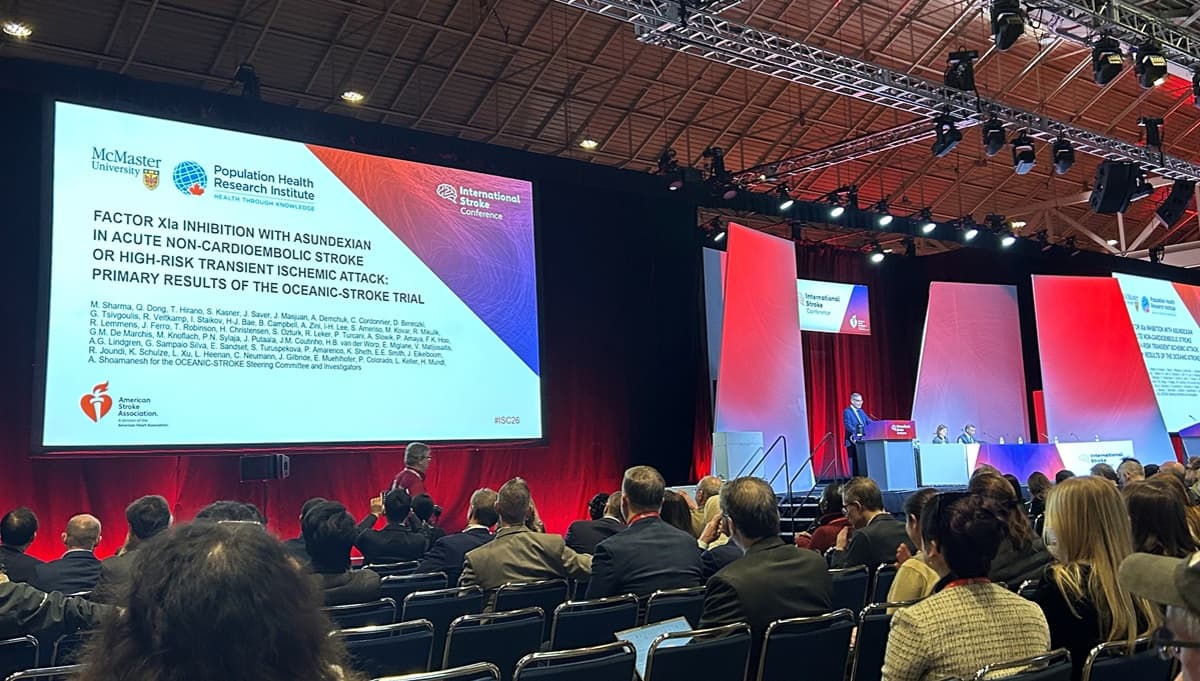
Now Published - OCEANIC-STROKE: Asundexian Prevents Recurrent Strokes, With No Added Bleeding
Companies Mentioned
Why It Matters
Asundexian offers a bleeding‑neutral anticoagulant option, potentially reshaping secondary stroke prevention and expanding clinicians' therapeutic arsenal. Its efficacy could lower long‑term disability and healthcare costs associated with recurrent strokes.
Key Takeaways
- •Asundexian cut ischemic stroke risk to 6.2% vs 8.4%
- •Number needed to treat is 53 for one-year stroke reduction
- •No increase in major bleeding observed with asundexian
- •Trial enrolled 12,237 patients across 37 countries, mean age 68
Pulse Analysis
Secondary stroke prevention has long relied on antiplatelet agents, but clinicians face a trade‑off between reducing clot formation and provoking intracranial bleeding. The unmet need for a therapy that decouples thrombosis from hemostasis has driven interest in factor XIa inhibition, a pathway that interferes with clot propagation while sparing platelet function. Asundexian, an oral, reversible factor XIa inhibitor, emerged from phase II studies with promising safety signals, positioning it as a candidate to fill this therapeutic gap.
The OCEANIC‑STROKE trial delivered robust evidence: over two years, patients receiving asundexian experienced a 26% relative reduction in ischemic stroke (HR 0.74) and similar gains across disabling stroke, cardiovascular death, and composite mortality outcomes. Importantly, the incidence of ISTH‑defined major bleeding was virtually identical to placebo (1.9% vs 1.7%), confirming the drug’s bleeding‑neutral profile. Subgroup analyses showed consistent benefit regardless of age, baseline NIHSS, or antiplatelet regimen, suggesting broad applicability in the non‑cardioembolic stroke population.
If the FDA grants approval, asundexian could become the first oral anticoagulant specifically indicated for secondary stroke prevention without the hemorrhagic penalty of traditional agents. Payers will scrutinize pricing, given the high cost of novel oral anticoagulants, while clinicians will need clear guidelines on patient selection—particularly excluding atrial fibrillation and severe renal impairment. Long‑term durability and real‑world adherence will be critical research areas. Nonetheless, the trial’s findings signal a paradigm shift, offering a safer, more effective option to keep stroke survivors alive and disability‑free.
Now Published - OCEANIC-STROKE: Asundexian Prevents Recurrent Strokes, With No Added Bleeding
Comments
Want to join the conversation?
Loading comments...