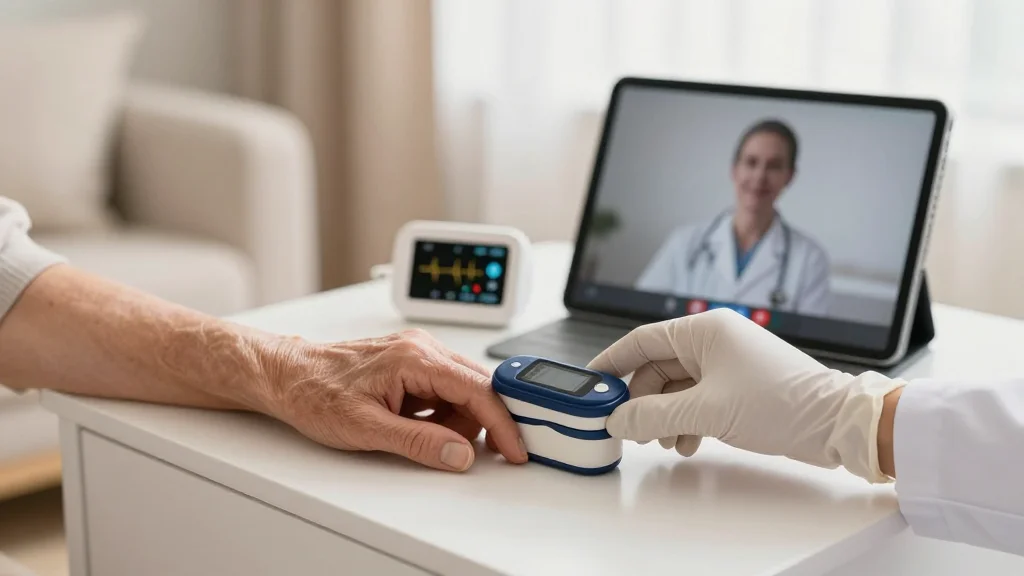
The Global Evolution of Virtual Wards: Five Year Forecast and Strategic Assessment of the NHS, Continental Europe and the United States (2026–2031)
Companies Mentioned

Why It Matters
Standardising and funding virtual wards accelerates cost‑effective acute care at home, reshaping hospital utilisation and patient outcomes globally.
Key Takeaways
- •NHS targets 40 virtual‑ward beds per 100k by 2031
- •US Hospital‑at‑Home waiver secured through 2030
- •Europe market to reach $13.6 bn, 7.1% CAGR
- •AI and RPM cut readmissions and admin time
- •£14 bn saved in UK equals ~$17.8 bn annually
Pulse Analysis
The NHS’s five‑year roadmap pivots around financial devolution to Integrated Care Systems, allowing local leaders to allocate resources where demand is highest while adhering to a strict resource envelope. A standardized procurement framework launched in 2026 will curb regional vendor fragmentation, and the NHS App, slated as the primary digital front door by 2028, will consolidate remote consultations, prescriptions and a single patient record. Together, these moves aim to double virtual‑ward capacity, a shift projected to save roughly £14 bn—about $17.8 bn—each year by reducing unnecessary hospital stays and ambulance dispatches.
In the United States, the Hospital Inpatient Services Modernization Act embedded the Acute Hospital‑at‑Home waiver into the 2026 appropriations bill, providing a stable five‑year horizon for capital investment. As of April 2026, 365 CMS Certification Numbers cover 137 health systems across 37 states, with early adopters reporting up to 44% lower 30‑day readmissions and significant bed‑day savings. Commercial insurers reimburse home‑based acute care at 209% of Medicare rates, underscoring the financial upside for providers willing to integrate remote‑care pathways into their service lines.
Europe’s Hospital‑at‑Home sector is on a rapid growth trajectory, expanding from $8.44 bn in 2024 to an estimated $13.57 bn by 2031. France’s 2026 PLFSS reforms aim to trim healthcare spending by €7.1 bn—approximately $7.7 bn—while still expanding home‑based services. Spain’s Catalonia region has standardized reimbursement using APR‑DRGs, achieving outcomes comparable to inpatient care. The EU‑funded H@H project, backed by a €101 million Horizon Europe grant, will test interoperable digital tools across five hospitals, targeting a 20‑30% cost reduction and a unified cross‑border knowledge hub for acute home care. AI‑driven risk stratification and advanced RPM devices are the technical backbone enabling these clinical transformations across the Atlantic.
The Global Evolution of Virtual Wards: Five Year Forecast and Strategic Assessment of the NHS, Continental Europe and the United States (2026–2031)
Comments
Want to join the conversation?
Loading comments...