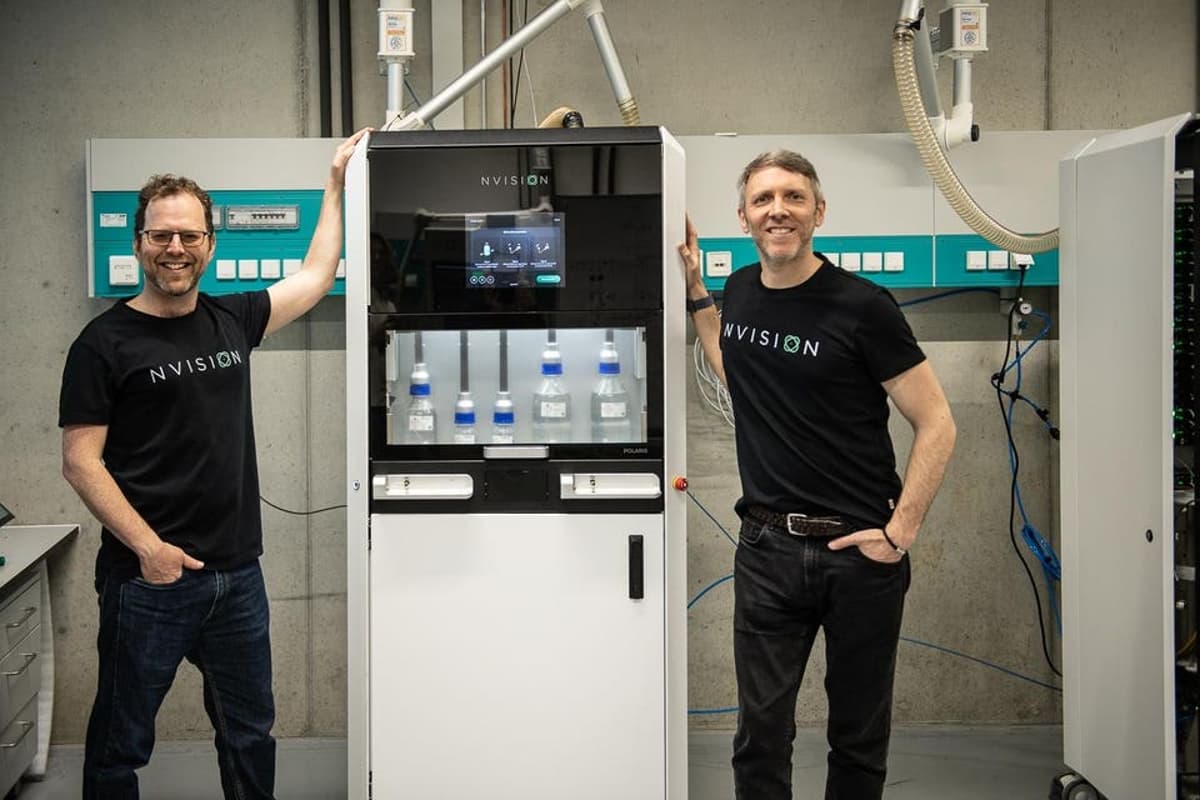
This $250 Million Startup Tracks How Cancer Reacts To Treatment In Real Time
Why It Matters
Real‑time metabolic imaging could cut months from treatment decision cycles, improving outcomes and reducing costly trial-and‑error therapy. The combined imaging and quantum drug‑design approach positions NVision to reshape oncology diagnostics and accelerate pharmaceutical pipelines.
Key Takeaways
- •NVision secured $55 million, $38 million led by Abbott.
- •Metabolic MRI boosts sugar signal 10,000× for real‑time tumor monitoring.
- •Plan to deploy in 20 global cancer centers by year‑end.
- •Quantum computing aims to design drugs for “undruggable” targets.
- •FDA discussions underway; clinical trials targeted for 2027.
Pulse Analysis
NVision’s breakthrough hinges on a quantum‑enhanced metabolic MRI that transforms ordinary scanners into molecular telescopes. By magnetizing glucose molecules, the system generates a signal over 10,000 times stronger than conventional MRI, allowing clinicians to see metabolic shifts within days rather than weeks. This capability addresses a long‑standing gap in oncology: the inability to gauge treatment efficacy early enough to adjust regimens, a factor that often determines patient survival in aggressive cancers such as prostate and pancreatic tumors.
The fresh $55 million infusion, anchored by Abbott’s $38 million commitment, gives NVision the runway to scale its platform from research labs to commercial sites. Abbott’s involvement signals a broader industry shift toward early‑diagnosis tools that integrate seamlessly with existing imaging infrastructure, reducing capital outlay for hospitals. NVision’s roadmap targets 20 premier institutions—including MD Anderson and UCSF—by the end of the year, positioning the company to capture a sizable share of the emerging metabolic imaging market, projected to exceed $1 billion globally within the next five years.
Beyond imaging, NVision is leveraging its quantum expertise to accelerate drug discovery. The same quantum‑engineered hydrogen technology that powers the MRI can be repurposed to simulate molecular interactions for targets deemed "undruggable" by traditional methods. If successful, this could truncate the drug development timeline and lower R&D costs, a compelling proposition for pharmaceutical firms facing mounting pressure to deliver novel therapies. The convergence of real‑time diagnostics and quantum‑driven drug design may set a new standard for precision oncology, prompting competitors to explore similar hybrid models.
This $250 Million Startup Tracks How Cancer Reacts To Treatment In Real Time
Comments
Want to join the conversation?
Loading comments...