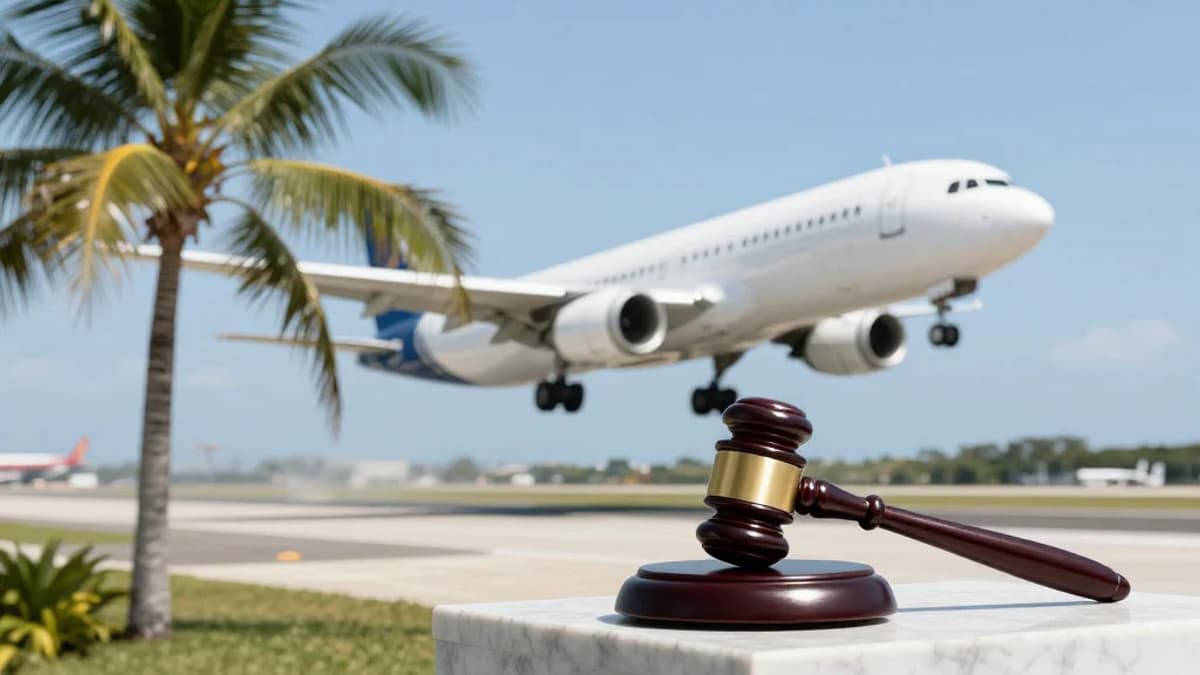
Florida Lawmakers Approve Bill to Rename Palm Beach International Airport After Donald Trump
•February 20, 2026
0
Key Takeaways
- •Senate passed renaming bill 25‑11, all Democrats opposed
- •House approved measure 81‑30 earlier this week
- •Governor DeSantis must sign; FAA approval also required
- •Renaming effective July if law enacted
- •First living politician airport naming in U.S.
Summary
Florida lawmakers have passed legislation to rename Palm Beach International Airport after former President Donald Trump, clearing the Senate 25‑11 and the House 81‑30. The bill now awaits Governor Ron DeSantis' signature and subsequent FAA approval before becoming effective in July. Supporters cite Trump’s Florida residency and ties to the Palm Beach area, while all Democratic votes opposed the measure. If signed, the airport would become the first major U.S. facility named for a living politician.
Pulse Analysis
The decision to rename Palm Beach International Airport reflects a broader trend of leveraging political capital to shape public landmarks. Historically, U.S. airports honor deceased aviators, civic leaders, or geographic features; naming a major gateway after a living former president breaks that convention. This move aligns with Florida’s Republican leadership, which has increasingly highlighted Donald Trump’s residency and economic contributions to the state. By embedding his name in a high‑visibility asset, legislators aim to cement a legacy that extends beyond traditional political arenas.
From an operational standpoint, the rebranding will require extensive coordination with the Federal Aviation Administration, airline partners, and signage vendors. The FAA’s approval is not automatic; it must assess potential safety implications, navigational chart updates, and compliance with international naming standards. Moreover, airlines will need to adjust reservation systems, flight‑plan databases, and marketing materials, incurring costs that could run into millions of dollars. For travelers, the name change may cause short‑term confusion, but long‑term branding could attract tourists drawn by the novelty factor, especially given the airport’s proximity to Mar‑a‑Lago and other Trump‑related attractions.
Politically, the bill serves as a litmus test for Trump’s influence within the Florida GOP and the national conversation about commemorating contemporary figures. Critics argue the renaming politicizes infrastructure and risks alienating segments of the traveling public, while supporters view it as a rightful acknowledgment of Trump’s economic impact on the state. The outcome may inspire similar initiatives in other states, prompting a reevaluation of naming policies for public facilities nationwide.
Comments
Want to join the conversation?