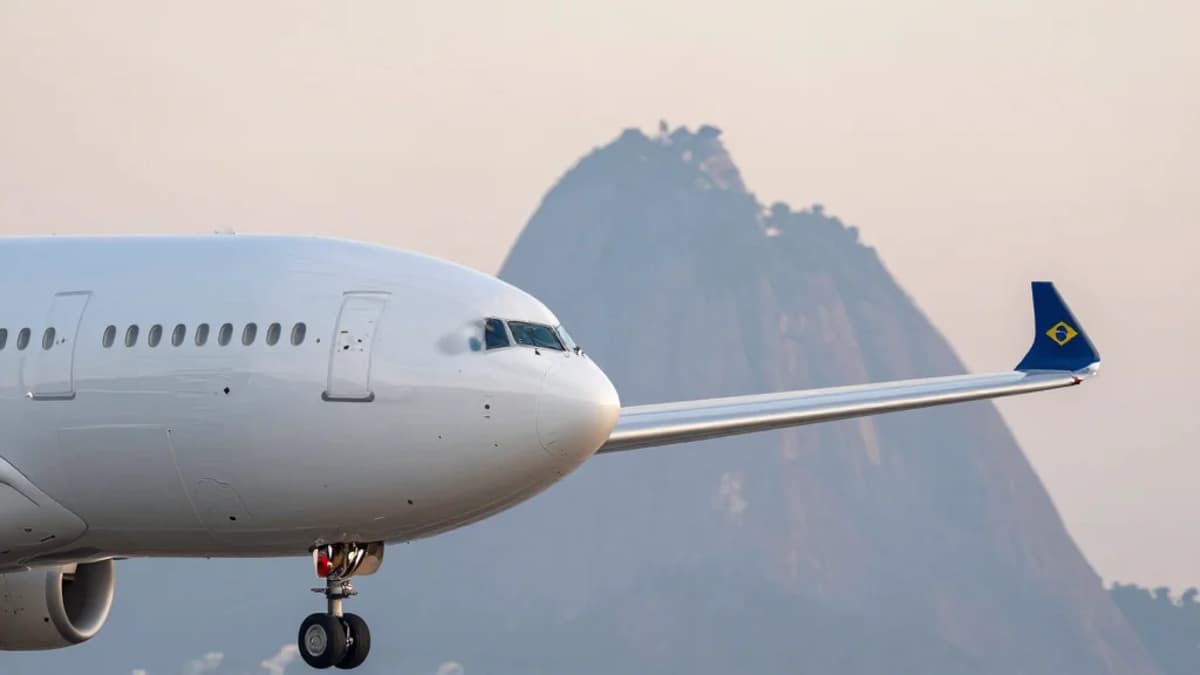
GOL Introduces Airbus A330neos to Launch Long-Haul Flights From Brazil
•March 6, 2026
0
Key Takeaways
- •GOL to receive up to five A330-900s by 2027.
- •Widebody jets enable Brazil‑Europe and Brazil‑US routes.
- •ACMI wet‑lease with Wamos Air adds operational flexibility.
- •A330neo improves fuel efficiency, lowers emissions per seat.
- •GOL expands beyond 737 fleet, targeting long‑haul growth.
Summary
Brazilian carrier GOL Linhas Aéreas announced it will acquire up to five Airbus A330‑900neo aircraft, slated for delivery in 2026‑27, to launch its first long‑haul international services. The wide‑body jets, seating nearly 300 passengers and capable of 15‑hour flights, will allow GOL to connect major Brazilian hubs with Europe and the United States. GOL also secured an ACMI wet‑lease agreement with Wamos Air to provide crew and support during the rollout, while emphasizing fuel‑efficiency and lower emissions. The move follows a recent financial restructuring and aims to capture growing Latin American travel demand.
Pulse Analysis
The Latin American aviation market has been on an upward trajectory, driven by rising middle‑class incomes and a surge in international tourism. GOL Linhas Aéreas, Brazil’s second‑largest carrier, has traditionally focused on short‑haul routes with an all‑Boeing 737 fleet. By introducing the Airbus A330‑900neo, the airline is making a decisive shift toward long‑haul operations, a segment historically dominated by legacy carriers such as LATAM and Avianca. This strategic diversification aligns with the region’s post‑pandemic recovery and offers Brazilian travelers direct access to European and North American hubs without relying on code‑share partners.
The A330‑900neo brings a 25 % improvement in fuel burn compared with previous‑generation wide‑bodies, translating into lower per‑seat operating costs—a critical factor for a low‑cost carrier. With a capacity of roughly 300 seats and a range exceeding 7,000 nautical miles, the aircraft can comfortably serve nonstop routes such as São Paulo to Madrid or New York. GOL’s ACMI agreement with Wamos Air adds further flexibility, allowing the carrier to scale capacity quickly while mitigating crew training and maintenance overhead. This wet‑lease model also spreads risk during the early phases of route development.
By entering the long‑haul arena, GOL not only diversifies its revenue streams but also strengthens Brazil’s global connectivity, a priority for both tourism and trade ministries. The new aircraft could enable the airline to compete on price and frequency against established transatlantic players, potentially reshaping market dynamics on routes like São Paulo‑Lisbon or GRU‑Miami. If demand materializes as projected, GOL’s strategy may prompt other regional low‑cost carriers to consider wide‑body expansions, accelerating the shift toward more affordable intercontinental travel across Latin America.
Comments
Want to join the conversation?