UK Airport Hopes Hydrogen-Powered Ground Equipment Will Cut Emissions
•March 4, 2026
0
Key Takeaways
- •Exeter runs two-week winter hydrogen GSE trial.
- •Dual‑fuel GPU tested in cold, inclement weather.
- •April trial proved hydrogen’s decarbonisation potential.
- •Storage and safety gaps remain for large‑scale use.
- •Results will guide future airport hydrogen regulations.
Summary
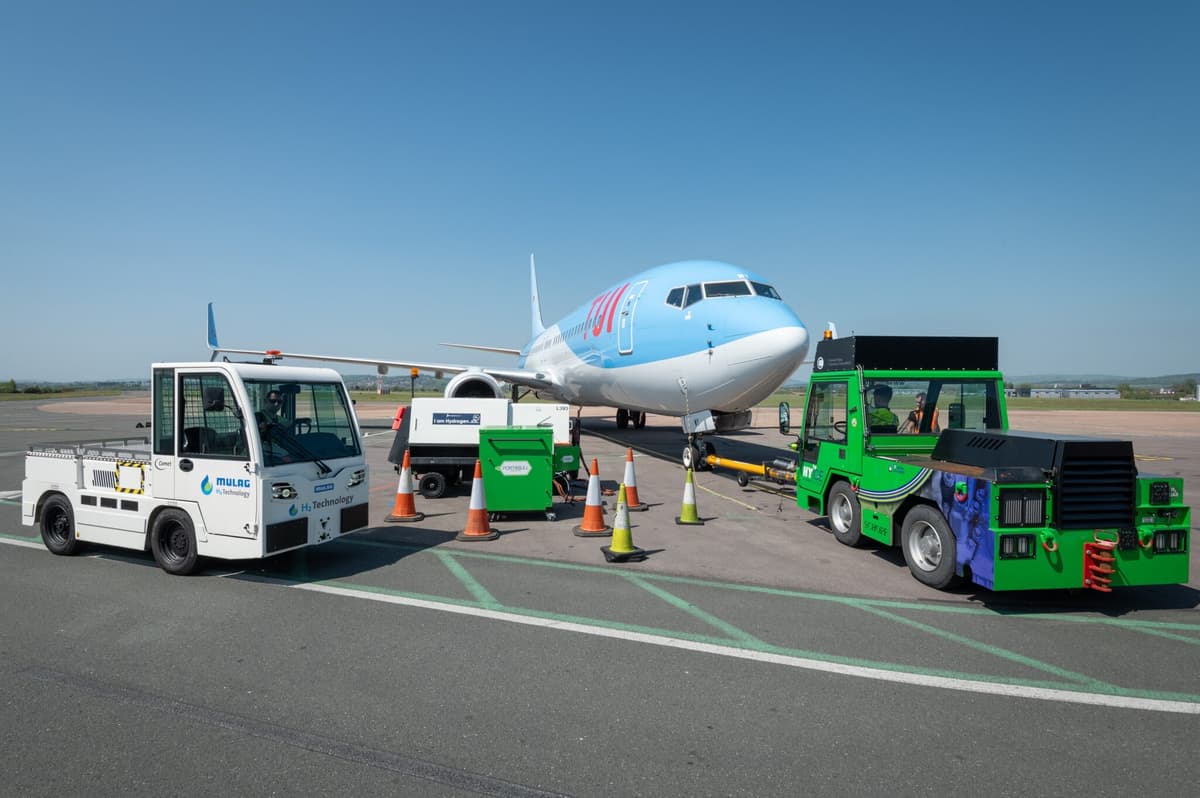
Exeter Airport in the UK is conducting a second two‑week winter trial of hydrogen‑powered ground support equipment, focusing on a dual‑fuel (hydrogen/diesel) ground power unit operating in cold, inclement weather. The trial follows an April test that deployed a hydrogen GPU, a hydrogen‑combustion push‑back tug, and a fuel‑cell baggage tractor during a live TUI 737‑800 turnaround. Findings from the April Zero Carbon Turn project showed hydrogen’s decarbonisation promise but highlighted significant gaps in safe storage and handling at scale. Supported by Cranfield University, ULEMCo and the UK CAA, the data will inform future hydrogen applications and regulatory frameworks.
Pulse Analysis
Hydrogen‑powered ground support equipment (GSE) is emerging as a practical low‑hang‑fruit for airport decarbonisation. Exeter Airport’s latest winter trial, backed by Cranfield University and the UK Civil Aviation Authority, pushes a dual‑fuel GPU through real‑world conditions such as sub‑zero temperatures and night‑time operations. By capturing performance metrics on fuel efficiency, emissions reductions, and equipment reliability, the project builds a data‑driven case for scaling hydrogen GSE beyond pilot demonstrations.
The Exeter initiative sits within a growing European momentum. EasyJet’s 2024 hydrogen refuelling trial at Bristol and Austrian Airlines’ hydrogen generator pilot at Vienna both demonstrated feasibility but also underscored persistent challenges: safe on‑site hydrogen storage, refuelling logistics, and integration with existing diesel‑centric fleets. Researchers stress that without standardized safety protocols and robust supply chains, broader adoption could stall. The current trial’s focus on dual‑fuel technology reflects a pragmatic bridge, allowing airports to leverage existing diesel infrastructure while gradually increasing hydrogen utilisation.
For the aviation industry, these trials are more than environmental experiments; they are precursors to a regulatory ecosystem that will govern hydrogen use across airports and, eventually, aircraft. Successful validation of hydrogen GSE can reduce Scope 3 emissions that airports control directly, improve public perception of green aviation, and create a template for future hydrogen‑fuelled aircraft ground handling. As regulators digest the forthcoming data, the sector can expect clearer guidelines, incentivised investment in hydrogen infrastructure, and a clearer pathway toward net‑zero airport operations.
Comments
Want to join the conversation?