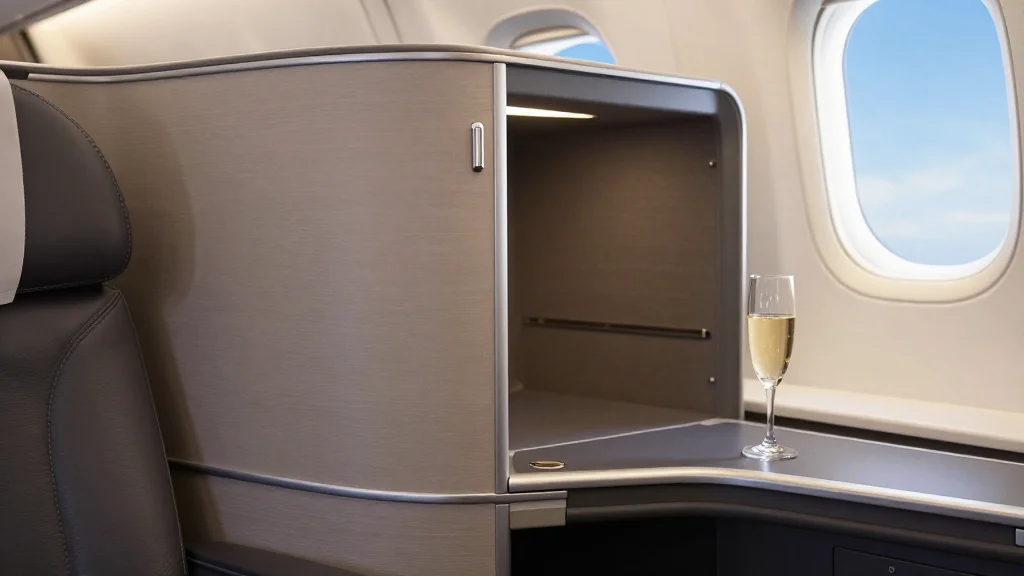
5 Airlines' Business Class Seats That Are The World's Most Private In 2026
Why It Matters
Enhanced privacy directly boosts passenger satisfaction and willingness to pay premium fares, giving airlines a competitive edge in the lucrative long‑haul market. The move also signals a race to differentiate business class as a revenue‑generating product rather than a commodity.
Key Takeaways
- •Air France offers Starlink Wi‑Fi and a 2‑meter lie‑flat suite
- •Cathay Pacific’s Aria Suite adds a sliding door and wrap‑around seat
- •ANA’s “THE Room” features alternating forward/rear rows for aisle access
- •Singapore Airlines uses full‑length dividers for three privacy configurations
- •Qatar Airways’ Qsuite introduces fully enclosed doors and quad‑seat layout
Pulse Analysis
The push for private business‑class cabins is more than a design fad; it’s a strategic response to evolving traveler expectations. Post‑pandemic business travelers now demand hotel‑like seclusion, reliable high‑speed internet, and flexible spaces that support both work and rest. Airlines that integrate technologies such as Starlink satellite connectivity and noise‑cancelling environments can command higher yields, as premium passengers are willing to pay extra for uninterrupted productivity and sleep. This trend aligns with broader industry data showing that business‑class revenue per available seat‑kilometer (RASK) has risen steadily, driven by passengers seeking differentiated experiences rather than merely larger seats.
Privacy innovations also reshape cabin economics. Enclosed suites enable airlines to reconfigure cabin layouts, often converting traditional 2‑2‑2 or 2‑3‑2 arrangements into 1‑2‑1 or quad configurations that maximize both privacy and social interaction. Qatar Airways’ Qsuite, for example, leverages a quad layout that can be split into individual suites or combined for couples, effectively increasing seat‑utilization flexibility. Such modular designs reduce the need for additional aircraft types, allowing carriers to retrofit existing wide‑bodies and extend the life of their fleets while still offering cutting‑edge products.
Looking ahead, the competitive advantage will hinge on how airlines blend privacy with sustainability and digital services. As carbon‑offset initiatives become mandatory, carriers must balance the added weight of private enclosures with fuel‑efficiency goals. Simultaneously, the rise of AI‑driven cabin personalization—adjusting lighting, temperature, and entertainment based on passenger profiles—will further differentiate premium offerings. Airlines that successfully integrate these elements will not only attract high‑value customers but also set new standards for the future of business travel.
5 Airlines' Business Class Seats That Are The World's Most Private In 2026
Comments
Want to join the conversation?
Loading comments...