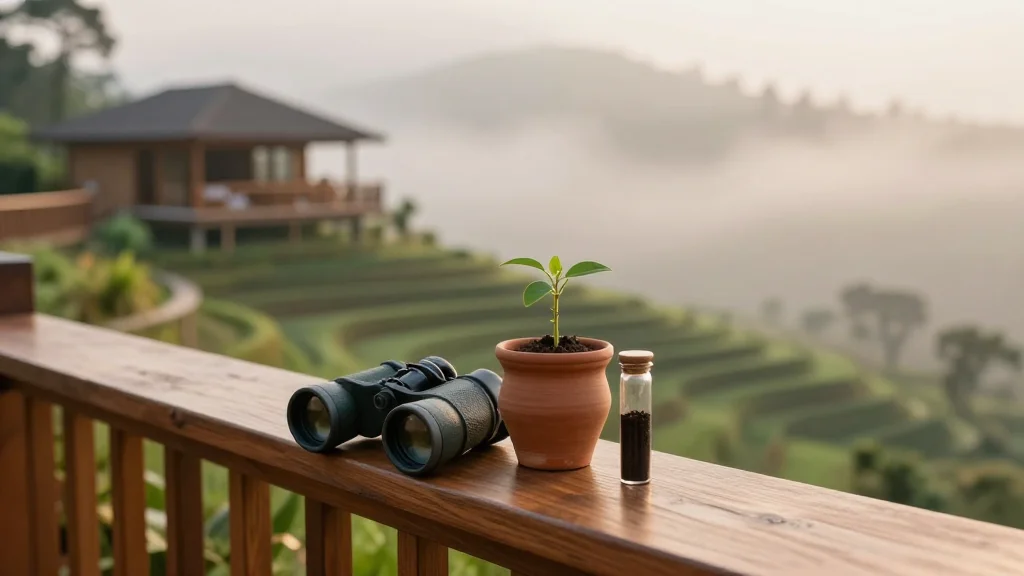
Aarunya Nature Resort Unveils Its New Nature Pavilion, Advancing Sri Lanka’s Role in Conservation, Research, Education, and Regenerative Tourism
Why It Matters
The pavilion elevates Sri Lanka’s profile in sustainable luxury travel while providing a living laboratory that can accelerate biodiversity research and regenerative agriculture practices. Its model shows how high‑end hospitality can directly contribute to conservation and local economic development.
Key Takeaways
- •Nature Pavilion built from bamboo, mud bricks, lime‑free renders.
- •Serves as research hub for endemic flora, fauna, and agroforestry.
- •Guests can join guided trails, spice foraging, biodynamic farming sessions.
- •Supports Sri Lanka’s regenerative tourism and net‑zero hospitality model.
- •Highlights Aarunya’s inclusion in TIME World’s Greatest Places 2026.
Pulse Analysis
Regenerative tourism is reshaping how luxury destinations balance profit with planet, and Sri Lanka’s burgeoning eco‑travel market is a prime example. The island’s UNESCO‑listed Knuckles Mountain Range and rich spice corridors attract travelers seeking authentic nature experiences, yet the sector has struggled with overtourism and environmental degradation. Aarunya’s Nature Pavilion arrives at a critical juncture, offering a tangible blueprint that merges high‑end hospitality with scientific inquiry, thereby enhancing the country’s reputation as a responsible travel hub and encouraging policy makers to support similar initiatives.
The pavilion’s construction showcases a commitment to low‑impact design, using bamboo, mud bricks and lime‑free renders sourced from nearby Kandy. Over a two‑year period, local craftsmen were trained in novel bamboo techniques, creating a replicable skill set for the region’s building industry. Inside, the facility functions as a research hub, partnering with universities and government agencies to monitor endemic flora and fauna, while also serving as a living classroom for guests. Interactive programs—spice foraging, biodynamic tea processing, and guided bird‑watching tours—bridge the gap between education and leisure, turning visitors into ambassadors for conservation.
Industry observers see Aarunya’s model as a catalyst for broader change. By embedding conservation into the core guest experience and achieving net‑zero energy and waste goals, the resort demonstrates that luxury can be sustainable without sacrificing profitability. As Sri Lanka seeks to revive tourism post‑pandemic, the Nature Pavilion provides a compelling narrative for eco‑conscious travelers and investors alike, potentially spurring a wave of similar projects across South Asia. The resort’s inclusion in TIME’s World’s Greatest Places 2026 further amplifies its influence, positioning Sri Lanka as a leader in experiential, regenerative tourism.
Aarunya Nature Resort Unveils Its New Nature Pavilion, Advancing Sri Lanka’s Role in Conservation, Research, Education, and Regenerative Tourism
Comments
Want to join the conversation?
Loading comments...