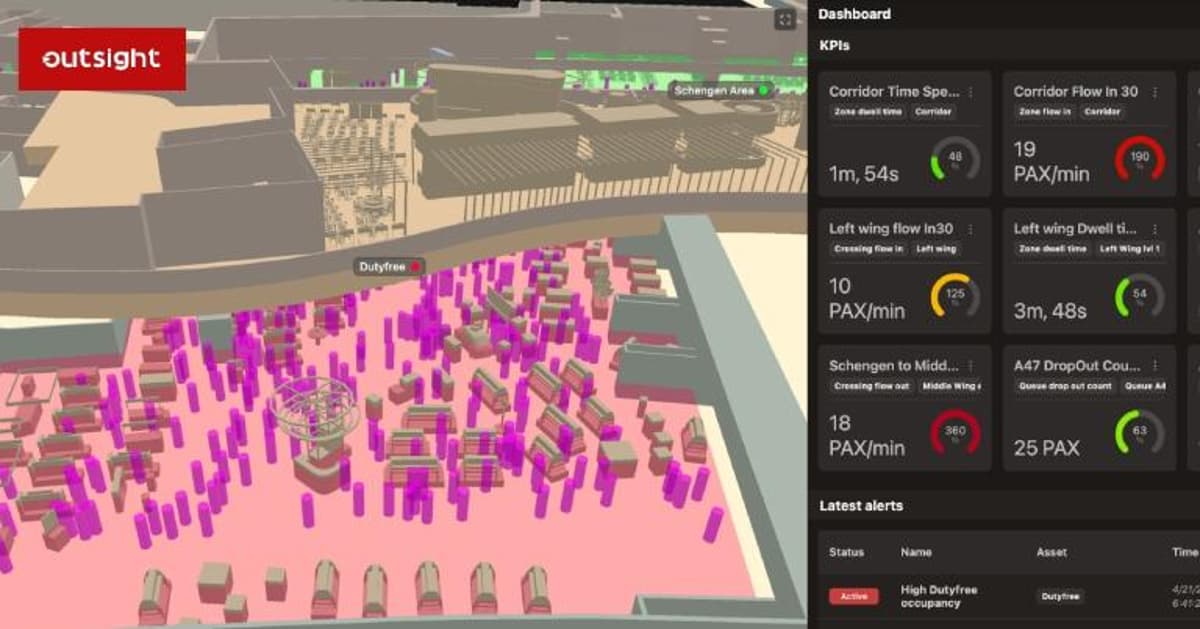
Aeroporti Di Roma Deploys Outsight’s Physical AI Solution at Scale Across Fiumicino Airport
Companies Mentioned
Why It Matters
By turning raw LiDAR data into actionable insights, ADR can proactively manage crowding, cut wait times and improve resource utilization—key competitive advantages for a major European hub facing growing passenger volumes.
Key Takeaways
- •ADR expands Physical AI across Schengen zones for real‑time flow insights
- •3D LiDAR captures passenger movement, enabling proactive resource allocation
- •Predictive analytics reduce queue times and improve operational efficiency
- •Outsight’s platform validates AI‑driven airport management at major hub
Pulse Analysis
Physical AI and LiDAR are rapidly becoming core components of modern airport infrastructure. Unlike traditional camera‑based systems, LiDAR creates precise three‑dimensional maps of moving crowds, feeding algorithms that can detect bottlenecks before they form. Vendors such as Outsight are packaging this sensor data with advanced analytics, offering a scalable solution that integrates seamlessly with existing airport IT stacks. The technology’s ability to operate in low‑light or privacy‑sensitive environments makes it especially attractive for high‑traffic zones like Schengen corridors.
At Rome Fiumicino, ADR has moved from a pilot in the arrivals immigration area to an industrial‑scale rollout covering nearly every common‑use space within the Schengen zone. The deployment provides a continuous, real‑time view of passenger density, queue lengths and dwell times, enabling staff to redirect personnel, open additional lanes, or adjust signage instantly. Early metrics from the pilot indicated a 12% reduction in average wait time and a measurable lift in on‑time performance, outcomes that the expanded system aims to replicate airport‑wide. By embedding these insights into its operational command center, ADR can also feed predictive models that forecast peak periods days in advance.
The broader implication for the aviation sector is a clear signal that data‑driven, AI‑enabled operations are moving from experimental to essential. Airports that adopt spatial intelligence can differentiate themselves through smoother passenger journeys, higher retail conversion rates, and more resilient crisis management. As airlines push for tighter turnaround windows, hubs like Fiumicino that can dynamically allocate gates, security lanes and ground staff will enjoy stronger airline partnerships and potentially higher slot values. Outsight’s success may spur further investment in sensor‑fusion platforms, accelerating the industry’s march toward fully autonomous, agentic airport ecosystems.
Aeroporti di Roma deploys Outsight’s Physical AI solution at scale across Fiumicino Airport
Comments
Want to join the conversation?
Loading comments...