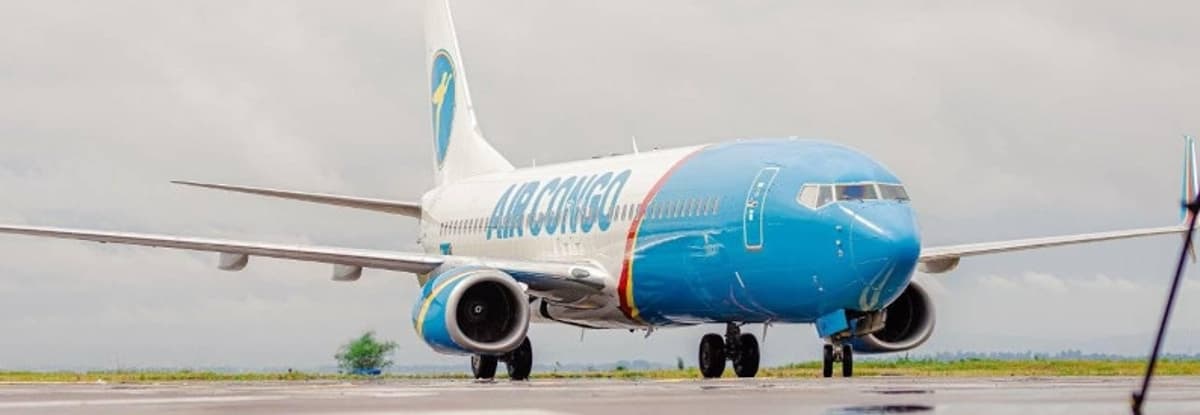
Air Congo Expands Regional Network Amid ATR72 Delays
•March 3, 2026
0
Why It Matters
The expansion diversifies Air Congo’s revenue base beyond its single international route, strengthening its position in Central Africa’s competitive market. Delayed ATR deliveries highlight the challenges of fleet modernization for emerging carriers reliant on foreign partners.
Key Takeaways
- •New routes to five African capitals launch March‑April 2026
- •ATR‑72‑600 deliveries delayed until mid‑April 2026
- •Expansion adds three weekly B737‑800 flights to Johannesburg
- •No online bookings available for new services yet
- •Fleet remains three B737‑800s, two dry‑leased, one wet‑leased
Pulse Analysis
Air Congo’s latest route rollout marks a strategic push to capture underserved regional traffic in Central and East Africa. By linking Kinshasa to major hubs such as Johannesburg, Entebbe, Douala, Cotonou and Dar es Salaam, the carrier taps into high‑yield business and diaspora demand that has historically been serviced by larger airlines. The new schedule, anchored by its three B737‑800s, offers three weekly frequencies to Johannesburg via Lubumbashi, signaling a commitment to consistent capacity while the airline gauges market response before scaling further.
The delay of the two ATR‑72‑600s, now slated for mid‑April 2026, underscores the operational risks tied to complex certification processes and cross‑border staffing approvals. Ethiopian Airlines, a 49% shareholder, provides both technical expertise and wet‑lease support, but visa bottlenecks for its crews have slowed pre‑delivery testing in France. This postponement forces Air Congo to rely longer on its narrow‑body fleet, limiting its ability to serve thinner routes efficiently and potentially affecting cost structures until the turboprops become operational.
In the broader context, Air Congo’s expansion challenges incumbents like Ethiopian and Kenya Airways by offering more direct connections from the Democratic Republic of Congo to key economic centers. Enhanced connectivity can stimulate trade, tourism, and investment flows, while also positioning the airline as a regional hub for onward flights. If the new services gain traction and the ATR‑72‑600s integrate smoothly, Air Congo could accelerate fleet diversification, improve load factors, and solidify its foothold in the competitive African aviation landscape.
Air Congo expands regional network amid ATR72 delays
0
Comments
Want to join the conversation?
Loading comments...