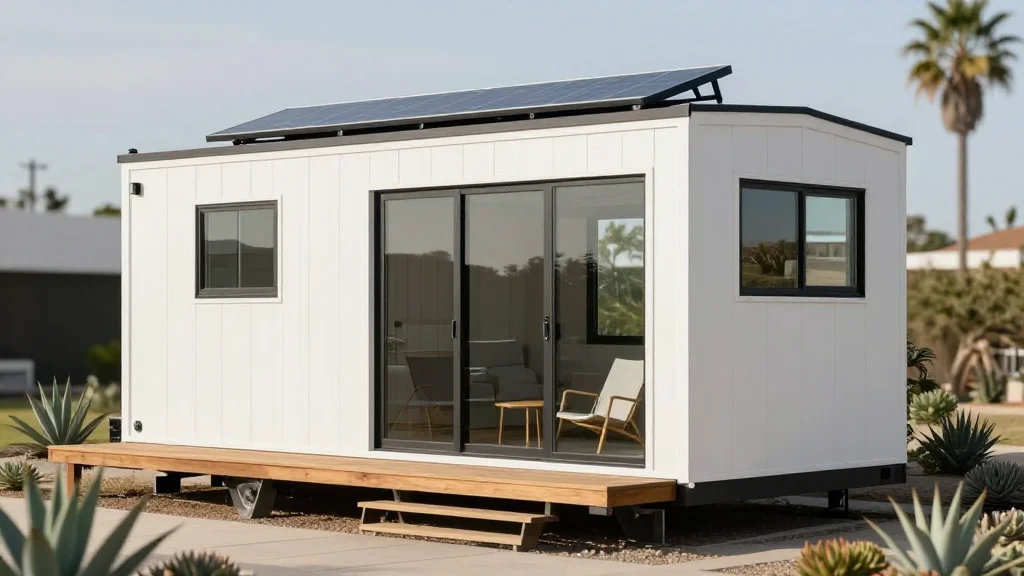
Airbnb Hosts Turn Tiny‑Home Builds Into Profitable Short‑Stay Rentals

Companies Mentioned
Why It Matters
The rise of tiny‑home rentals on Airbnb signals a diversification of the short‑stay ecosystem, challenging traditional hotel supply chains. By delivering hotel‑level amenities in a fraction of the footprint and cost, micro‑lodging offers a scalable revenue model for individual owners and small investors. For the broader hospitality industry, the trend forces legacy operators to rethink room‑type offerings and pricing strategies. Hotels may need to incorporate more flexible, design‑focused units or partner with modular builders to stay competitive in a market where guests increasingly prioritize uniqueness and value.
Key Takeaways
- •Sakura Kishiro built a 400‑sq‑ft tiny home for just over $100,000 and achieved 80% occupancy since March
- •Nightly rates range from $100 to $300, generating consistent cash flow
- •The home includes upscale amenities like washer‑dryer and dishwasher, rare in tiny‑home rentals
- •Comparable Airbnb‑listed historic pub in Wales earns £240 (~$300) per night, showing cross‑property viability
- •Investors are eyeing modular tiny‑home kits as a new asset class within hospitality
Pulse Analysis
Kishiro’s case illustrates how the economics of micro‑lodging are reaching a tipping point. Construction costs for a well‑finished tiny home now sit under $100,000, while dynamic pricing tools can push nightly rates into the $300 range during peak periods. When you annualize a conservative $150 average nightly rate at 80% occupancy, the gross revenue exceeds $40,000, delivering a payback period of roughly three years—an attractive horizon for individual investors compared with the longer timelines of hotel development.
From a market dynamics perspective, the model leverages two converging forces: the democratization of design through prefabricated modules and the platform effect of Airbnb, which supplies a ready‑made marketplace and pricing intelligence. This synergy reduces entry barriers, allowing entrepreneurs without deep hospitality experience to compete on guest experience. Traditional hotel chains, which are capital‑intensive and bound by legacy property portfolios, may find it harder to replicate this agility.
However, scalability hinges on regulatory environments. Cities that tighten short‑term rental rules could curtail growth, while those that adopt permissive accessory dwelling unit policies may become hotbeds for tiny‑home clusters. The next wave of industry activity will likely involve lobbying efforts, zoning reforms, and partnerships between municipalities and modular builders to create designated micro‑lodging districts. For investors, the key will be to balance the allure of high yields with the risk of policy shifts, positioning tiny‑home projects as complementary to, rather than replacements for, traditional hotel assets.
Airbnb Hosts Turn Tiny‑Home Builds into Profitable Short‑Stay Rentals
Comments
Want to join the conversation?
Loading comments...