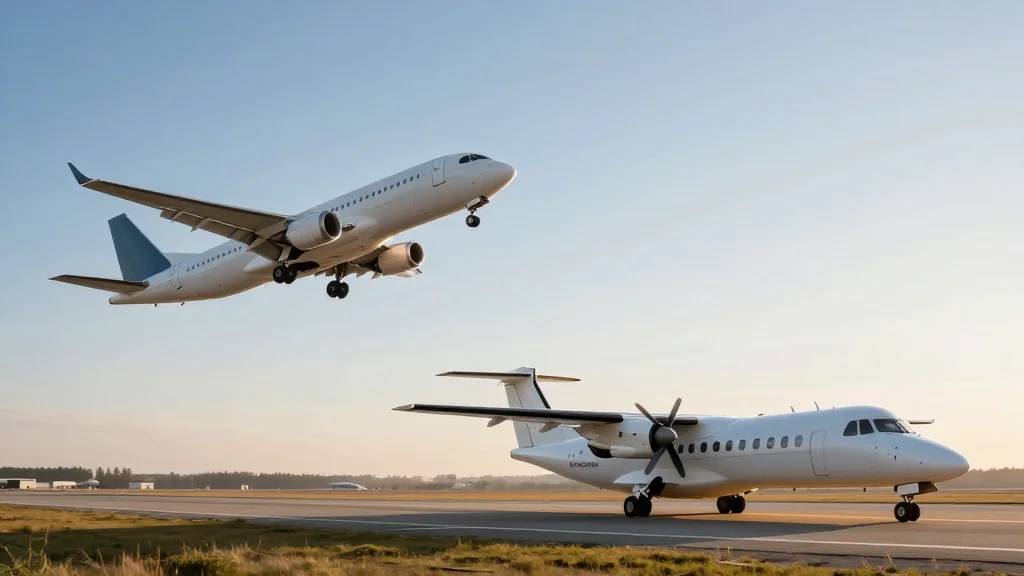
Airlines Expand and Restructure Routes in an Era of Uncertainty
Companies Mentioned
Why It Matters
The divergent approaches will dictate which carriers can sustain profitability and capture market share in a volatile environment, influencing ticket availability and pricing for travelers worldwide.
Key Takeaways
- •Air France adds weekly Paris‑Dakar, Tokyo, Shanghai, and India flights.
- •KLM boosts Amsterdam‑Bangkok frequency and upgrades Caribbean fleet.
- •Lufthansa cancels 20,000 short‑haul flights, closes CityLine subsidiary.
- •Thai Airways targets 82% load factor using 787‑9 and A321neo.
- •Europe cuts capacity, Asia expands as fuel costs rise.
Pulse Analysis
The aviation sector is at a crossroads, with jet‑fuel prices soaring amid Middle‑East tensions and supply chain constraints. Carriers that can align capacity with resilient demand are gaining a competitive edge, while those burdened by legacy cost structures are forced to trim routes. This environment has prompted a strategic bifurcation: European airlines prioritize hub consolidation and cost control, whereas Asian operators lean into market growth, leveraging newer aircraft to offset fuel volatility.
Air France’s summer schedule illustrates the expansion mindset, adding weekly services to Dakar, Tokyo and Shanghai before rolling out ten weekly flights each to Mumbai and Delhi in the winter. KLM mirrors this trend, increasing Amsterdam‑Bangkok frequencies and deploying Boeing 777‑200 and 787‑10 jets on Caribbean routes to enhance premium product offerings. Meanwhile, carriers like Emirates, Delta and Singapore Airlines are also scaling long‑haul capacity, betting on a post‑conflict rebound in intercontinental travel.
Conversely, Lufthansa’s aggressive reduction of 20,000 short‑haul flights and the closure of its CityLine subsidiary signal a defensive posture aimed at filling planes and tightening operational control. European carriers are consolidating hubs in Zurich, Vienna and Frankfurt to preserve network connectivity while shedding under‑performing routes. For passengers, the outcome is a mixed bag: fewer direct options in some regions, but potentially higher service quality and more reliable schedules where airlines succeed in matching capacity to demand. The industry’s success will hinge on how intelligently airlines balance expansion, optimization and cost containment.
Airlines Expand and Restructure Routes in an Era of Uncertainty
Comments
Want to join the conversation?
Loading comments...