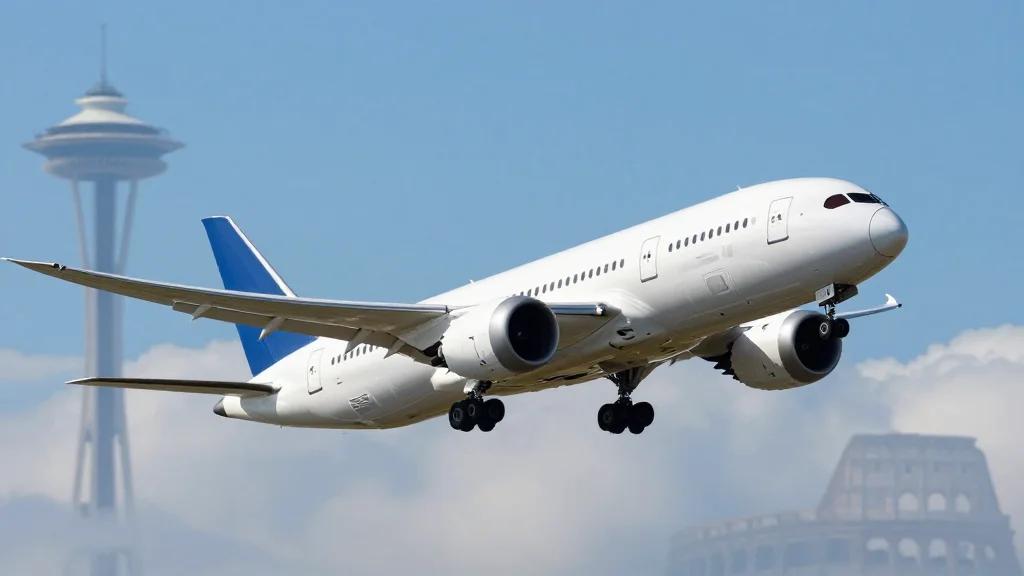
Alaska Launches Rome, British Airways Restores St. Louis
Companies Mentioned
Why It Matters
The new routes revive direct Europe‑U.S. connectivity for mid‑size American markets, unlocking latent demand and challenging legacy network models. Their success could prompt additional nonstop links, reshaping the competitive landscape for both legacy and low‑cost carriers.
Key Takeaways
- •British Airways launches first UK‑St. Louis nonstop in 22 years
- •Service operates four times weekly with Boeing 787‑8, all three cabins
- •BA targets mid‑market US cities, following similar launches in Portland, Pittsburgh, Nashville
- •Alaska Airlines begins Seattle‑Rome 787‑9, marking its first transatlantic route
- •Success could spur further nonstop links to Kansas City, Indianapolis, etc.
Pulse Analysis
British Airways’ reintroduction of a nonstop London‑St. Louis service is more than a nostalgic revival; it addresses a two‑decade void in direct European access for a metropolitan area of roughly 2.8 million people. The four‑weekly Boeing 787‑8 operation offers World Traveller, World Traveller Plus, and Club World cabins, providing a product that U.S. carriers have historically deemed unprofitable. Yet the route taps a sizable oneworld loyalty base and corporate travel demand that was previously forced onto hub‑and‑spoke itineraries, promising higher yield per seat.
Alaska Airlines’ Seattle‑Rome launch marks the carrier’s first true transatlantic foray, signaling its ambition to evolve from a regional player into a global contender. The 787‑9’s fuel‑efficient design reduces operating costs, allowing Alaska to compete on price and frequency against legacy carriers on a high‑profile European capital. By establishing a foothold in Europe, Alaska can leverage its existing domestic network to feed traffic both ways, creating new revenue streams and diversifying its route portfolio beyond the West Coast.
The parallel moves by BA and Alaska illustrate a broader shift toward serving mid‑market U.S. gateways that were abandoned during post‑9/11 hub consolidation. Airlines such as Aer Lingus with its A321XLR and other European flag carriers are testing similar models, suggesting that demand for point‑to‑point transatlantic flights is resurging. If these routes achieve sustainable load factors, we can expect a cascade of new nonstop services to cities like Kansas City, Indianapolis, and beyond, reshaping the competitive dynamics of the Atlantic market.
Alaska Launches Rome, British Airways Restores St. Louis
Comments
Want to join the conversation?
Loading comments...